
Cuba Briefing
The Caribbean Council's Exclusive Publication on Cuba

The Cuba Briefing is your news and insight resource for the latest developments in Cuba.

Published since the mid-1990s, Cuba Briefing is an unparalleled resource of detailed analysis on economic, social and political developments going on inside Cuba including analysis on the Cuban government’s priorities and policy developments towards foreign investors, economic reform, and the growth of the private sector.

Cuba Briefing is produced on a weekly basis by David Jessop, the director and founder of the Cuba Initiative and Non-Executive Director of the Caribbean Council, providing expert insight and a longer term lens on week-to-week developments in the country.

Don’t miss out on the latest news business and opportunities from the region. Subscribe to receive the Cuba Briefing Publication directly to your inbox. Subscribers receive 23 editions over 12 months. Click to Subscribe.

Leading Articles Featured in Cuba Briefing

24th April 2023

Russia’s Foreign Minister, Sergei Lavrov, has said that the terms of the restructuring of Cuba’s debt to the Russian Federation are practically agreed. He was speaking at the end of a three-day visit to Havana during which he discussed the supply of oil, wheat, and other issues with government.

“Many goals were achieved that were discussed and agreed upon during the visit of the President of Cuba to the Russian Federation, primarily with regard to our relations in the field of fuel and food supplies,” Lavrov told a press conference held at the end of his visit. President Díaz-Canel visited Moscow in late November 2022 (Details Cuba Briefing 29 November 2022).

Continuing, he confirmed that “this work is at the final stage. Literally in the coming days the first results will be announced, and finally, I think, all this will be discussed during the intergovernmental commission, which is meeting here in mid-May,” he said.

Lavrov went on to stress that agreeing on the conditions for restructuring the Cuban debt will “contribute to everything that is advancing and is being achieved.”  Solutions, he said, have already been worked out and are being implemented that will allow Cuba and Russia not to be subject to sanctions. They will allow us “to reliably secure our trade, economic, and investment ties and projects from the influence of illegal Western sanctions,” the Russian news agency Interfax quoted Lavrov as saying.

Regarding the supply of fuel and wheat, which for months Cuba has been struggling to obtain internationally, the Russian state linked media platform Sputnik quoted Lavrov as noting that the outline supply agreement on Russian bilateral cooperation achieved when President Díaz-Canel visited Moscow is being finalised.

On fuel, it will now be, Sputnik noted, for the Cuban-Russian Intergovernmental Commission to discuss supplies to Cuba in Havana in mid-May. In the case of wheat, it quoted Lavrov as saying “a special loan for additional supplies” is now being negotiated.

Speaking about tourism, Russia’s Foreign Minister said that he was certain that the expansion of tourist possibilities would also appear on the agenda of the Intergovernmental Commission. Both Cuba and Russia are interested in expanding the possibilities of mutual travel, but the decision in this regard “is made by the airlines themselves,” he told media representatives.

More generally, Lavrov noted that he had discussed in Cuba other areas in which Moscow and Havana could develop commercial and economic cooperation. These, he said, will be further explored when the Intergovernmental Commission on cooperation in trade and economy meets.

Commenting on the re-election of President Díaz-Canel and Esteban Lazo as President of the National Assembly (See Cuba below) he described it as a “vote of confidence of Cuban society in the policies implemented by the President’s team, including in the Minister of Foreign Affairs [Bruno Rodríguez].”

During the visit mention was made of “new bilateral economic and trade prospects and exchanges in other spheres, including cultural, educational and military, as well as sharing experiences in maintaining public order.” Answering a media question about whether Russia has plans to restore a military base in Cuba, Lavrov noted that “military cooperation with Cuba is developing successfully, in accordance with the agreements of the two sides.” “I understand that the form of this cooperation satisfies both the Russian and Cuban sides,” he said.

War in Ukraine

Regarding what Russia describes as its ‘special military operation’ in Ukraine’, Lavrov noted that “our Cuban friends, President Díaz-Canel, and other representatives of the leadership clearly outlined their position and expressed full understanding in their assessments of the reasons that led to the current situation.”  Russia’s Foreign Minister went on to note: “We cannot agree that the world should permanently continue to live by these American rules…which reflect a desire to continue colonial ways of living off others and eliminating competitors.” For this reason, he said, he had proposed that Cuba and Russia cooperate in “the international arena to mobilise the countries that also reject such a dictate.”

Lavrov noted that the new conception of Russia’s foreign policy provides greater attention to the Latin American and Caribbean region but does not imply action to impose recipes “from the outside.”  Granma reported that Russia now intends taking an increased interest in Latin America through integration mechanisms including those involving Russia, Brazil, India, China, and South Africa (the BRICS), the Community of Latin American and Caribbean States (CELAC) and Mercosur.

Relationship with Russia deepening

Cuba’s Minister of Foreign Affairs described relations as “a reflection of the maturity and historical character”, as well as “an expression of the high priority that Cuba grants to its ties with Russia.” In doing so he stressed the importance of the inter-foreign ministry consultation mechanism that exists between Cuba and Russia that enables “joint evaluation” and exchanges on issues of common interest relating to the international agenda.

On the conflict in Europe, Granma quoted Cuba’s Foreign Minister, Bruno Rodríguez, as saying: “We strongly reject the expansion of NATO, which continues to the Russian borders, the main cause of the current conflict in Europe.” In doing so he indicated that Cuba sought “a diplomatic, constructive and realistic solution to the current crisis by peaceful means, which guarantees security and sovereignty to all, as well as regional and international peace and stability.”

Lavrov arrived in Cuba on 19 April at the end of a 17-21 April tour of Latin America which included Brazil, Venezuela, and Nicaragua. Russia is one of Cuba’s top ten trading partners, and both governments now define their partnership as “strategic.” Among those Lavrov met with were former Cuban President Raúl Castro. See also Russia below.

The Caribbean Council is able to provide further detail about all of the stories in Cuba Briefing. If you would like a more detailed insight into any of the content of today’s issue, please get in touch.

Photo via: Peter Benjeens
10th April 2023

The High Court in London has ruled that the Cuban State has no direct responsibility for €72mn (US$78.5mn) of accumulated Cuban debt held by CRF I Ltd, but that the Banco Nacional de Cuba (BNC) is responsible for meeting the claim (Background Cuba Briefing 6 February 2023).

In a 94-page judgement, Judge Sarah Cockerill said that Cayman registered CRF I lawfully purchased the debt with the BNC’s approval, but it lacked the authority to consent on behalf of Cuba.  As a consequence, the Cuba State is no longer part of the continuing court case since it is not a guarantor for the debt.

Justice Cockerill, however, also ruled that CRF I has the right to demand payment of the debt from the BNC, should at trial the court order it to repay the amount owing. As such, subject to appeal, she wrote, the case can continue solely against the BNC. This appears to mean that the sum owed can only be recovered from the BNC’s assets and resources.

Subsequently, Cuba’s Minister of Justice, Oscar Silvera, said the judgement will be the subject of an appeal in May.

If Cuba were to lose the appeal, it is expected that the High Court will then determine the merits of CRF I’s case, and Justice Cockerill would be, as she indicated, be “competent to judge the debt claims presented” at a future date.

Initial Cuban commentary described the ruling as “a victory,” with President Diaz Canel saying  in a Tweet: “[The] Republic of Cuba wins lawsuit in London: CRF is not a creditor of the Cuban State. Once again, the enemies of the nation failed. Their lies collided against a professional and prestigious court.”

In other remarks, Cuba’s Justice Minister told a press conference that the lawsuit had established that the Republic of Cuba and the Banco Nacional de Cuba were different entities.

“We are talking about two different entities, the Republic as a sovereign guarantor, a power that the State has to assume responsibilities in terms of guarantees in the face of debts awarded to other entities in the country, and the BNC as an economic and commercial entity,” he said.

Indicating that the ruling made clear that the Cuban State has no obligation to respond to the lawsuit and that it is immune from English jurisdiction, he said that the outcome should be regarded as a victory.  “The Republic as a sovereign entity is immune because at no time did the State approve guarantees on the debts assumed by CRF”, Silvera said.

In a statement issued following the ruling, CRF I’s Chairman, David Charters, noted “CRF remains committed to finding a solution with Cuba that has zero impact on its budget for at least five years, recognising the difficult economic situation the country is facing.”

 “Cuba won a technical point in this judgment which we have already remedied, and we do not expect this issue to impact the eventual final outcome, which is a complete victory for CRF,” he wrote. Charters also observed that “BNC was the central bank of Cuba and remains responsible for managing these unpaid Cuban debts.”

Earlier this year the Spanish news agency EFE reported that CRF I is the largest holder of Cuba’s sovereign debt and has accumulated bonds of €1.2bn” (US$1.3bn). It is a member of the private sector London Club of Creditors holding Cuban debt. CRF I has previously attempted to reach a settlement with Cuba, including a 2018 offer which it said received no response.

Cuba states that it has never ignored its debts or negotiations with “legitimate” creditors and has previously called CRF’s claims illegitimate, describing the firm as a “vulture fund.”. The Banco Central de Cuba (BCC) maintains that the debt was contracted by the BNC when it still operated as Cuba’s central bank. The BNC was dissolved and replaced in 1997 by BCC which took over many of the functions of the BNC. 

The Caribbean Council is able to provide further detail about all of the stories in Cuba Briefing. If you would like a more detailed insight into any of the content of today’s issue, please get in touch.

3rd April 2023

Together with Cuba’s state owned Corporación CIMEX SA, Russian private sector interests are to open a wholesale supermarket selling Russian goods, and with Russian government funding will develop a first hotel for Russians. Additionally, a joint Russia Cuba Centre for Economic Transformation is expected to be established, and a new financial settlement system created.

In the last week the Russian news agency Interfax has quoted Boris Titov, Chairman of the Russia-Cuba Business Council, and President Putin’s Commissioner for the Protection of Entrepreneurs’ Rights, as telling the Russian media: “Many Russian manufacturers are interested in promoting their products in Cuba. We hope that the new trading house would become a single wholesale importer of products and independently determine prices on the retail market in this country.” The preliminary consent of the Cuban side has been received, we continue to expect the official signing of the contract,” he said.

The idea of a Russian trading house follows from discussions held during President Diaz-Canel’s visit to Moscow in late November 2022 (Cuba Briefing 29 November 2022).

According to Titov, the proposed ‘Rusmarket’ will sell food products, household products, and other goods. The arrangement will be based on a contract that will, he said, make it possible to resolve difficult issues with logistics, the transportation of Russian goods, and their insurance. Speaking about tourism, the Chair of the Russia-Cuba Business Council told the news agency that consideration was being given to closer cooperation with Cuba in the field of tourism.

“The flow of Russian tourists to Cuba is gradually recovering. Now we are considering the creation of a separate hotel specifically for guests from our country. Financing of such projects is possible at the expense of a fund under the Ministry of Finance”,  Interfax quoted Titov as saying. The fund referred to relates to a new offsetting arrangement for trade with Cuba through what previously has been described as “a specially formed account”.

Titov indicated that he expects a Cuban working group related to the economic reform of the Cuban economy to arrive in Moscow shortly. In January Interfax reported that the Russia-Cuba Business Council was exploring “economic transformation in Cuba based on the development of private companies.”

The forthcoming visit is expected to discuss the launch of a joint Centre for Economic Transformation, involving representatives of key Cuban ministries and the Cuban Central Bank, with Russian experts drawn from the Stolypin Institute for Growth Economics as well as the Centre for Strategic Research and the Institute for Economic Forecasting of the Russian Academy of Sciences.

Speaking about the new initiatives, Cuba’s Ambassador in Moscow, Julio Garmendia, said that Russia and Cuba are currently “in a new moment of promising relations.” In remarks to the Russian media quoted by Interfax he said that the Cuban National Assembly is preparing to develop legislation that will deepen contacts with Russia. “The main thing is that a political decision on this matter has already been made,” the Ambassador said.

As reported previously by Cuba Briefing, the Stolypin Institute for Growth Economics is a think tank with close ties with the Russian government and state academies of sciences. It conducts scientific research financed by the private sector, government, and grants from the President of the Russian Federation. Its views are broadly based on a belief in the need for the Russian economy to encourage private property and competition, cultivating markets, developing a middle class and small and medium-sized companies, and that Russia stops depending on oil.

Previously Titov, who is close to President Putin, has said that one of the proposals under consideration involves the creation of a new financial settlement system that would incorporate the trading accounts of all those participating. This would, he said, “Not only [be] a clearing centre, but, by and large, an organisation with a banking license, the main task of which is to significantly reduce the volume of cash payments. And, of course, we will have to deal with lending, leasing, and factoring”.

Separately, Cuba’s Minister of Foreign Trade and Foreign Investment, Rodrigo Malmierca, has said about the supermarket proposals being developed by Titov: “We are working to ensure that Russian investments in Cuba are subject to special protection. Despite the difficulties with liquidity, we can provide this joint venture with special treatment so that it does not have to repatriate its income.” (Background Cuba Briefing 30 January 2023).

As Commissioner for the Protection of Entrepreneurs’ Rights, Titov is in charge of protecting the rights of Russian businessmen who support the Kremlin.  In January, Titov met with President Díaz-Canel in Havana. He has previously been quoted as saying that the Russia-Cuba Business Council want to “breathe the energy of entrepreneurial initiative into these relations.” Corporación CIMEX SA is controlled by the US-sanctioned Cuban military related conglomerate GAESA.  The spokeswoman for the Russian Ministry of Foreign Affairs, María Zajárova, recently said that Moscow maintains its commitment to strengthen strategic cooperation with Cuba in multiple fields. 

Photo by Kir Simakov 

The Caribbean Council is able to provide further detail about all of the stories in Cuba Briefing. If you would like a more detailed insight into any of the content of today’s issue, please get in touch.

27 March 2023

Cuba is relying on “the dynamic recovery of tourism,” the resuscitation of the productive sector, changes to state enterprises, and a better currency allocation system to deliver growth of 3% this calendar year, according to Deputy Prime Minister Alejandro Gil, the Minister of  Economy and Prices (MEP).

In remarks made to the annual audit meeting of the MEP, Gil laid stress on state enterprises assuming greater responsibility for outcomes, indicated that tax incentives would be introduced, and spoke about the creation of a new law for state enterprises.

In addition, he said, a new entity to manage non-state Cuban businesses would be created, and flexibility introduced into the state planning process “to recognise economic reality.”

These and other measures, Gil said, would be contained in a macro-economic stabilisation programme that will aim to rebalance the Cuban economy  and “guarantee a favourable environment that is conducive to economic growth.”

Speaking about the outlook for the Cuban economy this year,  the Minister said that the projected slowdown in the world economy due to high inflation, increased interest rates, and a reduction in investments presented “adverse risks”. This will mean, he said, Cuba will need to strengthen activities that generate exports, establish objective priorities, and create complementarity between state and non-state economic actors.

He also highlighted the importance of  the faster recovery of tourism in delivering a rapid recovery of the economy; the need for greater speed in addressing rising input prices; the importance of capturing more foreign exchange; the need to undertake the “internal transformation” of state enterprises; and accelerating the process underway of the decentralisation of power to the territories. 

Gil went on to say that government will address the negative issues that affected economic performance in 2022. In doing so he noted the partial dollarisation that has occurred between state companies and the non-state sector, retail price inflation, and the losses made by state enterprises.

Speaking about plans to transform state companies and devolve management responsibility, Gil announced that Government would this year begin to classify them to achieve their “effective performance as a main actor in the production of goods and services”. This, he said, would see in a proposed new Company Law, provision for the consolidation of enterprises, and their management model and governance classified in a review lasting up to the end of 2024.

He additionally told the meeting that the proposed macro-economic stabilisation programme will see work developed within the MEP on tax reform, the recovery of monetary balance, and “convertibility of the national currency.”

At the same time, he said, macro-economic governance and planning will be redesigned so that the MEP’s Coordination Committee has “the necessary technical analysis instruments and the capacity for decision-making with respect to macro-economic policies.”

State media reports of the meeting additionally indicated:

  • That the role of the MEP in delivering Cuba’s National Economic and Social Development Plan, “will be strengthened.”
  • The annual planning process will allow for “greater flexibility and adaptive capacity” in “the context in which the national economy now operates.” 
  • It will be “necessary to defend the principle of not importing what can be produced in the country.”
  • Traditional planning and regulation mechanisms will be transformed, combining their presently centralised character with decentralisation.
  • The MEP will support the creation  of new economic actors.
  • Greater emphasis will be placed on achieving efficient management of the investment process and on streamlining research.
  • The currency allocation system will be reformulated, new self-financing schemes for exporting entities will be consolidated, and costs will be based on priorities.
  • Control mechanisms will be created through the Directorates of the MEP in relation to the use of freely convertible currency and receipts prioritised.
  • And measures will be introduced to mitigate the social impact of the new policies on Cubans.

In other reported remarks to the meeting, Cuba’s Prime Minister, Manuel Marrero, told attending senior members of Cuba’s Communist Party, Ministers, and the Minister-President of the Central Bank of Cuba and officials attending that while the impact of the US embargo could not be ignored, the macro-economic programme being proposed would become the “key and the guiding thread” in relation to future development. 

The Caribbean Council is able to provide further detail about all of the stories in Cuba Briefing. If you would like a more detailed insight into any of the content of today’s issue, please get in touch.

20th March 2023

Speculation is growing in the US that some imprisoned Cuban protestors and dissidents may soon be released, possibly into exile, leading to an easing in relations with the US.

Reports from well-placed US NGOs and in mainstream media outlets including CNN, suggest that negotiations to this end continue. They cite the recent visit to Havana by the Papal Envoy, Cardinal Benjamin Stella, the comments he made following a meeting with President Diaz-Canel (Cuba Briefing 13 February 2023), the actions of European diplomats in Havana, and a recent speech made by the US Assistant Secretary of State for Western Hemisphere Affairs, Brian Nichols.

Speaking on 14 March at Florida International University (FIU) in Miami, Assistant Secretary Nichols indicated that the Biden Administration is open to the possibility of accepting Cubans currently imprisoned in Cuba.

Although saying nothing about the negotiations fostered by the Vatican, he noted that US officials continue to seek the release of political prisoners both publicly and privately in exchanges with Cuban officials. “If they want to come to the United States, we will explore the avenues available under US law to welcome them,” Nichols said, noting the large numbers of individuals imprisoned for their involvement in the 11/12 July 2021 street protests, and the contact the US Embassy in Havana has had with them and with  dissidents.

Separately, European diplomats in Havana indicate that they are preparing to issue humanitarian visas to any Cubans who may be released by the government and leave the island for exile abroad. Civil society organizations suggests that following the protest some 670 individuals were sentenced and over 1,500 detained. Cuba says the number involved is about 800, however the trials have remained closed, and in some cases very long sentences have been imposed.

The position of the Cuban government however remains unclear with the Minister of Justice, Oscar Silvera, reportedly having suggested to EU diplomats earlier this year that while amnesty is not legally possible in Cuba their request for pardons had been noted. Meanwhile, speculation continues as to whether any decision would be linked to exile, whether encouraged or forced, for those who might be freed.

In his remarks Nichols made clear that the US strongly opposes forced exile.  “The United States will not turn its back on political prisoners, and if they want to come to the United States, we will explore the avenues available under US law to welcome them,” he told those attending his address.

In remarks largely aimed at explaining Washington’s Cuba policy to the Cuban-American community, Nichols said that in its dialogue with Cuba, “we always emphasise that the Cuban people must be able to choose where to live and the government must allow its citizens to return to Cuba.”

In February, Benjamin Ziff, Chargé d’Affaires of the U.S. Embassy in Havana, stated that Cuba’s government’s imprisonment of protesters and dissidents “is the most serious obstacle to any improvement in the bilateral relationship” (Cuba Briefing 13 February 2023).

More generally in his address, Nichols sought to outline two key aspects of the present US Administration’s policy.  The first, he said, is to “promote accountability for human rights abuses,” and the second is to “explore meaningful ways to support the Cuban people while limiting benefits to the Cuban regime.”

Speaking about new policies he said that the Biden Administration was “exploring the expansion of access to services hosted in the cloud and other development tools for the Cuban people.” These tools, he told those attending, “will help activists and civil society to connect with each other and facilitate the flow of information inside and outside the Island. They will also help the Cuban people to access more services, including those that circumvent censorship.”

Nichols observed that “the economic situation is worse than even the so-called Special Period of the 1990s and the human rights situation is bleaker than it has been in decades.” He was also critical of the high rates of inflation facing Cubans and the shortages of food, medicine, and electricity.

“The Cuban government is quick to blame others for its economic ills without acknowledging the decades of mismanagement that led to the current crisis,” he said, noting Havana’s tendency to blame everything on the US embargo “ which Havana waves like a flag to justify all its failures.” 

“We continue to ask the Cuban government to implement economic policies that improve the country’s situation, such as greater freedom for private sector agents and much-needed agricultural reforms,” Nichols said.

Nichols also spoke about other aspects of the Administration’s Cuba policy, indicating that approximately 10,000 Cubans “from all walks of life” have successfully used the new US parole programme introduced in January this year. Since implementation he said, “the number of Cuban migrants attempting a dangerous irregular migration has plummeted.”

The Caribbean Council is able to provide further detail about all of the stories in Cuba Briefing. If you would like a more detailed insight into any of the content of today’s issue, please get in touch.

14th March 2023

The Australian miner, Antilles Gold, has said that it has confirmed the presence of high-grade copper in samples taken from its El Pilar oxide concession in central Cuba. An expanded drilling programme will start in April 2023. This, it said, will focus, “on the copper-gold oxide domains and on a cluster of porphyry copper-gold intrusive targets.”

In two progress reports to the Australian Stock Exchange, Brian Johnson, the Executive Chairman, of Antilles Gold said that its 1800-metre drilling programme in 2022 at El Pilar in Ciego de Avilar had identified a 134.5-metre zone grading 1.13% copper from just under 50 metres, with a smaller zone grading up to 4.85% copper. In another drill hole, the company struck up to 38.31 grams per tonne of gold across 14 metres from a depth of 49.5 metres, as well as an 8-metre intersection of 1.27% copper.

Johnson said that the Bowral, New South Wales based company would now be splitting its activities in Cuba into two arms: one focused on small gold mines in its Minera La Victoria joint venture with Cuba’s state mining company GeoMinera SA,  and another that will be focussed on copper.

In a statement, he said that its gold mining operations in Cuba with GeoMinera had “the potential for worthwhile cumulative gold production and profitability” and that there were opportunities for another joint venture “exploring major copper targets.”

Antilles Chairman also noted that the company expects to use its anticipated surplus cash flow from its  existing La Demajagua mine development on the Isla de la Juventud to assist in funding subsequent gold projects, and in the exploration of the significant copper prospects that have been identified.

According to industry analysts this could see work on developing a mine at El Pilar come soon after the proposed open pit La Demajagua gold, silver, and antimony mine opens, which according to Antilles will be “development ready” in mid-2023, with commissioning expected in June 2024.

Antilles Gold reported that GeoMinera SA has indicated that Minera La Victoria “will be permitted to carry out multiple gold projects.”

The company also noted that a new subsidiary, Antilles Metals Inc, is being incorporated in the Cayman Islands to enter a separate joint venture with GeoMinera to explore the El Pilar copper-gold porphyry system.  Antilles added that it had signed a Letter of Intent with GeoMinera initiating negotiations on including in its Exploration Agreement “a second, highly prospective copper belt in Cuba.”

Australia’s The Market Herald reported on 3 March that in an indication of Antilles commitment to its partnership with GeoMinera, the miner’s Cayman Islands-registered subsidiary acquired an extra 1% in the Minera La Victoria joint venture making it an equal partner with GeoMinera.

Antilles is engaged in three projects in Cuba with GeoMinera: an open pit mine at the La Demajagua sulphide gold-silver deposit on the Isle of Youth; the potential gold-copper mine at Il Pilar in Central Cuba; and the Antonio copper-zinc mine in Villa Clara which involves extracting remnant ore from a Soviet-era mine that has not been operational since 1992.

The Caribbean Council is able to provide further detail about all of the stories in Cuba Briefing. If you would like a more detailed insight into any of the content of today’s issue, please get in touch.

Photo by Lucas Kapla

6th March 2023

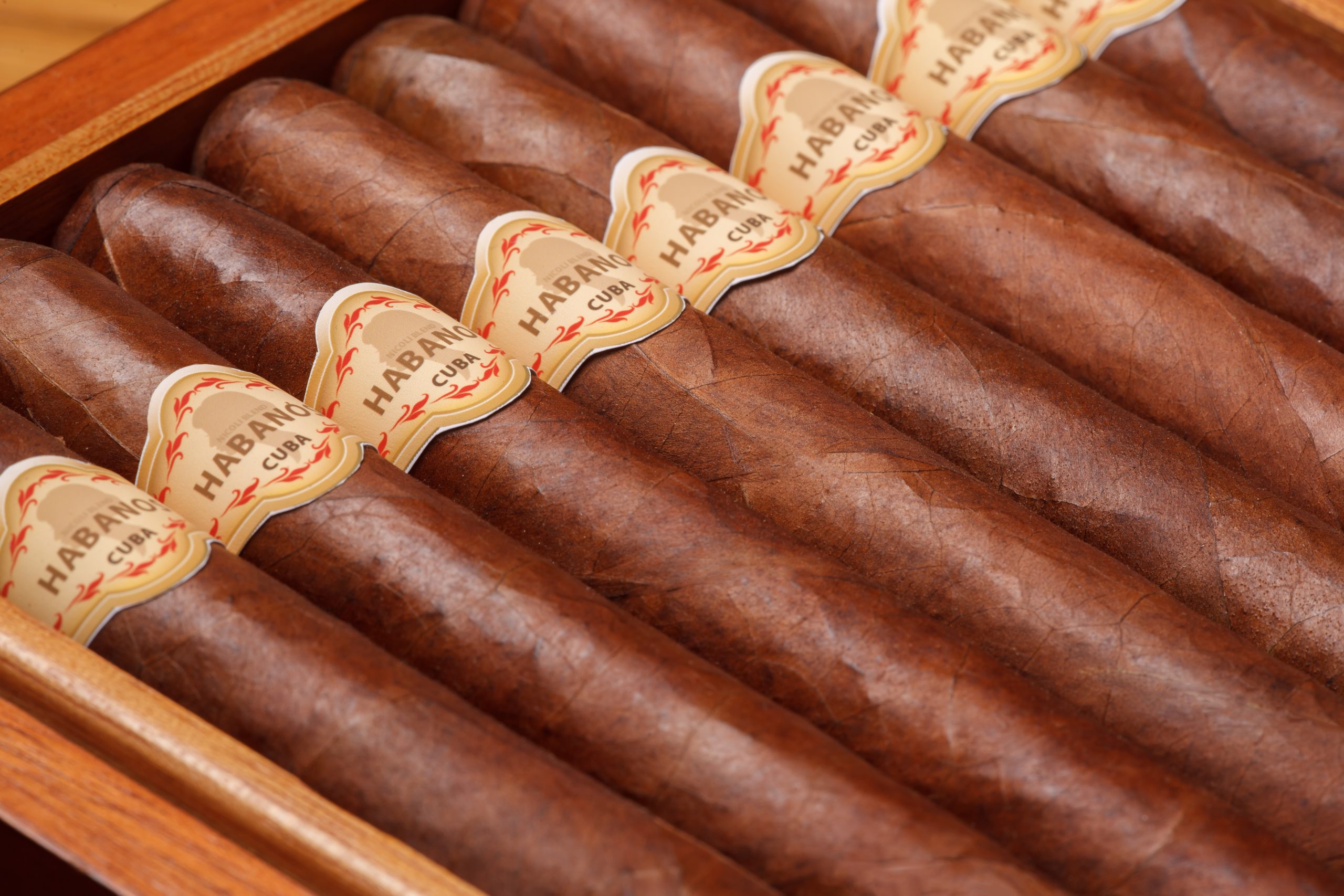
Habanos SA, has said that its revenue from cigar sales in 2022 was US$545mn, an increase of  2% on the previous year.

In a presentation to the media at the start of the recently ended Habanos Festival, the company’s Co-Presidents Luis Sánchez-Harguindey Pardo de Vera and Maritza Carrillo González, told journalists that  the company’s export product was in good health, and it had increased the numbers of its sales outlets globally by 10% last year to 4,769. 

Spain, France, Germany, China, and Switzerland were the main markets  with some 53.7% of sales being in Europe, 19.3% in the Asia Pacific region, 15.3%, in the Americas, and 11.7% in the middle East and Africa. Under US regulations, Cuban cigars cannot be sold legally in the US.

Also speaking to the media, Luis Blanco, the Agricultural Director of the Tabacuba business group, said that under a readjusted plan following the extensive impact of Hurricane Ian on Cuba’s western province of Pinar del Rio last September (Cuba Briefing 3 October 2022), overall planting nationally this year will be around 8,500 hectares of which 5,780 hectares will be in the province.

Although the campaign ended elsewhere in the second part of February, it will continue until the end of March in Pinar del Rio. Speaking about the recovery of the province’s 10,000 casas de cura and other tobacco storage facilities in what is Cuba’s most important high-value leaf producing province, he noted that 2,400 have been repaired while 1,700 are undergoing reconstruction.

Blanco confirmed that despite the damage caused, Cuba did not have a raw material deficit and would be able “to meet the plans established both for exports and for the segments and assortments destined for the population.” In the case of tobacco for export, the impact of the hurricane was minimal, he said. Just “15% was lost and the rest processed and recovered.”

Separately, Cigar Aficionado has reported that the results come at a time of considerably higher prices for Cuban cigars and shortages of many brands, particularly for high-profile lines such as Cohiba. Last year, Habanos said that its global pricing standard worldwide would be set in line with the prices in Hong Kong. The company said that the global pricing standard was similar to how other luxury goods like watches, jewellery or handbags are sold. Tariffs and taxes mean in practice that prices vary from market to market.

The Habanos festival saw the launch of a number on new lines, the Montecristo Open, Bolívar New Gold Medal and the Línea Maestra.

The Caribbean Council is able to provide further detail about all of the stories in Cuba Briefing. If you would like a more detailed insight into any of the content of today’s issue, please get in touch.

27th February 2023

Cuba is struggling to produce the 0.4mn tons of sugar it needs from its 2022-23 campaign needed to deliver the quantities required for domestic consumption and export.

A report in Granma quoted Ángel Ríos, the General Director of Azcuba’s Productive Chain as saying that as of mid-February that there was a deficit of 95,000 tons against what was forecast. No figure was cited as to the overall production level to date.

The shortfall he said was a consequence of manufacturing delays caused in part by power plant breakdowns, a lack of fuel, tires, batteries and spares for transportation and cane cutting, an inability to prepare mills to start grinding on time, and financing difficulties arising from US sanctions. Unusually, Granma quoted him as indicating that migration, inflation, poor wages, and criminality were also taking their toll on the sector’s capacity to deliver.

Granma reported that of the just 23 mills involved in this year’s campaign (Background Cuba Briefing 7 November 2022) seven were experiencing problems. Two of the largest and most significant in terms of overall production, Urbano Noris in Holguin and the Antonio Guiteras plant in Las Tunas, were specifically reported to be facing labour shortages because of migration and an aging labour force.

The official publication quoted Ríos as saying that Cuba’s overall economic situation “marked by inflation” was also having an influence and that “production problems …. prevented workers from receiving decent wages and many leave.”  In addition, he said “the lack of a qualified workforce, especially intermediate managers, has had a negative impact, which had caused a lack of discipline and rigor. A group of important breakdowns, he noted, were associated with bad operating practices, while production “had been affected by fires in cane fields and sugar thefts committed by criminals.”

Asked about the problem of theft, he said that such incidents had “forced the directors of the centrals (mills) to concentrate on confronting criminal acts” in collaboration with law enforcement and local communist party militants. “The criminals have violated fences and warehouses, they have threatened the custodians and workers of the power plants, as well as the families of those who oppose them”, he told Granma, naming five mills in different provinces to have suffered in this way.

More positively, Ríos confirmed that some mills as planned will operate all year to make molasses to produce alcohol and spirits, offering workers “considerable income” benefitting the economy through tax contributions. This he said was enabling the mills to use the  income obtained from alcohol production to pay off debts contracted with cane producers, in order to encourage an increase in acreages. He also confirmed that some mills had associated plant producing animal feed from the residues of alcohol production.

Although the report provided few figures as to likely outcomes, Granma quoted the Azcuba Director as saying; “as the harvest is still young, we believe that we will be able to guarantee what is scheduled” although this may mean, he added, that the present harvest is extended to April or into May depending on weather conditions.

Last year Government took the decision to utilise fewer mills to grind cane, reducing the number from 36 and concentrating resources in fewer plants with the objective of obtaining greater efficiency. In 2022 just 0.47mn tons of sugar were produced. The 0.45mn tons planned for this year is divided between  the family food basket, tourism, manufacturing, and export.

The Caribbean Council is able to provide further detail about all of the stories in Cuba Briefing. If you would like a more detailed insight into any of the content of today’s issue, please get in touch.

20th February 2023

A new law applicable to Cuban state enterprise is in preparation.  The document which is expected to be far-reaching is likely to be approved when the country’s National Assembly meets in December.

Reporting that discussions on a new business law are underway, the Cuban News Agency ACN quoted Deputy Prime Minister, Alejandro Gil, the Minister of Economy, and Planning (MEP), as referencing a call by former President Raúl Castro “to shake [up] socialist state enterprise”.

Speaking at a meeting of the Cuban Government’s Inter-Institutional Council, Gil said that the principles of future legislation relating to state enterprise will be guided by language in the country’s 2019 Constitution, and the economic and social guidelines agreed during the seventh Communist Party Congress.

ACN quoted Gil and Johana Odriozola, Vice Minister of the MEP, as saying that because of the “weight of the state company in the Cuban economy, as the main provider of goods and services, it must be distinguished by its efficiency and effectiveness.”

The legislation is expected to create a new approach to the organisation, motivation, responsibility, and future direction of state entities. Gil highlighted the importance of the debate and consultations that will soon take place across Cuba to inform thinking about the initial draft.

ACN reported that work has been underway since last year and has involved a survey of 646 business leaders of state enterprises “in search of a first consensus.” It also indicated that the date of presentation of the draft law to the National Assembly has been brought forward from what was originally planned.

Among the areas the new law is expected to address is the state business model that Cuba will need in future. ACN noted that it will define “the economic regime, autonomy, financial relations with the State, the participation of workers, their governing bodies …. management, social responsibility and control, and internal audit”. It will also establish the mission of state enterprises, their “governance, governing boards, OSDE (superior business management organisation), resource allocation, [and] powers to promote insertion international and business creation with foreign investment.”

In recent months, senior political figures from Cuba’s President downwards have stressed the need for Cuba’s inefficient, poorly managed, bureaucratic, and loss-making state enterprises, to operate on a decentralised, professionally-managed basis, making profits, taking independent decisions, and when relevant working with the non-state sector and foreign investors. At the same time, Cuba’s official media has been highlighting the experience of those enterprises that are well managed, responding to demand in the internal market, making surpluses, and in some cases developing their potential for export. 

The Caribbean Council is able to provide further detail about all of the stories in Cuba Briefing. If you would like a more detailed insight into any of the content of today’s issue, please get in touch.