Cuba Briefing
The Caribbean Council's Exclusive Publication on Cuba

The Cuba Briefing is your news and insight resource for the latest developments in Cuba.

Published since the mid-1990s, Cuba Briefing is an unparalleled resource of detailed analysis on economic, social and political developments going on inside Cuba including analysis on the Cuban government’s priorities and policy developments towards foreign investors, economic reform, and the growth of the private sector.

Cuba Briefing is produced on a weekly basis by David Jessop, the director and founder of the Cuba Initiative and Non-Executive Director of the Caribbean Council, providing expert insight and a longer term lens on week-to-week developments in the country.

Don’t miss out on the latest news business and opportunities from the region. Subscribe to receive the Cuba Briefing Publication directly to your inbox. Subscribers receive 23 editions over 12 months. Click to Subscribe.

Leading Articles Featured in Cuba Briefing

02 December 2024

Officials appearing on Cuban state television have made clear that the recently established National Institute of Non-State Economic Actors (INAEE) is intended to control and direct Cuba’s embryonic private sector.

Aizel Llanes Fernández, the Director of the National Institute of Economic Research, speaking on the television programme Mesa Redonda, said that the creation of the INAEE is “based on research into the need for its existence” and came “at the request of non-state actors, who required an entity to represent them.” 

Describing it as a “common entity” seen in many countries in the region, Europe, and Asia, she told viewers that “It is an institution that is not only focused on control, but also has a job to promote and strengthen capacities.”

Speaking on the same programme, Mercedes López, the President of the INAEE told viewers that the entity is in charge of directing and controlling state policy in relation to  the development and operation of non-state MSMES, self-employed workers (CNA), and non-agricultural cooperatives (TCP). It has, she said, a President and Vice President, and five fundamental directorates: the first three to oversee MSMES, CNA and TCP, one for inspection, and another for development, science, and innovation.

“The fundamental objective,” she said, “is to continue promoting these non-state economic actors, complying with regulations, promoting relations with the rest of the actors, and their inclusion in territorial development strategies.”

Denying this constituted a step backwards, she told listeners that it is quite the opposite. “The regulation we are proposing is accompanied by the interest in improving and increasing contractual relations between all economic actors,” she said.

Highlights in this issue: 

  • Cuba’s President makes first public comments on outcome of US elections
  • All private and foreign companies must provide 50% of own power by 2028
  • Deputy Prime Minister discusses small modular reactors for power generation with IAEA
  • Russia publishes amended details of planned upgrades to Cuban power plants
  • Details of commercial biotech venture in China published

Speaking abouts the INAEE’s functions, López stressed that a central role “is to  coordinate and evaluate, with the agencies of the Central State Administration and national entities, policy proposals related to non-state economic actors” in the areas of its competence.” It will also, she added, control compliance with the regulatory provisions relating to the implementation of state policy and ensure the insertion of non-state actors into Cuba’s decentralised  territorial economic and social development strategy. As such, it will also work closely with the provincial and municipal bodies that now have decentralised responsibility for achieving positive regional economic outcomes by state and non-state companies.

“In this mission”, she said, “we have to observe and ensure that the approval process for non-state economic actors is carried out correctly,” with the priority being given to “the person who applies and their interest in creating an MSME, and, secondly, what these actors mean for the territories, what they can contribute.”

In the short term, the INAEE says, it will develop “a constant exchange programme with economic actors which will begin with MSMES dedicated to marketing (selling goods), and similar activities, then moving on to partners and Presidents of (state) MSMEs in the Ministry of Industries.”

Cuban officials say that  in 2023 there were 4.3mn Cubans in employment of whom 38% worked in the non-state sector. At the end of August this year, there were 0.62mn  self-employed workers and more than 0.14mn linked to MSMES and Non-Agricultural Cooperatives. They also say that of the “more than 135,000 people” who have recently  joined the workforce and who had no other employment option available, more than 40% went directly into the non-state sector, “improving the lives of their families.”

The new entities intended work plan, and government’s stress on the direction and integration of state-with non state economic enterprise, make clear that rather than supporting the creation of a market- driven socially-regulated private-public sector, the INAEE is about largely about centralised bureaucratic control and direction. The INAEE (El Instituto Nacional de Actores Económico No Estatales) is subordinate to Cuba’s Council of Ministers. ncy levels. In March this year ONEI reported that in 2023 they stood at just 25%, a very low figure by Caribbean standards, or make any mention of key performance statistics such as revenue per available room, a profitability measure commonly used by the industry internationally. (See Cuba Briefing 11 March 2024)

02 December 2024, Issue 1259

 The Caribbean Council is able to provide further detail about all of the stories in Cuba Briefing. If you would like a more detailed insight into any of the content of today’s issue, please get in touch.
25 November 2024

Cuba’s Tourism Minister, Juan Carlos García, has said that  “it is essential to have a good  high season” as “the country and the Cuban economy need it.”  His comments came as a leading Canadian tour operator announced that it is reducing the number of hotels included in its offering to clients visiting Cuba.

Speaking to Granma, García noted that while the challenges and difficulties facing the sector are high, “tourism must be the driving force of the Cuban economy”.

In published remarks, García went on to say that he hoped that the sector will be in a better position this winter than during the high season last year. His ministry has taken, he said, all possible measures to improve outcomes “while creating wholesale tourism supplier companies, some of which are 100% foreign owned.”

He acknowledged, however, that the island will not meet its original goal of receiving 3mn visitors in 2024 because of “the scenario in which tourism has developed this year,” a reference to recent hurricane damage and continuing nationwide power and food supply problems.

Highlights in this issue: 

  • UK Court of Appeal rules CRF I legitimate creditor in  case against former central bank
  • Council of State provides few details of progress of macroeconomic reforms
  • Finance Ministry reduces import duties to stimulate food supply
  • Vice President criticises decentralised authorities’ failure to deliver change in Holguin
  • St Petersburg’s governor says city’s trade with Cuba increasing rapidly

His remarks, just as the 2024-25 high season begins, reflect government’s hope that the sector will be able to provide much needed economic activity and foreign exchange, despite falling arrivals numbers from almost every significant visitor market including Canada during this year’s summer season.

Cuba’s Office of National Statistics and Information (ONEI) reported in October that overall international stopover and cruise visitor arrivals in August 2024 declined by 18.2% to 144,981, compared to the 177,265 visitors received in August 2023. ONEI also noted that overall international arrivals in the first eight months of 2024, fell from 1,666,592 in 2023 to 1,608,078 over the same period this year, a decrease of 3.5%.

García went on to tell Granma that recovery from the two recent hurricanes and the earthquake that hit the island have been a priority for tourism, with work at several locations including Cayo Largo del Sur being accelerated to ensure that properties are ready before 30 November to receive their first clients.

He stressed the number of hotel rooms that will be available, which he put at 80,000, observing that 75% are rated four- and five-star, with many he said managed and run by the eighteen foreign hotel chains that operate on the island.

García told Granma that Cuba is diversifying its tourism offering to attract more visitors. It is designing, he said, innovative experiences for visitors wanting nature and adventure tourism, cultural and historical-heritage tourism, and seeking to attract those holding  events and incentives, and further developing health tourism, with the objective of showing Cuba has more to offer beyond its beaches.

Subsequently, the publication suggested in an article to mark Cuban Tourism Day that the sector is transforming itself to have a product that will help it remain competitive with other tourism destinations in the Caribbean.

Granma made no mention of occupancy levels. In March this year ONEI reported that in 2023 they stood at just 25%, a very low figure by Caribbean standards, or make any mention of key performance statistics such as revenue per available room, a profitability measure commonly used by the industry internationally. (See Cuba Briefing 11 March 2024)

25 November 2024, Issue 1258

 The Caribbean Council is able to provide further detail about all of the stories in Cuba Briefing. If you would like a more detailed insight into any of the content of today’s issue, please get in touch.
18 November 2024

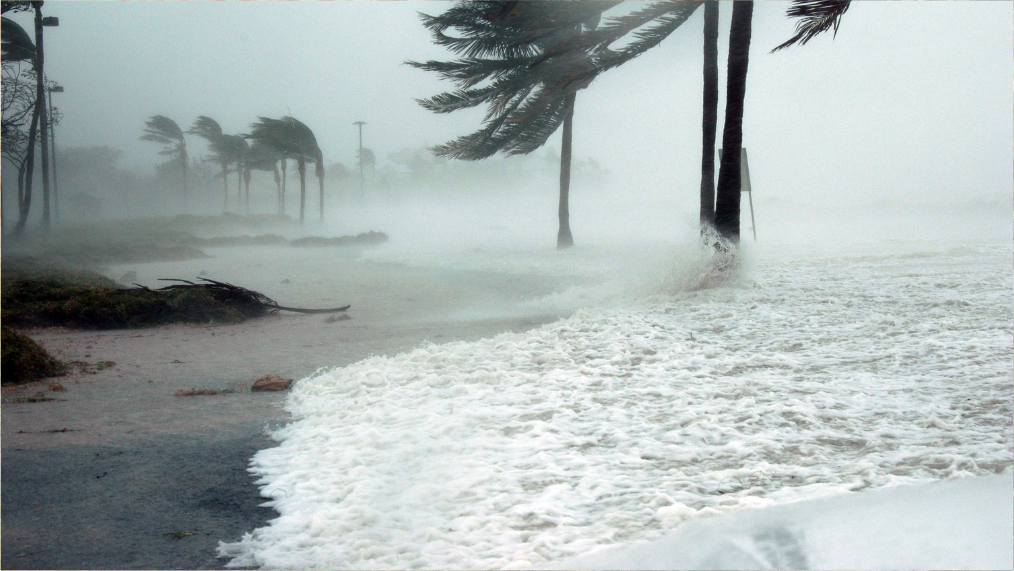
A Cuban minister has said that Cuba will not experience any economic growth this year owing to the impact of hurricanes Oscar and Rafael and recent seismic activity in eastern Cuba.

The three events caused damage over a period of twenty days to housing, electrical distribution, agriculture, water supply, hospitals, schools, and infrastructure in provinces in both Cuba’s east and west.

Speaking to the media about the economic effect, the Minister of Economy and Planning, Joaquín Alonso, said despite not having an exact quantification of the impact, and it not being possible to make an accurate forecast of the impact on planned GDP growth, “it can be intuited from now on, that there will be no growth in the economy during the year.” While recovery work is underway, he said, this will largely depend on available resources.

Alonso was speaking after an earthquake with a preliminary magnitude of 6.8 on the Richter scale shook eastern Cuba on 10 November adding new challenges to the economy and the recovery process still underway from Hurricanes Oscar and Romero, and continuing blackouts which together have left many Cubans apprehensive and uneasy.

Highlights in this issue: 

  • Russia-Cuba Intergovernmental Commission meets in Havana – new agreements outlined
  • China’s President authorises second round of humanitarian support for Cuba
  • Trump nominates Marco Rubio to be US Secretary of State
  • Extensive power outages continue despite gradual restoration of the grid
  • Agriculture Minster stresses importance of recovering agriculture

The epicentre of the earthquake, according to a report by the US Geological Survey, was centred about 40km offshore and south of Bartolomé Masó in Granma province, with the effects felt particularly strongly in the small municipality of Pilon, in the city of Santiago de Cuba, the island’s second-largest, and across Cuba’s eastern region.

Speaking to the media,  Alonso said that a preliminary assessment showed that more than 34,000 homes have been reported damaged by the three events, with the impact varying from total to partial with many roof collapses. In relation to the distribution of electricity, he said that around 2,449 transformers had been affected, along with high voltage towers, 200 km of distribution lines and an undetermined number of fallen cable carrying poles.

The economic damage to agriculture, he told the media, was  considerable with 37,000 ha of land dedicated to agricultural production lost along with 381 agricultural facilities. A preliminary estimate in relation to agriculture, the minister said, put the cost to Cuba at CUP383mn. He also noted that damage has been reported to twenty-two hospitals, 605 communication towers, 276 educational facilities, 189 domestic trade establishments, 25 warehouses, 88 pumping stations for water, and four bridges in different areas.

Separately, a meeting of Cuba’s National Defence Council heard that intense work is being carried out in Granma and Santiago de Cuba provinces in response to the effects of the earthquake.

The First Secretary of the Communist Party in Santiago de Cuba, Beatriz Johnson, said that the National Centre for Seismological Research (CENAIS) had recorded more than 1,130 aftershocks, more than fifty of which were perceptible. Preliminary data in the province of Santiago de Cuba indicated that at least 230 homes were affected by the earthquake in the municipalities closest to the epicentre. Damage was also reported to some state, educational and health facilities.

Other speakers at the meeting reportedly stressed the need to respond to the sudden and large-scale event by visiting families even if they had not suffered physical or material damage, “to transmit trust and security, as well as to maintain information and social communication through all channels

Leading members of government, the military, and Communist Party who were participating also discussed work underway in the provinces of Artemisa, Havana and Mayabeque to recover from Hurricane Rafael, and in Guantanamo province in relation to the earlier damage caused by Hurricane Oscar.

18 November 2024, Issue 1257 

 The Caribbean Council is able to provide further detail about all of the stories in Cuba Briefing. If you would like a more detailed insight into any of the content of today’s issue, please get in touch.

11 November 2024

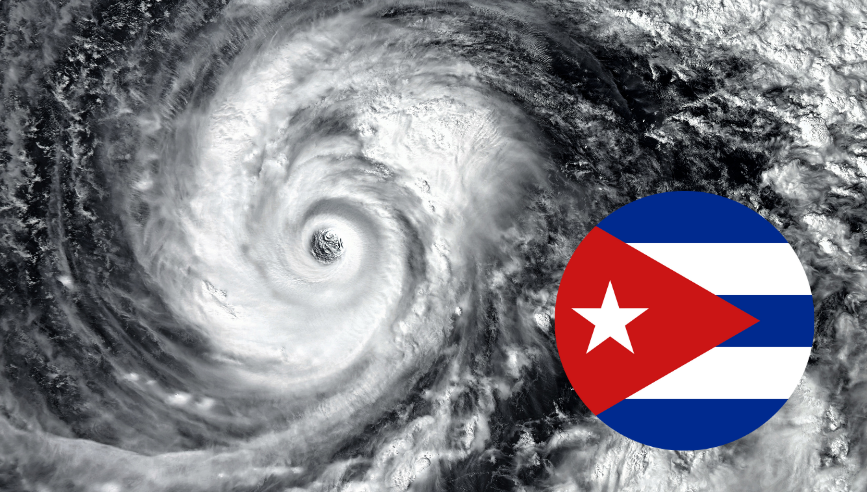
A second hurricane in three weeks to hit Cuba has caused what government described as “major damage” to the three western provinces of Artemisa, Mayabeque and Havana. Tens of thousands of Cubans had earlier been evacuated along with visitors from the most at-risk areas, and education and transport was suspended.

Hurricane Rafael came ashore on Wednesday 6 November on the southern coast of Artemisa bringing storm force winds of 185 kmph (115mph) and rainfall of up to 200 mm (8 inches), crossing the island from south to north in less than two hours. In the days following, strong sea surges affected Cuba’s coasts causing moderate to severe coastal flooding.

Just seventeen days earlier, on 20 October Hurricane Oscar, had crossed Cuba’s northeastern end causing severe damage to the province of Guantanamo and to parts of Holguin, leaving eight dead, 12,000 homes damaged and 13,000 hectares of crops damaged. (See Cuba Briefing 21 and 28 October 2024)

The arrival of Hurricane Rafael, a category three storm caused a nationwide shutdown of Cuba’s just recovering ailing power generation and distribution system, resulting in the second such blackout in a matter of weeks.

Highlights in this issue: 

  • Hurricane prematurely ends FIHAV 2024
  • Re-election of former President Trump yet to be commented on
  • Russia’s Deputy Prime Minister arrives in Havana to discuss closer economic relationship
  • Panasonic reported to have halted ties with its supplier of Cuban cobalt
  • Vietnamese company Thai Binh to increase solar power involvement in Cuba

In the days following Rafael, President Díaz-Canel  accompanied by the Secretary of Organisation of the Cuban  Communist Party, Roberto Morales, visited sites in Havana, Artemis and Mayabeque to assess and emphasise the importance of making rapid progress on restoring water distribution, the clearing of roads, and the inspection of electrical transmission lines in preparation for resynchronisation of the grid.

Addressing a meeting of the National Defense Council shortly after the hurricane had left Cuba’s shores, Cuba’s President stressed the need to evaluate the damage to enable proper management of the recovery and resources with priority given to recovery measures in the three provinces most affected. “A new recovery process is already beginning,” he said, referring to Hurricane Oscar.

11 November 2024, Issue 1256 

 The Caribbean Council is able to provide further detail about all of the stories in Cuba Briefing. If you would like a more detailed insight into any of the content of today’s issue, please get in touch.
04 November 2024

Cuba’s first Vice President, Salvador Valdés Mesa, has said that it is essential that all those involved in the sugar sector do everything possible to “move forward the preparations for the next harvest, with responsibility and rationality.”

Addressing the closing session of the Third Conference of the National Union of Sugar Workers, he also stressed the need for workers in the sector to produce food to feed themselves and their families.

Valdés, a former trades unionist, said that the 2024-25 campaign needed to improve outcomes irrespective of whether there was more or less fuel, “so that there are a greatest number of mills in full grinding mode.”  According to previous Cuban reporting, the 2023-2024 campaign was severely set back by shortages of fuel, spare parts, and the migration of labour.

Sugar, he told unionists, remained a “strategic sector due to its contributions in products and services to national consumption and to exports,” and that it was essential that  sugarcane plantations were recovered.

Highlights in this issue: 

  • Tourist arrivals numbers continue to decline
  • Power situation worsens as fuel shortages, maintenance, and breakdowns return
  • Power situation worsens as fuel shortages, maintenance, and breakdowns return
  • Sherritt says its Moa nickel mine and Energas power plant fully operational
  • Overwhelming support for 2024 UN  resolution calling for an end to US embargo

Acknowledging that in due course “expensive investments” would be necessary to improve agricultural yields, Valdés stressed that during the idle months between planting and cutting  and milling, sugar workers must now plant and grow food.

To this end, he said, it would  be necessary to generalise the work of those cooperatives with positive management and trade union sections with proven leadership that have been able to guarantee food to their workers and families.

“We, the cadres, have to transform this matter and save the sugar industry” to protect its workers, he said. Describing the sector as a part of Cuba’s “history, identity and tradition,” Valdés told the meeting. “The working class will not let down the Revolution, and this sector even less so. We trust in you,” the trades union publication Trabajadores reported him as having said.

Also speaking, Vice President, Jorge Luis Tapia, questioned why “almost 50% of the productive bases do not have good yields and production diversification.”

“We need to do a deep analysis to save the sugar industry. We have approved measures for the sector; the debt of many UBPCs (Basic Unit of Cooperative Production, a form of agricultural cooperative) has been renegotiated up to three times; the price of sugar cane has been raised; and differentiated attention has been promoted for retirees,” Granma quoted him as saying.

Tapia said that there would be a thorough evaluation with cooperatives whose boards of directors have not achieved what others have, despite the same fuel limitations. He also noted that it would be necessary to “transform the work of municipal and provincial governments to better serve sugar cooperatives. There are many tasks, but we must move from discourse to concrete actions and measure more closely what we do,” he told the meeting.

The  conference heard that just fifteen mills will grind cane in the coming campaign compared to 25 in 2023-24. No indication has yet been provided as to the hoped for size of the harvest.

As reported in Cuba Briefing 26 July 2024  there has been no official indication of the size of the final 2023-2024 sugar harvest despite Julio García, the Director of AZCUBA forecasting in December 2023 that production in the 2023-24 national campaign would be better than in 2022-23 when the outcome of 350,000 tons of sugar was at an all-time low.

A commentary published in September in Trabajadores warned that there are now “threats hanging like the sword of Damocles over the sustainability of sugar production.”

Citing the situation in the province of Las Tunas,  the publication wrote that the province’s sugarcane plantations “are declining at an accelerated rate as a result of repeated failures to comply with planting plans and cultural care,”  at a time of known limitations of resources and inputs.

Despite this, it observed, “the majority of workers are unaware of the 93 measures approved to save the sugar industry and there is resistance to the creation of labour collectives, whose objectives are aimed at efficiency and the improvement of wages in line with results.”

It noted also that this together with damage caused by persistent rains “jeopardises the future of this activity in a province that still has four sugar mills with the potential to produce sugar and ensure the production of derivatives.” 

Noting that the recent and current sowing campaign is far from meeting its goals,  it reported that in Las Tunas between December 2020 and June 2024, there had been a decline of 48% in the land allocated to sugarcane. It noted also that the sector lacked needed inputs, and all local sugar agro-industrial companies were in an “unfavourable situation.”

04 November 2024, Issue 1255 

 The Caribbean Council is able to provide further detail about all of the stories in Cuba Briefing. If you would like a more detailed insight into any of the content of today’s issue, please get in touch.
28 October 2024

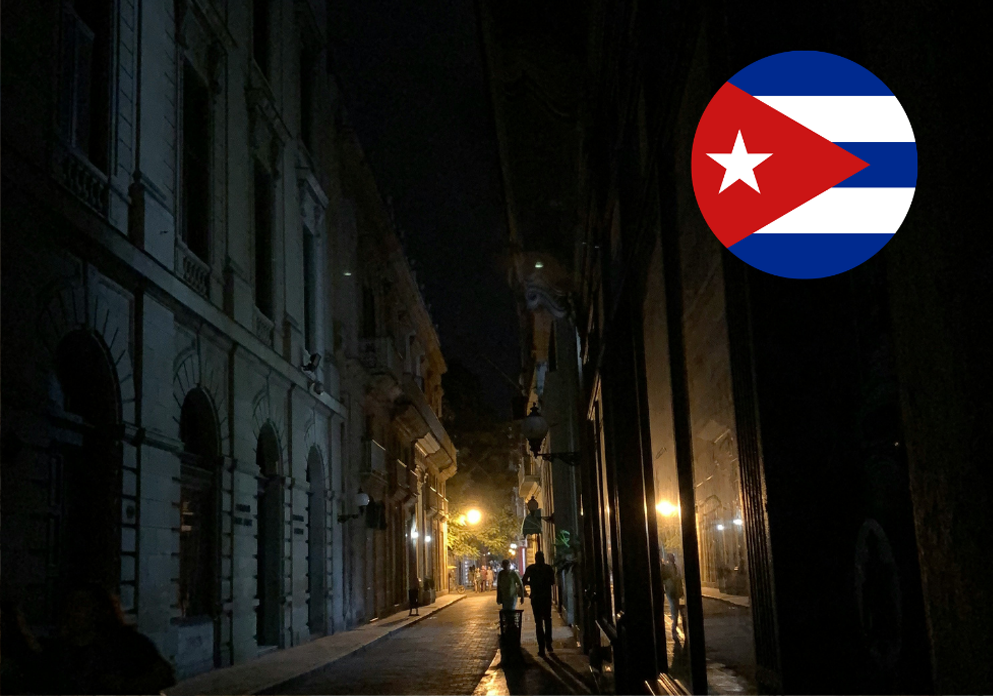
Power has returned to most of Cuba following four days during which attempts to restart the island’s national electrical system failed. The nationwide collapse of the grid coincided with Hurricane Oscar hitting the eastern Province of Guantanamo late on Sunday 20 October causing extensive destruction.

Addressing Cuba’s National Defence Council on 22 October about the power outage which began on Friday 18 October and the hurricane’s impact, President Díaz-Canel said: “We are still in the fight, we are still working to address these two important situations that create an exceptional condition in the lives of Cubans, and we will be in permanent contact with our people as we move forward in addressing these problems.”

Highlights in this issue: 

  • Hurricane Oscar causes extensive destruction in east of island
  • BRICS to invite Cuba to become a partner state
  • US Appeals court dismisses Helms Burton case against four cruise lines
  • Planting for next tobacco crop underway
  • Mexico evaluating sending humanitarian fuel aid to Cuba 

During the outages, small, sporadic, peaceful protests took place in some cities, principally in the form of Cubans banging pots in frustration at the absence of power and water, according to  international news agency reports. The external internet monitoring group NetBlocks noted a rapid decline in internet traffic during the nationwide blackout as most Cubans were unable to recharge their phones to go online.

Government extended until Sunday 27 October the suspension of work and education to enable power to be restored and for rescue efforts to be undertaken in parts of Guantanamo and for the damage caused  to be assessed.  An official note indicated that arrangements were in place to provide salaries to those working on recovery and those who have had their work suspended.

28 October 2024, Issue 1254 

 The Caribbean Council is able to provide further detail about all of the stories in Cuba Briefing. If you would like a more detailed insight into any of the content of today’s issue, please get in touch.

21 October 2024

Cuba is still struggling to restore power across the island following a two-day nationwide collapse in the electricity supply to the national grid.

On 18 October, and then again on 19 October, the whole island was plunged into darkness with technicians trying but failing to gradually start up and link the country’s aging power plants to the grid.

As Cuba Briefing went to press on Monday morning, power had only begun to come back slowly in a very limited way in some parts of the country including Havana. On Sunday 20 October Cuban reporting made clear the process of recovery will be slow, and hugely complex and difficult, creating challenging logistical issues as well as social and political pressure on government.

To make matters worse, as new problems associated with restoring the power supply emerged, civil defence preparations had to be activated across the country as Hurricane Oscar, a category one storm, began to make landfall near Baracoa, Guantanamo, potentially affecting the eastern provinces of the country.

Following a meeting of Cuba’s National Defence Council on Sunday, President Díaz-Canel said that work continues to ensure greater energy stability but stressed that the island cannot operate its power plant at its full capacity without  stable fuel supplies. Cuba, he said, is experiencing an exceptional situation, marked by two fundamental and complex events, “an energy emergency and a cyclonic alarm related to the country’s eastern provinces.”

Cubadebate quoted him as saying after the meeting that work continues on “stabilising the system and managing to obtain fuel supplies that will allow us to work in a better situation during the next few weeks.” He also noted that efforts are being made to obtain spare parts to gradually recover distributed generation.

Highlights in this issue: 

  • Unión Eléctrica technicians trying to restore supply
  • Overall short to medium term power outlook remains challenging
  • FIHAV 2024 to be “austere, decent and dignified”
  • Agriculture minister says 40% of land granted for crops is being used for housing
  • Russian Bailiff Service helping Cuba improve compliance with law

Speaking about Hurricane Oscar, Díaz-Canel stressed: “Due to the complexity of the situation, it has been decided to activate the entire structure of the defence councils in all provinces, because although there are five or six that could be affected by the cyclone, the rest are also affected by the energy emergency.”

Referring to social stability, he said that  “the only thing that contradicts this determination of unity of our people is that on occasions, particularly last night (Saturday), a small number of people, most of them in a state of intoxication …. [had] …. tried to provoke disturbances of public order, they have tried to commit vandalism and disturb the peace of our people.” He also warned about what he described as “the opportunity” being taken by those “who are working under the guidance given to them by the operators of the Cuban counterrevolution from abroad.”

 “The revolution will never tolerate this type of conduct and that any such behaviour will be addressed with the corresponding rigor. There is a great capacity from the Party and other organisations to respond to the concerns of the population, as long as it is done in a decent, organised, civilised and disciplined manner,” he said. “We will not allow anyone to act in such a way as to provoke acts of vandalism, much less disturb the peace of our people,” Cuba’s official media quoted him as saying.

21 October 2024, Issue 1253 

 The Caribbean Council is able to provide further detail about all of the stories in Cuba Briefing. If you would like a more detailed insight into any of the content of today’s issue, please get in touch.
14 October 2024

Cuba has written formally requesting partner status in the BRICS group of nations. The letter was sent to the Russian President, Vladimir Putin, as the bloc’s present pro-tempore Chair of the group.

In a message published on X, Carlos Pereira, the Director General of Bilateral Affairs of the Cuban Foreign Ministry (MINREX), wrote: “Cuba has officially requested to join the BRICS as a “Partner Country.” In doing so he noted that the Group “is consolidating itself as a key player in global geopolitics and a source of hope for the countries of the South.”

In June, Cuba’s Foreign Minister, Bruno Rodriguez, spelt out Cuba’s thinking when he addressed a meeting of BRICS Foreign Ministers held in Nizhny Novgorod in western Russia.  The Group’s strategic expansion, he said, meant that it now represents more than 45% of the world’s population and a third of the planet’s GDP, and was “a hope for the countries of the South in building a more just, equitable and sustainable multilateral international order.”

In doing so he referenced Cuba’s interest in the BRICS contribution to agricultural development and food security, the role of its New Development Bank, its broad-based foreign currency reserve mechanism, and the access it provided to financial resources on favourable terms. At the time he made clear “Cuba’s determination to evaluate all possible avenues for closer relations with the BRICS, in search of mutual benefits, including the possibility of becoming an Associate State of the group.”

In his remarks at the time, Rodriguez, emphasised Cuba’s existing involvement in what he described as “the far-reaching initiatives promoted by member countries of the Group,” including China’s Belt and Road Initiative, other global Chinese initiatives on security and development, and its interest as an observer member in seeking closer engagement in the projects of the Eurasian Economic Union.

Highlights in this issue: 

  • Cubans overseas encouraged to invest, participate in Cuban ICT development
  • Issues being addressed by state audit of tourism published
  • Rodriguez says Cuba ready for the outcome of the US election
  • Russia-Cuba Joint Intergovernmental Commission to meet at time of FIHAV 2024
  • Vietnam and Cuba’s military agree to deepen political co-operation  

Cuba has not yet formally confirmed whether President Díaz-Canel will participate in the expanded “Outreach” BRICS plus summit of the group that will be held from  22-24 October in Kazan in southwest Russia. However, Viktor Koronelli, Russia’s Ambassador to Cuba, was quoted by TASS  on 7 October as saying Havana had submitted “an official application to the Russian side to receive partner status, since Russia is chairing BRICS this year.” 

“In our opinion, they are interested in almost all areas of BRICS activity,” Koronelli told the official news agency. “Where they will participate more or less actively, we must wait for the decision on granting partner status, then we will see,” he said noting also that Cuba’s President, “has an invitation to take part in the extended meeting ….”

The BRICS  grouping initially involved Brazil, Russia, India, China, and South Africa but has recently expanded to include, Iran, Egypt, Ethiopia, and the United Arab Emirates. Initially conceived as a body to promote investment opportunities, it has since become an effective geopolitical grouping holding both core group meetings and BRICS plus discussions on issues ranging from de-dollarisation to security.

Partner country status in the BRICS group is an alternative to full membership, enabling  countries to engage with the organisation without being full members. BRICS diplomats have promoted this status as a way to more closely engage with countries in the Global South

Cuba’s President last visited Moscow in early May. Other senior ministers and military figures continue to visit frequently.

In September Cuba’s Interior Minister was in  Russia to attend high-level meetings in  St Petersburg on security issues involving BRICS plus countries and full members of the BRICS grouping. In addition to a core group meeting that discussed “combatting the terrorist threat, and security in the information and communication space” nineteen BRICS plus nations including Cuba joined the full members to discuss international security cooperation. The expanded BRICS plus group present included Cuba, Serbia, Belarus, Turkey, Mauritania, Laos, Vietnam, Venezuela, Bahrain, Nicaragua, Uzbekistan, Kazakhstan, and Azerbaijan.

14 October 2024, Issue 1252 

 The Caribbean Council is able to provide further detail about all of the stories in Cuba Briefing. If you would like a more detailed insight into any of the content of today’s issue, please get in touch.

07 October 2024

Cuba’s macro-economic reform programme is not moving forward at the speed government requires and a “decisive moment” has been reached, according to a subdued official report of a 30 September meeting of Cuba’s Council of Ministers.

According to summaries appearing on the Presidency website and in Cuba’s  official media, Joaquín Alonso, the Minister of Economy and Planning, told colleagues that “the Government’s plan to correct distortions and boost the economy is a process that is moving forward, but not at the speed we want.”  

He described in some areas progress as only being “discrete,” and outcomes as “emerging.  The reform programme was agreed in December 2023 and is intended to restore economic growth this year (See Cuba Briefing 2 January 2024).

In a subsequent intervention, Cuba’s Prime Minister, Manuel Marrero,  told ministers:  “Today, the most convincing result we have is the reduction of the budget deficit.” Although “a number of very important actions have been implemented, the population still does not perceive it, because it has not yet had a direct impact on it,” he was quoted as saying.

Highlights in this issue: 

  • Official Workers Union establishes section for non-state MSMES
  • CDR’s take on wider neighbourhood social and security role
  • US ‘humanitarian parole’ migrants must regularise status at end of two years
  • China and Cuba agree to expand their advanced scientific cooperation
  • Facilitation of business-to-business links with Eurasian Union companies discussed

Marrero went on to stress the need to “prioritise those issues that have a greater impact on the population,” and in particular the importance of combatting high prices and increasing production to improve the  quality of life for Cubans.

In the debate that followed, the First Deputy Minister of Economy and Planning, Mildrey Granadillo de la Torre, told the executive body that the country had arrived at a point in the process of correcting distortions and the planned relaunching of the economy that “is decisive.” 

Speaking about some of the measures introduced to exert greater government control over the economy and non-state enterprise, Granadillo de la Torre said that regulations requiring transactions to move online had seen electronic payments increase by 4% from mid-July to September. Despite this, she said, some 152,000 non-state entities do not have bank accounts open for the operation of their business and more than 300,000 fiscal bank accounts that have been opened have a zero balance.

Her comments appear to suggest a high rate of non-compliance with reform measures aimed at  capturing for tax and other purposes all non-state MSMEs and self-employed commercial transactions. 

Addressing the issue of price controls, she said that the process of continuing to monitor the maximum prices charged for six reference products (cut chicken, vegetable oil, sausage, powdered milk, pasta and powdered detergent) was continuing in relation to non-state outlets, as were efforts to address the violation of price controls through fines, so far she said, amounting to CUP348mn.

At another point in the meeting, according to Cuban official reporting, Alonso, the Minister of Economy and Planning, made clear that relations between state and non-state actors remains “a pending issue, since an adequate productive link between the different forms of state and non-state management has not been achieved.”

Describing efforts to integrate state and non-state business activities to create domestic supply chains,   he noted that progress so far has been slow. There were not, he said, effective complementary linkages between different entities or sectors adding value in each link of the chain. He observed that this also applied to the Mariel Special Development Zone (ZEDM) where he said weak linkages between its business entities and the national economy were affecting expected results.

Despite this, Ministers heard from the Minister of Finance and Prices, Vladimir Regueiro Ale, some positive news. The budget deficit, he told colleagues, is reducing because of cuts in expenditure and “the over-fulfilment of income.”

The budget, he said, showed a deficit of CUP32.1 bn, a figure lower than planned by CUP23.2 bn. Regarding falling expenditure, he said that the process of adjusting the budgets of the Central State Administrative bodies in the provinces was continuing “so that they correspond to the economic reality of the different territories.” He also noted that programmes for controlling expenses and boosting revenues were underway with some municipalities including Havana and Matanzas, and 54 municipalities now in surplus.

The reports quoted the Minister of Economy and Planning, Joaquín Alonso, as commenting that despite the “generally positive result” and the fact that “the adjustment to the current year’s Budget and Investment Plan has already been made substantially,” there remained a need to “maintain the work of control, evaluation and adjustment in the remaining months of 2024, as there are still reserves to be mobilised.”

Reflecting on the complex situation facing the economy, the official report of the meeting noted that “Prime Minister Marrero  emphasised that, in the midst of the lack of fuel, of foreign currency, of electric power, in the midst of all this, there are countless subjective issues that we have not yet resolved.”

“The first thing we have to do” he was reported to have insisted, “is to concentrate on resolving everything within our reach, because there is a lot of botching and there are many issues that do depend on us, and which we are not addressing ….”

In the face of so many difficulties, he stressed to ministers, we must “take on the subjective problems and each one in his own field, in the tasks that correspond to him and direct him, but also at the community level, which is where problems are first resolved.”

Addressing the meeting, President Díaz-Canel told ministers that the “distortions” identified between July and August meant that it would be necessary “to increase the pace of work” to contribute to “ordering the budget deficit” and to address relations between the state and non-state sectors.

He was quoted as saying that the progress so far made “gives us discreet solutions to begin to better control inflation and also the exchange rate of the Cuban peso.” “These discreet advances in macroeconomic indicators, he said, “have not yet reached the family economy, but they are beginning to put some elements in order.” Now we must work more decisively, he said, “it is a problem of organisation and control.”

No details were published on Ministers’ reported discussions on exports and imports, agricultural production, the preparation of the sugar harvest, and tourism activity.

The overall tone of the reporting was notable for its focus on the slow pace at which the hoped for macro-economic reforms intended  to deliver a return to economic growth this year are taking place; failures in delivery; the absence of any significant hoped for positive response by uncommitted Cubans; and the stress on the need for ministers and officials to do more to deliver better outcomes.

07 October 2024, Issue 1251 

 The Caribbean Council is able to provide further detail about all of the stories in Cuba Briefing. If you would like a more detailed insight into any of the content of today’s issue, please get in touch.