Cuba Briefing
The Caribbean Council's Exclusive Publication on Cuba

The Cuba Briefing is your news and insight resource for the latest developments in Cuba.

Published since the mid-1990s, Cuba Briefing is an unparalleled resource of detailed analysis on economic, social and political developments going on inside Cuba including analysis on the Cuban government’s priorities and policy developments towards foreign investors, economic reform, and the growth of the private sector.

Cuba Briefing is produced on a weekly basis by David Jessop, the director and founder of the Cuba Initiative and Non-Executive Director of the Caribbean Council, providing expert insight and a longer term lens on week-to-week developments in the country.

Don’t miss out on the latest news business and opportunities from the region. Subscribe to receive the Cuba Briefing Publication directly to your inbox. Subscribers receive 23 editions over 12 months. Click to Subscribe.

Leading Articles Featured in Cuba Briefing

30 September 2024

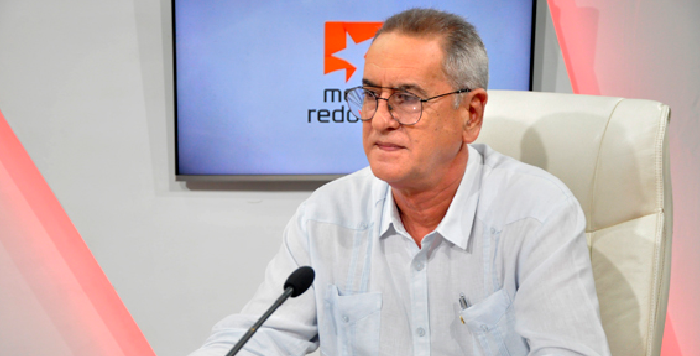
The Minister President of the Central Bank of Cuba (BCC), Juana Delgado, has identified the principal challenges facing the Cuban banking system.

Speaking on the television programme Mesa Redonda she said the most significant were the departure of trained personnel, technical obsolescence, the continuing impact of the US embargo, Washington’s designation of Cuba as a state sponsor of terrorism, and the Bank’s ongoing work on the restructuring of Cuba’s foreign exchange market.

Briefly addressing the yet to be resolved issue of the planned reform of the foreign exchange market announced by government last December, (See Cuba Briefing 2 January 2024), the Minister President said that the BCC continued to work with Government in helping develop its projections. “At this moment we are working hard on the implementation of a mechanism for the allocation and management of foreign currency and the implementation of a foreign exchange market in the country,”  she told viewers.

On the impact of the US embargo, she said that it remains the main challenge confronting Cuba, placing daily pressure on the banking and financial system in relation to its ability to obtain payment. Other challenges she identified as being the need to be more active in preventing the Cuban banking system being used in illegal financial operations, addressing technological obsolescence, and the importance of strengthening the overall infrastructure of the banking system. Regarding the exodus of personnel through migration, Delgado said that the BCC was now engaged in training the human resources required to meet present and the future needs. No further detail was provided. Looking ahead, the Minister President said that the Central Bank is developing a financial stability strategy which is designed and approved to encourage the banking system to adapt to the new conditions of the country. It “will entail a review of the structure of the system and the activities it carries out, in order to promote a more efficient use of monetary and financial resources,” she told viewers

Highlights in this issue: 

  • Cuba and Vietnam agree to deepen economic relations
  • National audit of the management of the tourism sector to begin
  • Minister says food industry must capture foreign currency to fund production
  • President calls for test to diagnose spreading oropouche virus
  • North Korea responds to fraternal greetings, relations return to normal
  • Legislation decentralising control of MSMEs comes into force

Appearing on the same programme, Ileana Estévez, an Advisor to the Minister President, noted that between 2% and 3% of the financing granted by the BCC is ultimately destined for individuals including self-employed workers and individual farmers, while some 97% of the monetary support granted went to the state productive sector especially in the areas of trade, repairs, food services, manufacturing and agriculture.

In her remarks she described several new and innovative initiatives that the BCC is developing. These included, she said, a project to establish a Development Bank to help promote the main economic activities in the country, and a green banking initiative to mitigate the effects of damage caused to the environment.

“There is a whole movement in the Cuban banking system linked to this activity. We are developing workshops to prepare staff and specialists. Although there are many strict rules for a bank to be certified as a green bank, we are taking important steps in this direction with the support of international entities,” she said.

Estévez also noted that to develop an affordable credit policy, a series of projects  will be introduced once conditions in the county allow. One, she said, will see banks include in their portfolio an offering that will be specifically designed for young people who are starting their working life.

Cuba’s Central Bank acts as the governing body for the island’s banking and financial system. It  currently oversees ten commercial banks, two of which are foreign, as well as fifteen non-banking financial institutions, plus ten representative offices of foreign banks and non-banking financial institutions. Its principal missions include ensuring the stability of the purchasing power of the Cuban Peso (CUP), proposing monetary, exchange rate, and credit policies, and once approved, directing, and executing such policies.

 30 September 2024, Issue 1250 

 The Caribbean Council is able to provide further detail about all of the stories in Cuba Briefing. If you would like a more detailed insight into any of the content of today’s issue, please get in touch.


24 September 2024

On 11th September 2024, history was made with the official launch of BritCham Guyana at the iconic Lord’s Cricket Ground in London. The sold-out event welcomed over 300 attendees, including business leaders, government officials, and prominent figures from the UK and Guyana, all united to strengthen trade ties between our nations.

The evening was not only a celebration of our growing partnership but also a step toward future business growth and development.

The launch of our new app, in collaboration with Guyana-Business.com, further enables connections across borders.

This is just the beginning! Thank you to everyone who contributed to making this event such a remarkable success. Let’s continue building bridges between the UK and Guyana.  The Caribbean Council was pleased to partner with BritCham Guyana and thank you to our members for joining us.

The Caribbean Council is pleased to announce that registration is now open for our latest UK Business Mission to Guyana.  11-14 November 20224 in Georgetown. Join the world’s fastest-growing economy.

In partnership with the Department for Business & Trade and the British High Commission Georgetown. Delegates will have the opportunity to attend organised group meetings with key local players as well as incorporating briefing meetings presented by lead business representatives with in-market experience and attend a networking reception at the UK High Commissioner residence.

The Guyanese Government is inviting investors to consider opportunities across a range of well-established sectors such as agriculture, infrastructure, public works, education, and energy.

Kindly use this form to register your interest.  (highlight this whole sentence and insert the hyperlink:  https://share.hsforms.com/1QAtu-DtwSmeBlRDpGf8Hzwbmjwx

24 September 2024

Between 2019 and the first half of 2024 Cuba suffered a loss of more than US$4bn in external income forcing it to take urgent remedial measures, according to a detailed economic report produced by the respected Cuban economist, a former Minister of Economy and Planning, and Minister of  Finance, José Luis Rodríguez.

His latest four-part analysis of the island’s economic performance up to June this year,  ‘Evaluation of the International Economy and its Impact on Cuba,’ published by El Economista de Cuba and reported on in summary in Cuba’s official media, details the economic challenges facing Cuba’s government.

His principal finding indicates that Cuba’s gross domestic product (GDP) is unlikely to recover this year following its 1.9% decline in 2023  let alone, he suggests, reach the 2% increase that government had hoped for in 2024.

He cites as reasons, few signs that remittances are increasing, low levels of foreign direct investment, continuing problems with debt servicing, failures in domestic economic policy, declining production in key sectors including food and sugar production, having to manage a fiscal deficit of around US$4bn, and continuing problems with the supply of fuel and power generation.

More generally, Rodríguez indicates that Cuba continues to face both domestic and international challenges including the rise in global food prices, what he describes as “international breaches of agreements that were supposed to guarantee oil imports,” the “slow recovery in tourism”, “the consequences of mistakes made in our own management,” and a continuing fall in external income. He also addresses the difficulties government is having in resolving the challenge of stubbornly high inflation and finding resources to address social challenges.

Cuban official coverage of his latest report laid particular stress on his comments about the continuing impact of the US economic embargo, unfavourable global trends including the war in Ukraine, the impact of Middle East instability on global value chains, and the island’s continuing slow recovery from the 2020 COVID-19 pandemic. 

Highlights in this issue: 

  • Electricity crisis worsens as power outages increase
  • Legislation decentralising control of MSMEs comes into force
  • Russian Railways to sign  contract for 1,000 km Cuban railways upgrade
  • European Commissioner defends dialogue with Cuba, criticises political detentions
  • Cuba’s President seeking closer economic, trade ties with Saudi Arabia.

With the first half of the year having elapsed and taking into account that only 58% of the island’s import plan was met and the volume fell by 22%, planned GDP growth does not now seem possible Rodríguez writes.

All of this has caused, according to the former Minister, “the country to suffer a loss of more than US$3bn in external income between 2019 and the end of 2023, leading to a current fiscal deficit of more than US$4bn.

His report, published in four parts, indicates “according to unofficial sources,” that in this a significant element relates to the continuing fall in the receipt of remittances, a source of income second only to medical and other overseas services. 

The remittances figure, Rodríguez writes “does not seem to have increased in 2023” despite Western Union resuming sending remittances to Cuba. Suggesting that this development should have implied a greater increase, he notes that “remittances play an important role as working capital for the non-state sector and support an appreciable level of consumption in the market that operates in MLC.”

In an apparent indication of the absence of available official data, Rodríguez cites a 2021 report seen by CNN indicating that “26% of Cuban households received remittances, accounting for around 2% of GDP” of which 84% came from the US and over 60% arrived informally. Referring to an estimate made by the Inter-American Dialogue, that suggested that such transfers in 2023 stood at US$2.5bn, the former Finance Minister says that “there is no clear evidence that remittances have grown to that level last year.”

On the subject of the island’s official debt, he notes that a new renegotiation with the Paris Club indicates, “a supplementary period was established for the payment of the debt, although no further details of it are known,” that in the case of Russia “payments were postponed until 2040,” and that work is being done on restructuring the debt with China.” Observing that Cuba is willing to repay its external debt when economic conditions improve, Rodríguez emphasises that it remains “essential to return to the alternative of a more flexible renegotiation of the debt,” as at an estimated US$29.4bn at the end of 2023 it is equivalent “to more than 40% of the GDP.”

Referring to Government’s plans announced earlier this year to try to address ‘distortions’ in the economy and return it to growth, Cuba’s former Finance Minister suggests this marks an essential  turning point in a process of transformation requiring bold and rapid decisions. Rodríguez warns this must take account of the risks and the need for balance between the cost and benefits the changes imply.

Highly complex measures require the consensus of the population, in order for them to have the success we need, he concludes. “We are aware of the seriousness of the economic situation and that action is necessary. It would be bad, very bad news to remain paralysed or to insist on following a path that has proven to be impractical because it is unsustainable,” he warns.

The full report including detail on the behaviour and trends relating to the economy,  trade, and the island’s main value chains can be found in its four sections published in Spanish on the website of El Economista de Cuba: https://www.eleconomista.cu/?s=jose+luis+rodriguez

 24 September 2024, Issue 1249 

 The Caribbean Council is able to provide further detail about all of the stories in Cuba Briefing. If you would like a more detailed insight into any of the content of today’s issue, please get in touch.

16 September 2024

The Secretary of Russia’s Security Council, Sergei Shoigu, has said that Moscow will introduce measures that it expects to help Cuba address the economic consequences of the US embargo.

Speaking in St Petersburg following a working meeting with Cuba’s Interior Minister, General Lazaro Alvarez, Shoigu said that Russia will provide additional economic support as well as developing the broadest strategic partnership in multiple areas.

“We are ready to increase cooperation between security councils, special services (intelligence agencies) and law enforcement agencies. We will pay special attention to trade, economic and investment cooperation, including within the framework of the relevant bilateral inter-governmental commission. We expect that Havana, including with our help, will overcome the severe crisis consequences of the American economic blockade. Russia will take additional measures to support Havana, in particular by providing new credit lines,” Shoigu said, according to the Russian official TASS news agency.

Shoigu, who was until recently Russia’s Defence Minister and previously visited Cuba in that capacity, was also quoted as observing during a bilateral working meeting with Alvarez that “Cuba is one of Russia’s closest allies in Latin America. We have long-standing, strong, time-tested relations – dating back to the days of the Soviet Union.”

Cuba’s Interior Minister was in  Russia to attend high-level meetings on security issues with  BRICS plus countries and full members of the BRICS grouping

In his opening remarks to all participants, Shoigu characterised the global system as now being “based on rules that are arbitrarily established and changed in the interests of a narrow group of states.”  He said that the St Petersburg meeting would offer “answers to the challenges we face, based on mutual respect and a healthy balance of interests.”

Observing that the voices of nations in Asia, Africa, Latin America and the Middle East, “are becoming increasingly louder on the world stage,” and that they are pursuing independent foreign policies, and  finding “their rightful place in the system of international relations,” he highlighted the fact that several interstate groupings, including the Community of Latin American and Caribbean States (CELAC), are now “promoting a constructive agenda.”

Highlights in this issue: 

  • Tabacuba says all is ready to begin 2024-25 tobacco campaign
  • Government announces reduction in size of bread in subsidised family basket
  • Sugar factory repair said to be the decisive step to improve next sugar harvest
  • Canadian travel advisory warns about Oropouche virus
  • US Study Group forecasts tightening of regulations on Cuban MSMEs will hinder growth 

The St Petersburg meeting was attended by 21 countries with full BRICS members Russia, China, India, Brazil, Iran, Egypt, the United Arab Emirates, Ethiopia and South Africa meeting first to discuss what was described as combating the terrorist threat, and security in the information and communication space.

The second part saw nineteen BRICS plus nations discuss international security cooperation. The expanded BRICS plus group present consisted of Cuba, Serbia, Belarus, Turkey, Iran, Mauritania, Laos, Vietnam, Venezuela, Bahrain, South Africa, Brazil, Nicaragua, the UAE, Uzbekistan, Kazakhstan, Azerbaijan, Egypt and India.

Prior to both meetings Granma reported that in Russia a Cuban delegation of senior security officials would “analyse relevant issues for national, regional and international security, as well as the most promising guidelines for cooperation in this area.”

In a separate indication of the deepening economic relationship between Russia and Cuba,  Russian Railways (RZD) confirmed during the 3-6 September Eastern Economic Forum held in Vladivostok details of the multi-million Ruble contract that it expects to conclude soon with Cuba. This will see it modernise and upgrade Cuba’s strategically important but aging railway network using Russian government credits. Full details will appear in the next issue of Cuba Briefing. At the same meeting Russia’s Minister of Transport, Roman Starovoit, confirmed to participants reports that Russian airlines are exploring the expansion of commercial flights to the Island.

Background to the long running discussions on upgrading Cuba’s railways network and related but now largely resolved financing issues can be found in Cuba Briefing 2 April 2024. An outline of the project was first detailed in Cuba Briefing 3 March 2017.

 16 September 2024, Issue 1247 

 The Caribbean Council is able to provide further detail about all of the stories in Cuba Briefing. If you would like a more detailed insight into any of the content of today’s issue, please get in touch.
9 September 2024

 International visitor arrivals decreased by 1.8% in the first seven months of 2024 in comparison to the same period in 2023 according to Cuba’s National Office of Statistics and Information (ONEI). 

The continuing downward trend for the fourth consecutive month and a particularly poor July suggest that the tourism ministry’s goal of receiving 3.2m visitors this year may now be hard to achieve. In 2023 Cuba received 2.4mn visitors. The published figures raise questions about Cuba’s plans for economic recovery as to a significant extent it depends on revenues from tourism. 

Analysis by Aruba-based Tourism Analytics of the published stopover numbers, which include visitors arriving by cruise ship, show that these fell to 1.47mn between 1 January and 31 July this year compared to the 1.49mn received in the same period in 2023. 

 The consultancy also notes, citing ONEI’s figures: that in July 2024 Cuba’s total international tourist arrivals decreased by 19.7%, falling from 190,775 in July 2023 to 153,261 in July 2024; that Cuba received 44,579 stopovers from Canada in July 2024, or 29.1% of all stopovers received for the month, a figure down 5.2% compared with July 2023; and the number of visitors from Russia decreased by 46.5% in July, falling from 19,894 in July 2023 to 10,637 in July of this year. 

It said that in the first seven months of 2024 Canada remained Cuba’s number one source market with a 42.5% share, but total stopover tourist arrivals from there fell by 1.3% to 622,128 compared to 630,039 in the same period of 2023. In the case of Russia, the number of visitors increased by 41.0% in the first seven months of 2024, to 123,358 from 87,506 in the comparative period in 2023. Cubans living abroad, a category Cuba counts separately, accounted for 179,746 of all international visitors in the first seven months of 2024 (a 12.3% share), down 14.4% from the 210,026 (a 14.1% share) recorded for the same seven months of 2023. 

 9 September 2024, Issue 1247 

Highlights in this issue: 

  • Gaviota announces the opening of more new hotels 
  • Locations for new, probably smaller wind farms across Cuba identified 
  • Foreign investors put forward proposals to address Havana’s serious garbage problem 
  • Cabañas says US policy unlikely to change dramatically whoever wins Presidency 
  • Russia and Cuba ‘considering closer military co-operation’ 

Over the same seven-month period US visitors, who can only travel to Cuba under licence, marginally increased to 83,136 arrivals from 82,288 in 2023. Other significant sources of arrivals were from 2 

Germany, Mexico, France, the UK, Spain, and Argentina, although arrivals from all European nations remained weak in comparison to previous years. 

James Hepple, the Managing Director of Tourism Analytics, told Cuba Briefing that Cuba has experienced something of a perfect storm, negatively affecting its tourism sector. 

“The restrictions on US travel to Cuba put in place by the Trump administration in June 2019 had a huge impact in eliminating large numbers of visitors, “ he says. Cuba’s problems, he adds, “were compounded by its slow response to the removing of barriers to travel to the island during the pandemic, and while many competing destinations such as Mexico and the Dominican Republic reopened to tourist business by the third quarter of 2020, Cuba did not open its borders to international travel until November 2021 by which time many potential visitors had switched to alternative destinations.” 

He observes too that European and Latin American business has been impacted by the decision by the US Department of State to designate Cuba as a State Sponsor of Terrorism in January 2021 which resulted in travellers who had visited Cuba on or after that date becoming ineligible for travel to the USA under its ESTA Visa Waiver Programme. “This is thought to have deterred a significant number of persons from choosing to visit Cuba,” Hepple says. 

To try to increase arrivals numbers, Cuba is now hoping to encourage a greater number of visitors from Latin America and has been focusing recently on the Mexican market, Bolivia, and Colombia, as well as encouraging increased airlift from multiple potential global source markets. 

Official figures produced in the first part of 2024 suggest that occupancy rates were as low as 35.5% in the first quarter of 2024. Despite this, Cuba’s President and ministers continue to describe tourism as a vital engine for economic growth, and the sector continues to absorb significant levels of official and state related investment. 

In a seeming paradox, given the islands weak visitor arrivals numbers and low occupancy rates, Cuban state entities such as the military controlled enterprise Gaviota continue to build new hotels through wholly owned enterprises incorporated outside of Cuba to offer management and operating contracts to international hotel groups (see below).

In 2023 Cuba received 2.4mn visitors. Prior to the Covid-19 pandemic Cuba received 4.2mn visitors in 2019 and 4.6mn in 2018. 

The Caribbean Council is able to provide further detail about all of the stories in Cuba Briefing. If you would like a more detailed insight into any of the content of today’s issue, please get in touch.

1st July 2024

Cuba has moved to cap the profitability of non-state entities in their dealings with the state sector, and is to exert oversight of idle well-funded, tax-related bank accounts. 

Following a week in which several senior figures including the Prime Minister, Manuel Marero, criticised the profits being made by some MSMES and the inflationary impact, the Ministry of Finance and Prices (MFP) gazetted a resolution that seeks “the containment of expenses incurred by state entities in their economic relations with non-state forms of management.”

Speaking to Granma about the decision, Vladimir Regueiro Ale, the MFP Minister, said that with the entry into force of new rules on 1 July, “only prices and rates that recognise up to 30% profit or profit margin will be accepted in goods and services that are acquired from the non-state sector, whether self-employed, MSMES, or Non-Agricultural Cooperatives.” The percentage, he told the publication, “is a significantly beneficial profit margin for this first moment of ordering relationships.” In doing so, he appeared to suggest that further changes are likely. The cap includes all relevant taxes.

“It is not a question,” he said, “of limiting this relationship, but rather of establishing these relationships with better pricing regulations.” He also stressed that state entities must improve their accounting and contracting methods, tender for goods and services from the private sector, and seek better offers in the territory in which they are located.

To this end, he emphasised the importance of upgrading economic and accounting teams in Central State Administration Agencies and locally elected assemblies, and the need to expand relevant training in ways that involve non-state economic actors that are service providers to the state sector.

The new measure, he said, is intended to “organise and optimise the resources that are generated from the state sector,” and re-order the relationship. The minister highlighted that the new measure also supported the containment of expenses in the state budgeted sector, in accordance with the country’s macroeconomic stabilisation programme, which he described as being aimed at “improving fiscal results.

According to a short announcement by the MFP it will now be up to provincial councils and municipal administration councils “to approve the maximum prices and rates for goods and services” acquired by state entities from the non-state sector, “taking into account the particularities of each territory.” A previous MFP Resolution established profit margins for the state sector.

In recent months Cuba’s private sector – with government’s encouragement in the light of its large fiscal deficit – has become an increasing source of  financing for the acquisition of raw materials  and imported goods, as well as a provider of services. The effect has been to fuel inflation, dollarisation, and extreme volatility in the island’s technically illegal informal foreign exchange rate, indirectly affecting those Cubans with little or no access to external support to meet the high cost of food, medicines and other items.

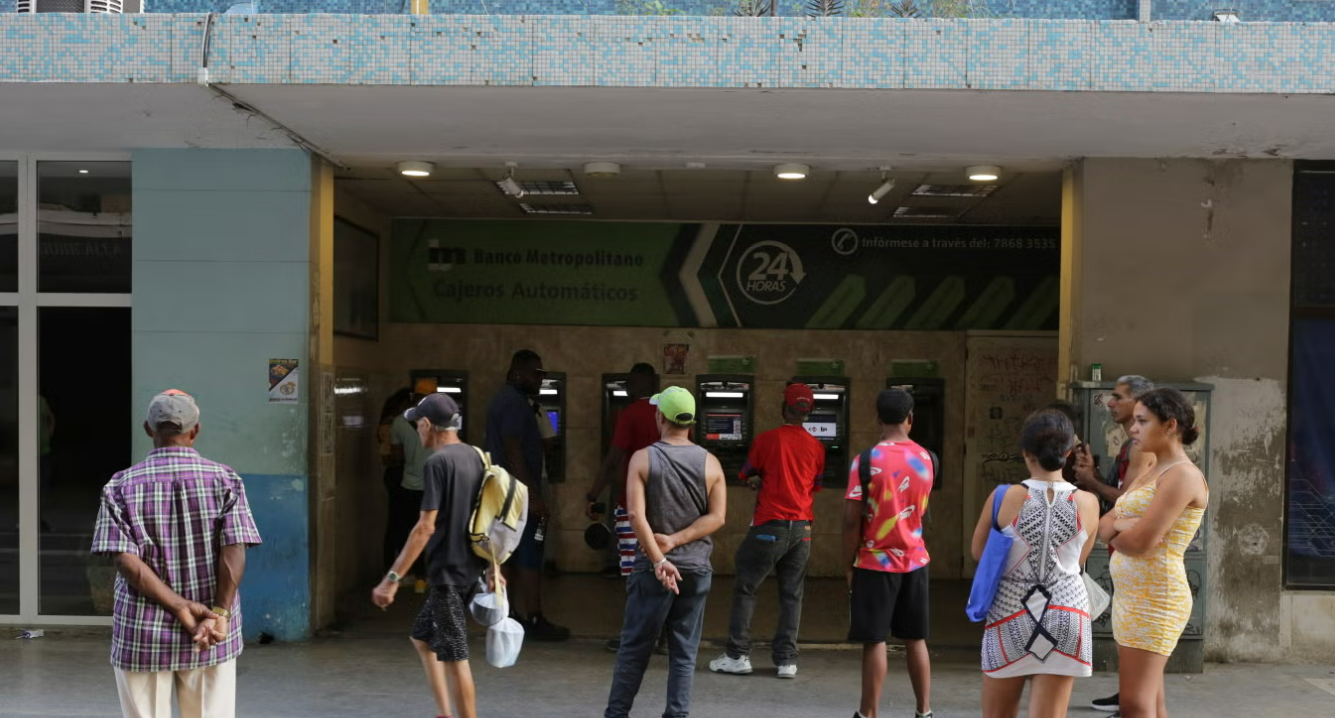
In a separate but probably related development, Cuba’s Central Bank (BCC) has said that it will block inactive business and individual tax-related bank accounts after an assessment, and will require real time mandatory declarations relating to large payments into any such accounts held by individuals. 

Speaking with President Díaz-Canel on a recent edition of the programme ‘Desde la Presidencia,’ Juana Lilia Delgado, the Minister President of the BCC, said that the Bank is proposing blocking inactive tax related accounts that Cuban businesses and individual taxpayers must open in relation to their annual tax declaration to Cuba’s National Tax Administration, ONAT.

The assessment, Delgado said, will relate to accounts  that do not accord with the levels of activity that the BCC considers a business or a specific economic actor should have. Delgado said that the measures will apply to accounts which receive large sums of money, as the Cuban authorities belive that business owners and traders are receiving payments into such accounts to avoid declaring income. 

Observing the “reluctance of both economic and private actors to participate adequately in the banking process,” President Díaz-Canel said that the issue was of particular concern in relation to private economic actors, MSMEs, and those who operate in agricultural markets. 

Responding, Delgado said that despite it being a requirement for all businesses to accept payment by bank card, many do not. The consequence, she said, is that cash is instead  concentrated “in the hands of a few.”

Observing that significant amounts of such cash is pending to the treasury,  she said: “It’s not that there is no money in the economy; there is more money than ever, but the flow has been reversed: more money leaves than returns.”

There are people, she said, “who are lending their personal accounts so that large amounts of cash can be transferred through them.”  Strong action will, she emphasised, be taken against them as such actions are “classified as a crime of money laundering.” 

The programme, which is broadcast on YouTube, ended with Díaz-Canel, stressing the need to “try to get money back into the financial banking system and reduce the demand for cash.” Cuba’s President also stressed the importance of better control over the ‘bankarisation’ process, observing that the policy relating to banking remained the solution to the problems of cash shortages in the Cuban economy.

The Caribbean Council is able to provide further detail about all of the stories in Cuba Briefing.  If you would like a more detailed insight into any of the content of today’s issue, please get in touch

Copyright 2024 The Associated Press. All rights reserved

24th June 2024

Cuba has published a draft Immigration Law that is intended to update the position of Cubans, their descendants, and migrants, who travel into and out of the country, as well as that of resident foreigners, foreign investors and visitors. 

The lengthy draft which is subject to comment and revision before being considered and passed by the National Assembly, updates the island’s 1976 Immigration Law, is intended to take account of the new ways in which Cuban society and the international movement of people now occurs whether for migratory or work purposes. It also codifies a new range of sanctions. 

For Cubans, the new law ends the previous determination that after a stay abroad of 24 months they are deemed to have migrated. To achieve this, the draft law contains two new immigration categories of ‘Cubans Resident in the National Territory’ and ‘Cubans Resident Abroad’, making provision for those overseas who seek to invest or establish businesses and “participate in the Cuban economic model,” as allowed for by law.

The change is intended to encourage economic engagement in what the law describes as  “the new Cuban economy,” by Cubans living overseas. To help achieve this, it offers Cubans living overseas treatment equivalent to that afforded to Cuban residents, except where the law establishes otherwise. It also enables Cubans abroad to inherit property if they comply with the legal and administrative procedures to register their inheritance. Among its other provisions, the new law requires that those who have renounced Cuban citizenship enter the country using a foreign passport and those with dual citizenship enter and leave on the same passport.

In the case of foreigners, in part, the draft seeks to regulate the presence of those who visit or reside in the country, and who travel under any of the immigration classifications held by non-Cubans who are resident. It also updates immigration rules that govern diplomatic or consular representation, other authorised offices, and legal entities.

In part, in the case of non-Cubans the new draft law requires:

  • Every foreigner to carry, permanently an identity card, or provisional identity card, passport or equivalent document.
  • Hotel administrations and non-state economic actors authorised to rent, to maintain a Registry of Foreign Guests, and to report arrivals and departures to the Immigration Authority no later than 24 hours after the rental by the foreigner.
  • Resident foreigners, on entering the country and within a period of ten calendar days, to register in the Foreigners and Immigration Registry.
  • Foreigners with the immigration classification of Temporary Resident, Real Estate Resident, or Humanitarian Resident, to have prior approval to carry out professional or work activities of any type

The proposed law also contains legal provisions regulating the detention, expulsion or deportation from Cuba of foreign residents and visitors.

The draft law in Spanish can be found here on the website of the National Assemblydraft law

The Caribbean Council is able to provide further detail about all of the stories in Cuba Briefing.  If you would like a more detailed insight into any of the content of today’s issue, please get in touch

Photo by Eric Ward on Unsplash

10th July 2024

Cuba’s Council of Ministers has heard that the island’s economic situation continues to be “very tense.”  An official report of the Council’s monthly meeting held at the end of May, noted however, that improvements have been seen in some indicators. 

At the meeting, ministers agreed three strategic priorities and a related new management structure that it is hoped will enable Cuba to better respond to the continuing economic crisis facing the island.

Reporting on the meeting, Granma quoted the Minister of Economy and Planning, Joaquín Alonso, as saying that although goods exports “do not meet the current plan” they “show growth compared to the same period of the previous year.” In the case of nickel, he said, prices in the international market were improving, a trend expected to continue.

Elsewhere in his reported remarks he indicated that the production of mechanised tobacco production is recovering, and its workforce has been strengthened; medical services have an accumulated overcompliance of 7%; and tourist services in April exceeded their plan by 6%. No detail was provided. To help alleviate current economic challenges, he said, the island must take advantage of the reserves it has, to export coal given its rise in price on the world market.

Addressing the issue of the continuing high rate of official inflation, Alonso said that the monthly rate “showed a slight deceleration in April: from 4.07% in March to 2.13%. Compared to March 2023, year-on-year inflation, he said, reached 46.4%, but “has been slowing.”

More positively, the Minister of Finance and Prices, Vladimir Regueiro Ale, told Ministers that at the end of the first quarter of 2024 the forecast deficit in the State Budget had been reduced. At the end of March, he said, “a favourable execution was achieved with a deficit of CUP34.12bn pesos, 62.2% of what had been planned for, with the provinces of Havana, Sancti Spíritus and Matanzas showing surpluses. Gross income, he added, had been “overfulfilled by 4%, determined by the favourable behaviour of business results, the profit tax, and the return on state investment.”

He also noted that the tax system had recovered as the main source of income for the budget, in which context, he said, the “contributions of non-state forms of management are also growing.” Speaking about tax returns he described the outcome for 2023 as “extraordinary compared to previous years” following a campaign to encourage returns led by the Communist Party and Government in Cuba’s provinces and municipalities. Compliance in making a tax return stood at 99.8% of taxpayers, he told ministers.

On the subject of new priorities, the official publication quoted the Minister of Science, Technology and Environment, Eduardo Martínez, as telling ministers that it is hoped that a “new formula” will enable Cuba “to get out of the situation we have ….”  Martínez said that the initial priorities, will be concentrated in the three most relevant sectors due to their immediate contribution to the economy and society and in “a first stage respond to current economic problems.”

Outlining the new approach, he told ministers “priority one is the increase in foreign currency income from the export of goods and services.” All exportable items in the country, he said, must in future have added value, production costs must be reduced, and quality parameters improved.  “Projects to develop new exportable products must be a priority,” Granma quoted him as saying.

According to the Minister, the focus will now be on increasing nickel production, making tobacco income profitable, developing innovative biotechnology products, strengthening tourism, the development of new exportable medical services, introducing new technologies to increase sugar production and its derivatives, and the creation of a financial strategy that supports exports and minimises the impact of the US embargo.

The report went on to note that a second group of priorities relate to increasing the national capacity for the generation of energy through the installation of photovoltaic and wind parks; delivering an energy transition in the sugar sector using biomass and increasing its contribution to the national energy distribution system; and increasing the extraction of Cuban crude oil and improving its presently poor quality. This will require Martínez said, “a lot of science and the introduction of [new] technologies.”

The third priority, Martínez reportedly told the Council of Ministers, related to food production. This, he said, will focus on the immediate introduction of technologies to produce animal feed to enable an increase in the production of pork, eggs, milk and beef.

To achieve this, a Strategic Government Projects group, Granma noted, will have a national manager who, together with a work team, will define the objectives, execution schedule and the economic feasibility of what is proposed.  

“Execution of these projects will be considered a priority for all actors participating at each level – namely OACE (entities of the central administration of the state), OSDE (superior business management organisations), companies, science, technology and innovation entities, provinces and municipalities,” it reported. Oversight will be undertaken by Cuba’s National Innovation Council, a body headed by Cuba’s President.

No mention was made in the report of how rapidly the new measures can be implemented, the likely source or costs of financing, or when a positive economic impact might be felt.

Other matters of economic significance considered at the meeting included:

  • Wherever possible the need to reduce energy consumption by going to remote working, teleworking, changing jobs, and working in offices.
  • Disconnecting power at work centres at weekends to decrease electrical demand.
  • Having non-state businesses reduce demand for electricity, high consumers identified, visited, and “having the situation explained to them.”
  • Improving communications so that state entities explain and not promise what they are not capable of guaranteeing.
  • Providing greater support for workers in the power sector in response to the arduous working conditions they are experiencing.
  • And the importance of budgeted state entities introducing bidding processes and rational pricing.

Ministers also received a policy proposal relating to Digital Transformation, the Cuban Digital Agenda, and strategy for the development and use of artificial intelligence in Cuba, Granma reported.

The Caribbean Council is able to provide further detail about all of the stories in Cuba Briefing. If you would like a more detailed insight into any of the content of today’s issue, please get in touch.

Photo by

28th May 2024

 Cuba’s Minister of Finance and Prices (MFP), Vladimir Regueiro Ale, has admitted that despite having updated the methodologies used to determine prices, Cuba’s government has so far not achieved its objective of reducing price inflation. 

“We have not achieved the effects we intended. Everything we have done that is new, even in terms of regulation, coordination, and price control, is insufficient for what our people are demanding of us. There is still a lot to do,” he told Cuban viewers of the television programme Mesa Redonda broadcast on 22 May. The broadcast was intended to indicate the state of Cuba’s finances. 

Acknowledging that “the greatest dissatisfaction that our population has …. is precisely with price control,” he said, “we have to be much more rigorous and, above all systematic.” 

Accepting that some prices remain high because they relate to imported products, he indicated that greater control is now required over the country’s informal market. “We are dissatisfied with the work that has been done and the leadership and systematicity in this sense, that there is speculation and there are prices that are totally irrational,” he said, criticising local officials failure to act. 

Quoting the price of chicken as an example, he said that price formation for the staple is being driven by the illegal market. The price at which it is being sold in this way has become a reference, according to Regueiro Ale, resulting in widespread price speculation. 

To address this, he told viewers, “a group of proposals” presented to Government will enable what he described as “effective action” that will have popular support. Looking further ahead, Rugerio Ale said that Government is clear that it is going to be able “to achieve a decrease in price levels that favours the purchasing power of the population in a sustainable way.” “But, he stressed, in the meantime, control regulations must be strengthened.“ 

During his lengthy exchange with the programme’s presenter, the MFP Minister also commented on the struggle Government is having to deliver the macroeconomic reform process announced in December 2023 which aims to address past economic mistakes and see renewed economic growth this year (Cuba Briefing 2 January 2024). 

Speaking about the country’s fiscal deficit, Regueiro Ale suggested that any guarantee of macroeconomic stability is likely to take time. “We cannot only see the fiscal deficit in a period of one year. We must rectify the growth dynamics towards a line of gradual reduction,” he told viewers. 

Observing that government income this year is not sufficient “to guarantee the expenses that must be incurred” to cover the 63% of expenses intended to finance research and science programs, health, education, social assistance, and other social programmes, he confirmed that to finance shortfalls sovereign bonds are being issued that will allow financing “to be captured from the banking system to cover the income deficiency.” 

Speaking about taxation, he noted that while there had been a significant growth in income of about CUP339bn, and measures introduced to enhance tax collection, expenses had grown faster, in part to meet the need to increase salaries in the health and education sectors and to subsidise energy prices. 

Stressing the importance of boosting income, he said, that as it will not be possible to exceed a deficit of CUP147,000mn, Cuba’s budgeted state and non-business sectors must avoid superfluous expenses and “work systematically to boost income.” 

During the one-and-a-half-hour-long programme the minister also noted: 

  • It has been possible this year to provide a timelier notification of the budget to provinces, municipalities, agencies of the Central State Administration, and all associations linked to budget financing. 
  • Priorities are now being set for 2025, and related directives created. 
  • Elected municipal assemblies rather than administrators are now required to present proposed devolved budgets to the Ministry of Finance and Prices. 
  • The MFP must present monthly the status of budget execution to the Executive Committee of the Council of Ministers, and report on the size of the fiscal deficit to enable adjustments to be made. 
  • The MFP’s power to redistribute resources has been restricted so that all savings are put towards reducing the budget deficit. 

Looking ahead, Rugerio Ale said that the MFP is proposing as a priority for 2025 greater coherence in the planning and budgeting process in relation to the development strategy of each municipality. In that way, he suggested, it should be possible to mobilise all the financial and economic capacity of a territory for its development to strengthen our economy. But, he told viewers, “we still have a long way to go.”