
Cuba Briefing
The Caribbean Council's Exclusive Publication on Cuba

The Cuba Briefing is your news and insight resource for the latest developments in Cuba.

Published since the mid-1990s, Cuba Briefing is an unparalleled resource of detailed analysis on economic, social and political developments going on inside Cuba including analysis on the Cuban government’s priorities and policy developments towards foreign investors, economic reform, and the growth of the private sector.

Cuba Briefing is produced on a weekly basis by David Jessop, the director and founder of the Cuba Initiative and Non-Executive Director of the Caribbean Council, providing expert insight and a longer term lens on week-to-week developments in the country.

Don’t miss out on the latest news business and opportunities from the region. Subscribe to receive the Cuba Briefing Publication directly to your inbox. Subscribers receive 23 editions over 12 months. Click to Subscribe.

Leading Articles Featured in Cuba Briefing

5th December 2022

A US Department of Justice led committee has recommended to the US Federal Communications Commission (FCC) that they deny an application seeking the installation of a direct submarine telecommunications cable directly connecting the US with Cuba.

The new undersea cable was intended to carry internet, voice, and data traffic. The Justice Department panel said the proposal raised national security concerns because the cable-landing system in Cuba would be owned and controlled by ETECSA Cuba’s state-owned telecommunications company and would be the only direct, commercial undersea cable connection between the two countries.

ARCOS-1 USA, the entity seeking to lay the cable, had previously indicated in a 2021 filing to the FCC that the cable would “increase the means through which Cubans on the island can communicate with the United States and the rest of the world.” It had cited a 2019 State Department Cuba Internet Task Force that “recommended enabling the construction of new submarine cables to Cuba.”
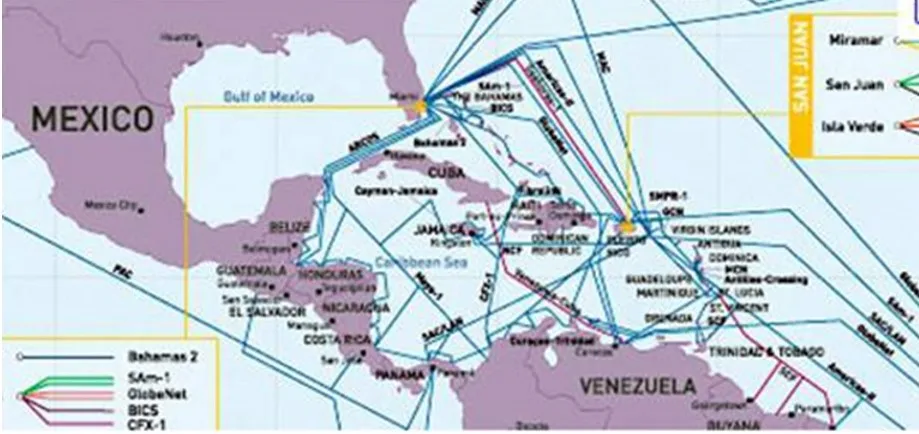
Present routes of submarine cables in Caribbean

However, the Department of Justice committee said that while it supported the “Cuban people’s access to an open, interoperable, secure, and reliable internet” the proposal posed “unacceptable risks to US national security.” ARCOS-1, which incorporates eighteen carriers including Verizon plus others from Latin America and the Caribbean, had sought to land the cable at Cojimar, Cuba.

The ARCOS-1 submarine cable system connects twenty-four landing points in fifteen countries in the Caribbean, Central America, and South America including Venezuela, Colombia, Panama, Nicaragua, and Mexico with the US.

The company had previously said that it intended achieving the service by creating a branch from an existing part of the ARCOS-1 Cable that lies approximately 56km off the coast of Cuba. In recent years there have been other attempts to restore a direct link between the two countries in some cases involving links to other cables that pass close to Cuba’s shores.

Responding, Cuba’s Vice Foreign Minister, Carlos Fernández de Cossío, criticised the recommendation noting: “This is the way in which the US Government is supposed to fulfil its declared commitment to promote the use of the Internet in Cuba, to express in practice its declared concern for the well-being of the Cuban people, whom it ruthlessly punishes with the economic blockade.”

Photo by Alvaro Pinot

The Caribbean Council is able to provide further detail about all of the stories in Cuba Briefing. If you would like a more detailed insight into any of the content of today’s issue, please get in touch.

28th November 2022

President Díaz-Canel has returned home from an intense four nation ten-day visit to Algeria, Russia, Turkey, and China. Official reporting suggests that there were significant immediate outcomes in China and Algeria but less so in Russia and Turkey.

The visits were aimed at deepening political and economic relations through in-person dialogue about possible support to help Cuba address its multiple economic problems including with energy and power generation, and its need to develop new trade and financing arrangements.

In an indication of the significance of the visits, Cuba’s President was accompanied by a delegation consisting of Vice Prime Ministers, Ricardo Cabrisas and Alejandro Gil; the Foreign Minister, Bruno Rodríguez; the Minister of Foreign Trade and Foreign Investment, Rodrigo Malmierca; the new Minister of Energy and Mines, Vicente de la O Levy; and the Minister of Public Health, José Angel Portal. The group travelled on an aircraft owned by the Venezuelan national airline Conviasa.

In this issue of Cuba Briefing, we report in detail on the outcome of the visits to Russia, Turkey, and
China. Details of the discussions in Algeria appear in Cuba Briefing 21 November 2022.

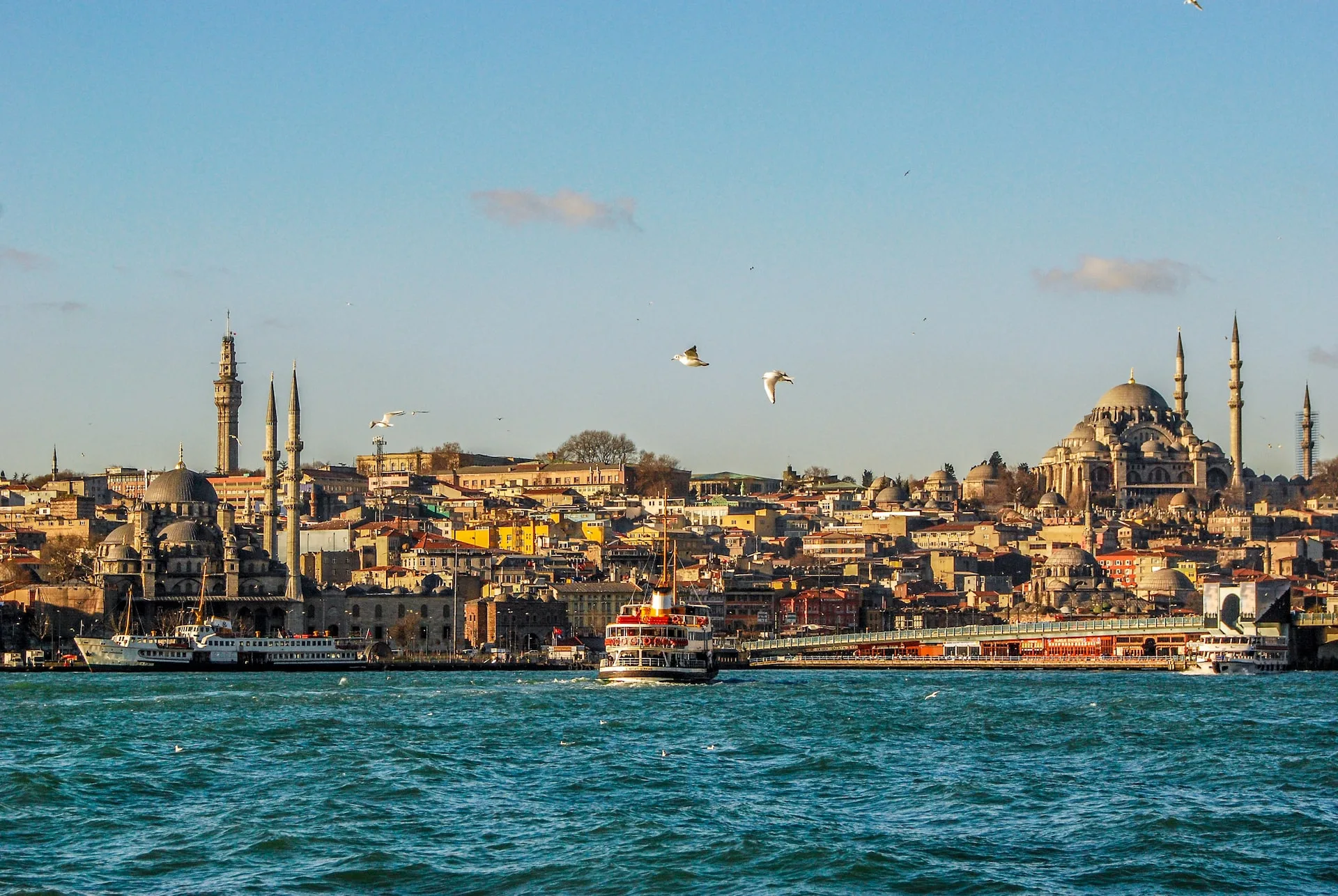
Photo by Engin Yapici

The Caribbean Council is able to provide further detail about all of the stories in Cuba Briefing. If you would like a more detailed insight into any of the content of today’s issue, please get in touch.

21st November 2022

President Díaz-Canel has begun a ten-day intense programme of visits to Algeria, Russia, Turkey, and China, during which he is expected to discuss with his counterparts, Cuba’s problems with power generation, its need to develop new trade mechanisms, and the economic challenges the country faces.

In an indication of the significance of the visit, he is being accompanied by a high-level delegation consisting of Vice Prime Ministers, Ricardo Cabrisas and Alejandro Gil; the Foreign Minister, Bruno Rodríguez; the Minister of Foreign Trade and Foreign Investment, Rodrigo Malmierca; the new Minister of Energy and Mines, Vicente de la O Levy; and the Minister of Public Health, José Angel Portal. The group includes Díaz-Canel’s wife, Lis Cuesta.

Before departing, Cuba’s President wrote on Twitter: “A brief but intense journey awaits us, visiting friends, opening roads, managing outlets for our besieged economy” noting also that during his  tour he would “address essential issues for our country, fundamentally related to the electrical energy sector.”

His programme, he wrote, “responds to the political and economic priorities of Cuba” as well as to the efforts to alleviate the effects of a post-pandemic crisis, which in Cuba’s case, he said, “is exacerbated by the effects of the blockade of the United States.”

Indicating that the visits have both political and economic objectives, he said: “we will be working intensely to strengthen economic and political ties” to enable the continued development of Cuba, and to build a “horizon of well-being.”

Early reports from his first call in Algeria indicate that its government has agreed to resume the supply of oil and gas, restructure its debt with Cuba, and deepen the two nations’ already close cooperation in areas from agriculture to health.

Speaking to the media, Algeria’s President, Abdelmadjid Tebboune, said that his country  would offer “sister Cuba a photovoltaic power plant as well as re-establishing the supply of hydrocarbons, so that Cuba can reactivate the plants and combat current power outages.”

President Tebboune also noted that both governments had agreed to cooperate on issues including the production of medicines and the creation of joint ventures to manufacture vaccines against some African and non-African diseases.

At the beginning of 2023, he said, a session of the two country’s Mixed Commission involving a group of 150 businesspeople and officials will be held in Havana to examine investment possibilities.

In his remarks, Tebboune also spoke about the  values that both Cuba and Algeria share from the past and present, and their willingness to build the future together. In this context, he said, it had been agreed to “relieve a little the Cuban economic context, cancelling the debt servicing and postponing its repayment for another time”.  Algeria’s President also indicated exchanges would be developed in other commercial areas and in higher education.

Cuban reporting quoted Díaz-Canel as saying that in meetings in Algeria important areas for collaboration had been identified, with discussions centred on issues that “show mutual benefit.” “Above all,” he said, this means “for our country an important support that demonstrates the understanding that the Algerian government has towards our situation.”

Cuba’s President said that the areas identified as “the most promising for collaboration,” include “health; energy; renewable sources; the medical-pharmaceutical industry; and cultural, educational, scientific-technological exchange.”

Speaking to the media in Algiers, Díaz-Canel highlighted the possibility of Algeria undertaking joint programmes in sugar production and being willing to evaluate, “a possibility, a way to renegotiate or restructure the debt that Cuba has with Algeria.”

The two nations have had close relations since Algeria achieved independence in 1962, as well as through the Non-Aligned Movement and energy supply, with large numbers of Cuban medical professionals working in Algeria in various fields of health care. Díaz-Canel is due to meet President Putin in the coming week (See Russia below). Further details of what are the highest-level international visits undertaken by Cuba since November 2018 will appear in the next issue of Cuba Briefing.

Photo by Roland Larsson

The Caribbean Council is able to provide further detail about all of the stories in Cuba Briefing. If you would like a more detailed insight into any of the content of today’s issue, please get in touch.
14th November 2022

After a two-year break because of the pandemic, the Havana International Fair (FIHAV) will in the coming week again take place with more than sixty countries represented, multiple official delegations, and a substantial business presence from Spain.

Speaking about the thirty eighth FIHAV, Cuba’s Minister of Foreign Trade and Foreign Investment, Rodrigo Malmierca, told viewers of the Cuban television programme, Mesa Redonda, that the numbers participating in the 14 to 18 November fair, is a “ sign of the confidence that the international community is willing to do business in the Cuban market,” despite, he said, the US embargo.

Among the larger delegations will be one from Spain consisting of over eighty companies, according to the Spanish Embassy in Havana. Organised by the Spanish Institute of Foreign Trade, a part of the country’s  Ministry of Industry, Commerce and Tourism, the Spanish enterprises will occupy four pavilions, including one consisting of many of the most significant companies in the Basque region. During the first day of the event a ‘dia de españa’ will be celebrated at FIHAV.

In a statement, the Spanish Embassy said that the country continues to be a strategic trading partner and the member of the EU that exports the most to Cuba. It noted that 47% of EU exports originate in Spain and were valued at almost €630mn (US$653mn) in 2021.

It is expected that during the Fair several announcements will be made about new investments

including a new Cuban beer brand to be launched as a joint venture with a European partner.  It is also anticipated that a joint venture with Unilever will be formally inaugurated in the Mariel Special Development Zone (ZEDM), and a stone laying event take place relating to the expansion of Richmeat De Mexico SA’s meat product operations in Cuba .

Addressing the complex economic challenges facing the country and Cuba’s indebtedness, Malmierca said that international business understood the difficulties the country is presently facing. “They have been informed that delays in payments or other problems in meeting the commitments made will be resolved gradually,” he told Cuban television viewers.

Malmierca noted that some 16,000 square meters of exhibition space at FIHAV had been taken, which he said was “a figure close to the best in recent years.”  

In terms of representation, this year’s fair will see China, Russia, Spain, France, Canada, Mexico, Brazil, and Venezuela having the greatest representation with about twenty-five countries having business groups led by ministers, deputy ministers and secretaries of state.

As in the past there will be a substantial presence of Cuban enterprise, with some 400 companies housed in the Fair’s central pavilion. This year, in addition to state enterprises, there will also be  represented joint ventures and several independently managed MSMEs which the Cuban government believes have the potential for export.

Speaking about the US presence at FIHAV, which peaked during the short period of détente under President Obama, Malmierca said that there will be companies from the US present, “not a large number,” but nine had confirmed their participation as exhibitors while others were participating in different delegations.

In his remarks he laid stress on the continuing importance of encouraging investment in Mariel’s ZEDM and said that a new updated portfolio of foreign investment opportunities will be detailed in presentations internationally accessible live online from ZEDM pavilion on Tuesday 15 November .

The Foreign Investment Forum which will include presentations by the Minister for Foreign Trade and Investment, the Director General of the Mariel Special Development Zone, the Head of Market Research Group, PROCUBA, and the Director of VUINEX, a one-stop-shop for foreign investors. To register and attend, interested parties should visit https://cuba.feriahabana.cu/en/investing-forein-forum/

The Caribbean Council is able to provide further detail about all of the stories in Cuba Briefing. If you would like a more detailed insight into any of the content of today’s issue, please get in touch.
7th November 2022

Cuba’s state sugar producer Azcuba has confirmed that the 2022-2023 sugar campaign will  start in mid-November utilising just twenty-three of the country’s fifty-six functioning sugar mills. The objective it said, is to better use limited resources, increase efficiency, and stabilise future levels of production.

In an interview with Granma, Dionis Pérez, the Director of Information Technology and Communications of Azcuba, sought to allay the fears of Cuban sugar workers at some of the country’s largest sugar mills and associated facilities.

On the subject of what will happen to the workers of the mills that do not grind cane, Pérez told the official Communist Party publication that employment will be maintained with some involved in “the conservation and preservation of the mill”, while others will be “incorporated into the maintenance and repair work, after the authorisation of financing for these activities.”

Other workers, he observed, would be “relocated to cane production, food and diversified production” which will become “their main sources of personal income.”  He did not however provide any indication of how this might happen, the numbers involved, or over what period.

“In the plants that do not grind in this harvest, repair, maintenance and conservation work will continue to guarantee the next harvest, based on the management of resources within the national territory,” the Azcuba Director told Granma. Pérez stressed however, this would happen only where financing is available, and must consider present and future linked opportunities for the  production of sugarcane, food, and diversified products.

The article appeared to suggest that some factories will be repaired while others may be dismantled, which if correct would have a significant effect on many of Cuba’s rural communities.

Pérez told the publication that the objective now is to diversify the industry so that it engages in both the planting and processing of cane and growing food. In future, he said, it was envisaged that 45,000 hectares of sugar land will be allocated for the planting of cane and 12,426 hectares for food production. At present, just 16,024 hectares of land are operational, of which 9,837 are destined for cane.

In his published remarks he made clear that the restructuring and future of the industry is now based on what he described as “the real financing that can be made available,” guaranteeing domestic consumption, and obtaining derivatives including animal feed, alcohols, and honey, and if market prices permit, an allied export plan.

Others quoted in the article indicated that some of the country’s biggest mills, including Central Azucarero Uruguay in Sancti Spiritus, will instead of grinding have targets for shipping cane by rail to more efficient plants. They also suggested that workers would be supported economically through a two-year loan for factory repair that would “protect 80% or 90% of workers’ wages” with a possible state loan in 2023, for what was described as “the concept of a paralysed factory.”

The restructuring of the sector comes after years of falling production and was first announced by President Díaz-Canel in early September when he told a meeting of the Communist Party and government leadership in the thirteen territories involved in sugar production, that an innovative approach was required (Cuba Briefing 12 September 2022).

This would involve, he said, milling just 6.6mn tons to produce 0.46mn tons of sugar to meet the requirements of the country’s guaranteed family food basket, tourism, industrial production including rum and alcohol, and for medical purposes. 

The production figures mentioned effectively confirm that little if any sugar will now be available for export to China or elsewhere, and that previous plans to earn about US$150m per annum from such exports are now at an end.

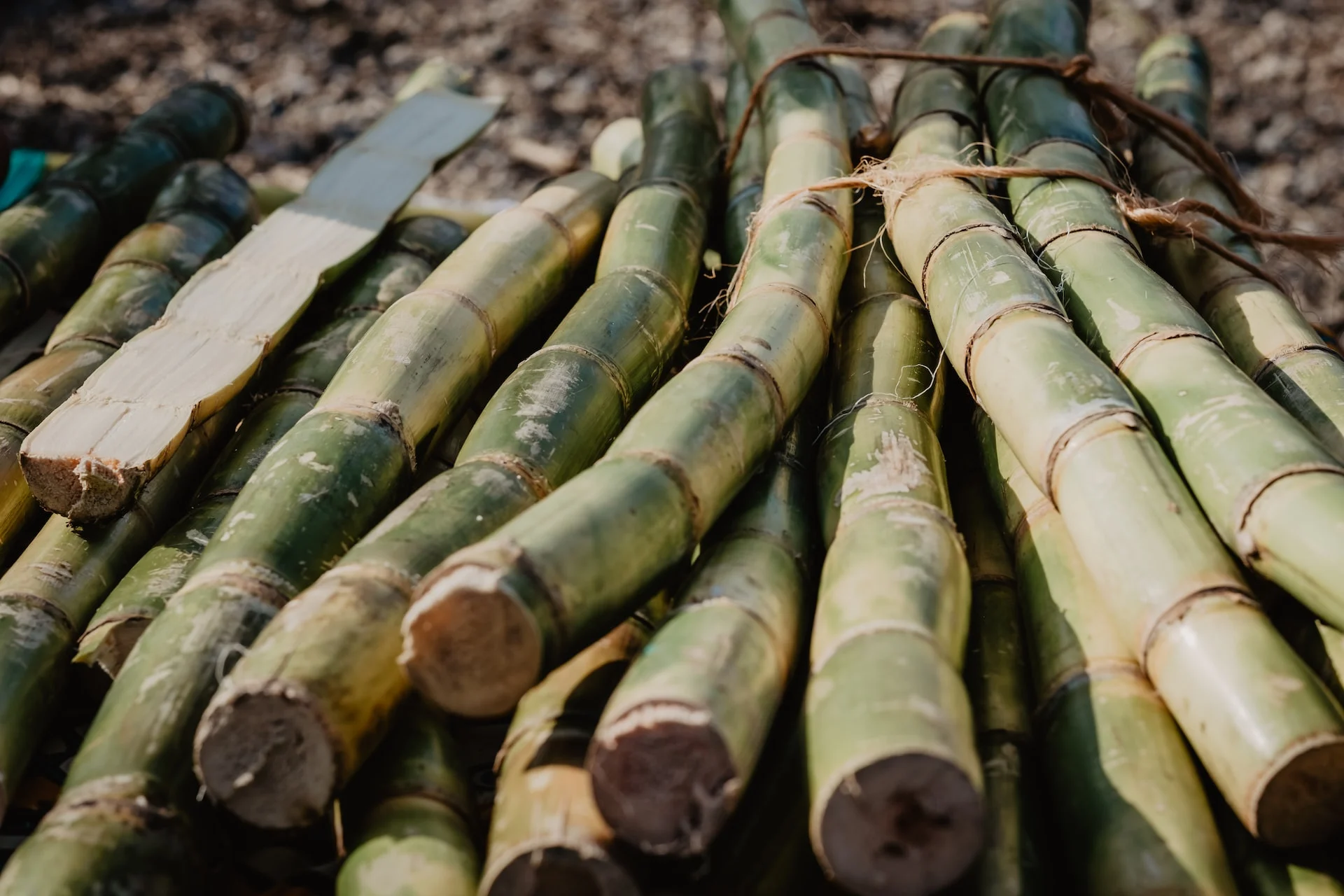
Photo by Victoria Priessnitz 

The Caribbean Council is able to provide further detail about all of the stories in Cuba Briefing. If you would like a more detailed insight into any of the content of today’s issue, please get in touch.
31st October 2022

President Díaz-Canel has told a group of visiting North American and Cuban-American businessmen that Cuba is open to dialogue with the US. If it is based on respect, there could be “a narrowing of relations, regardless of the ideological differences that we have,” he said.

Speaking during an informal meeting at the Presidential Palace, he told the group that their visit and participation in a business forum in Havana was significant and had meaning. It demonstrated, he said, that Cuba had the will to strengthen business and trade relations between both countries, as well as Cuba’s desire to develop business with “Cuban compatriots, living outside the homeland, who want to participate in the development of our country.”

More specifically, he told the group that the exchanges emphasised the importance of “a dialogue with respect; a dialogue where our sovereignty and integrity are not attacked; a dialogue where there are no unilateral positions of force. And if that is respected, he said, there can be that dialogue, there can be that narrowing of relations, regardless of the ideological differences that we have.”

Continuing, he observed: “Repeatedly we have proposed to the United States government, through the channels that we have been able to use, that we are open to dialogue and conversation without conditions, and with the possibility of covering all possible topics.”

Cuba “ratifies that we are open to strengthen, tighten dialogue and relations with any country in the world; and in particular with the United States,” he told the visiting US business group.

Speaking about the embargo, Díaz-Canel noted that although the Biden Administration had begun to announce some steps aimed at easing aspects of the measures introduced by the Trump Administration, and the direction was correct, what had been said had “not yet materialised in the fundamentals.”

The US business group were in Havana to participate in a 25-28 October business forum organised by the Cuban Chamber of Commerce and the Washington based Focus Cuba group.

Speaking at the Forum, Phil Peters, one of Focus Cuba’s two partners, said Cuba had made important progress in relation to the participation of non-state actors in the economy. The issue, he said, formed one of the topics of discussion in relation to the possibility of US businesses partnering with Cuban enterprise in the domestic retail and wholesale market (Background Cuba Briefing 12 September 2022).

Photo by Will Colavito

The Caribbean Council is able to provide further detail about all of the stories in Cuba Briefing. If you would like a more detailed insight into any of the content of today’s issue, please get in touch.
24th October 2022

The Canadian miner and refiner of nickel and cobalt, Sherritt International Corporation, has signed agreements with its Cuban partners settling C$362mn (US$265mn) in outstanding debt over five years. It has also agreed the terms on which it undertakes future mining and other operations in Cuba.

Under the agreement, beginning 1 January 2023, its Moa joint venture will prioritise payment of dividends in the form of finished cobalt to each partner, up to an annual maximum volume of cobalt, with any additional dividends in a given year to be distributed in cash.

The company said that all of its Cuban partner’s share of such cobalt dividends, and potentially additional cash dividends, will be redirected to Sherritt as payment to settle the receivables until an annual dollar limit, including the collection of any prior year shortfalls, has been reached.

Under the terms of the cobalt swap, Compania General de Niquel SA (GNC), Sherritt’s Moa joint venture partner, has agreed to assume certain liabilities of amounts owed to Sherritt by CUPET and Energas SA to fully repay outstanding amounts over a five-year period.

In a statement, Leon Binedell, the President and CEO of Sherritt  said that the agreement was a testament to the strong working relationship the company had with its Cuban partners.

Observing that it believes that the agreement “ brings an end to the historical repayment uncertainty,” he said that “Combined with Sherritt’s portion of the dividends, this is expected to provide significant cash flow to deliver on our strategic priorities to reduce debt and aggressively expand our business.”

Bindell went on to note that the strong fundamentals for both the nickel and cobalt markets was driven primarily by the strength of the electric vehicle battery market. This, he said, made it “an opportune time for completing these agreements and ensuring that each of the partners benefit from it.”  He described the agreement as “innovative.”

In a lengthy statement the company said that on 1 January 2023, the outstanding receivable amounts owing to Sherritt from Energas and CUPET, estimated to total C$361.9mn (US$265.3mn), will be assumed by GNC, who in turn will enter into payment agreements of an equivalent amount, denominated in local Cuban currency with Energas and CUPET. The amount includes the Energas conditional sales agreement receivable of C$332.4 (US$343.7mn) and trade accounts receivable from CUPET of C$29.5mn (US$21.6mn).

As a result of the exchange, Sherritt will no longer have the responsibility for collection on the amounts solely from Energas and CUPET. Energas and CUPET will remain liable for payment of the Energas/CUPET liabilities, as applicable, only to the extent not satisfied by GNC. On distribution of any redirected amounts from GNC in cobalt or cash to Sherritt, GNC will receive an equivalent payment from Energas or CUPET denominated in Cuban pesos.

Sheritt said that on 12 October 2022, Cuba’s Executive Council approved the twenty-year extension of the Energas power generation contract with the Cuban government to March 2043, which was set to expire in March 2023. The Energas facilities have an electrical generating capacity of 506 MW from two combined cycle plants at Varadero and Boca de Jaruco.

Sherritt is engaged in a multi-pronged growth strategy in Cuba focused on expanding nickel and cobalt production by up to 20% from 2021 and intends extending the life of its mine at Moa beyond 2040. It is also the largest independent energy producer in Cuba.

Photo by Encal Media 

The Caribbean Council is able to provide further detail about all of the stories in Cuba Briefing. If you would like a more detailed insight into any of the content of today’s issue, please get in touch.

17th October 2022

Cuba is hoping to bring together its experience in tourism and its capabilities in medical research and health care to become an international centre for health tourism and well-being. The intention is to seek foreign investment to develop the concept.

According to Dr Yamila de Armas, President of the Comercializadora de Servicios Médicos Cubanos SA (CSM), the initiative will be launched at the First International Fair of Medical Tourism and Well-being (FitSaludCuba). The event forms a part of the much larger 17-20 October ‘Health for All’ trade fair and convention which is expected to attract to Havana some 1,500 participants from 65 countries.

Speaking at a press conference about the event, Dr de Armas, the President of CSM, a state entity which offers a wide range of medical and health services to visitors to Cuba, said that the intention is to explore how Cuba’s tourism, scientific expertise and health care might be united in a manner that post-pandemic addresses the challenge of achieving universal health care.

FitSaludCuba will include a foreign investment forum and will, she said, also have the objective of identifying potential strategic partners interested in ventures that encourage the well-being of those vacationing on the Island and elsewhere.

According to Cuba’s state media, the event is intended to expose the products, experiences, and advances of health tourism in Cuba, consolidate alliances in medical and wellness tourism, consider marketing models in medical tourism, and explore the development trends of wellness tourism. Prensa Latina reported that it will address the country’s advances in biotechnology, medicine and science, and its potential to become a regional leader in health tourism.

CSM, a state linked entity, already offers a wide range of medical and health services to visitors to Cuba. It has branches in 13 of Cuba’s 15 provinces providing a range of medical and well-being services, with access to Cuban professionals in medicine, as well as to scientists and specialists. It presently provides rapid diagnostic services, therapies, health and wellness programmes, and facilities for convalescence which it says aim to strengthen an individual’s physical, mental, and immune status. The group also offers support with a range of diseases, dedicated locations for the rehabilitation of those addicted to alcohol and narcotics, and facilities for full medical checks.

At present it services are provided through the La Pradera International Health Centre, the Cira García Central Clinic, the International Centre of Neurologic Restoration (CIREN), and the Camilo Cienfuegos International Clinic. It works with the Pedro Kouri Institute of Tropical Medicine.

In May, CSM signed an agreement with the tourism related Cubanacán Group to promote health tourism on the island (Cuba Briefing 9 May 2022) at which time the group said that the development of medical tourism services was a priority for Cuba.

According to Dr Armando Garrido, the Director of Medicuba, since that time CSM has established several contracts with hotel companies in Havana, Varadero, and has plans for long stay health care at the Cienaga de Zapata National Park. He was quoted by Prensa Latina as saying that he anticipated that at FitSaludCuba “a group of actions will take shape [including] the signing of a significant number of contracts with international suppliers and letters of intent for new businesses.”

According to Cuba’s Ministry of Public Health (MINSAP), Health for All will be attended by regional and international organisations including ECLAC, Unicef, the FAO and the Pan American Health Organisation, a part of the WHO.

Photo by Max Letek 

The Caribbean Council is able to provide further detail about all of the stories in Cuba Briefing. If you would like a more detailed insight into any of the content of today’s issue, please get in touch.

10th October 2022

Cuba is continuing to mobilise support and resources from around the island to try to restore power and water to the western province of Pinar del Rio and to parts of Artemisa following the devastation caused by Hurricane Ian which hit the  island on 27 September.

State media reporting indicated that at a high-level meeting held on 6 October to assess progress with recovery, President Díaz-Canel stressed to participants the importance of responding rapidly “despite accumulated problems” affecting the two provinces and the island generally.

In an indication of the Cuban government’s concerns about stability, Cuba’s President was reported to have reiterated previous comments about the importance of Communist Party cadres (party militants)  increasing direct contact with the population in each location and providing then with up-to-date information on the recovery work.

He also stressed the need for agility in the distribution of resources, the importance of providing the neediest individuals and families with support, increasing the number of locations selling processed food, and the maintenance of hygiene with special attention to the possible spread of dengue. Other Cuban reporting has indicated that many senior members of Cuba’s national assembly and Communist Party have been touring the most damaged provinces to meet with residents to assess need and encourage recovery efforts.

In an apparent indication of concern about the pace of recovery and the effect on social stability at a time of continuing nationwide shortages of food and medicines, and blackouts, Cuba’s Communist Party website and Granma published in full as a statement, informal remarks made on 2 October by Díaz-Canel in which he stressed to cadres the importance of taking responsibility to encourage residents to overcome the damage caused.

Speaking during the third of four visits to Pinar del Rio accompanied by senior party officials and ministers, he said. “We have to be convinced that we can solve this and that we can get out of the problem, and for this we have to work with the concepts that we can get out [of this situation] by ourselves and that everything we do we have to do better.”

In his remarks he described the population as being divided between those who immediately joined in the recovery process; those who were stunned and were initially difficult to motivate, but who are now gradually participating; those who are critical of the pace of recovery and the absence of information but who are arguing from “positions of decency”; and others who are “acting differently” and protesting.

Referring to the latter category he said: “We cannot allow that. Demonstrations of this type have no legitimacy”, he said, before going on to note that “those who act that way, who claim all the rights that the Revolution gives but who contribute little, must be confronted; confronted with arguments.”

Alleging that such actions are being supported and paid for from abroad, he went on to say that those who make “ counterrevolutionary expressions, trying to commit acts of vandalism such as closing roads, throwing stones at economic or social places …. These  situations will be dealt with by the rigor of the laws in our society.”

Meanwhile, Cuban ministers speaking on the television programme Mesa Redonda have confirmed that Hurricane Ian caused extensive damage to a wide range of crops and the farming system mainly in Pinar del Río, Artemisa, Mayabeque, and to a lesser extent Havana provinces.

During one of several high-level meetings taking place daily it was reported that much remains to be done for life to return to normal in Pinar del Río and parts of Artemisa in relation to housing, infrastructure, agriculture, and the provision of goods and services.

Desiree Díaz, the Coordinator of Programmes and Objectives for the Provincial Government of Pinar del Río, was quoted as saying that a first priority is to “find solutions to the damaged houses, so that no family remains in the evacuation centres”, but she made clear in her comments that progress will be gradual and will have to be from local resources.

Separately, it was reported that in Pinar del Rio power is available to barely 24% of the state power supplier’s customers. Etecsa the state telecommunications company however said that 75% of fixed telephony and 65% of mobile services there had been restored, and services in Artemisa and Havana were gradually returning to normal.

In Havana, power has been restored to most districts a week after Hurricane Ian struck, largely defusing tension in relation to blackouts and ending sporadic street protests (Cuba Briefing 3 October 2022). However, regular power outages continue in the capital and across most of the rest of the country because of inadequate generating capacity. Reuters reported that many Cubans remain angry and concerned about the difficulty of buying food to replace that kept in freezers which was lost, and that tension continues.

Photo by Mario Caruso

The Caribbean Council is able to provide further detail about all of the stories in Cuba Briefing. If you would like a more detailed insight into any of the content of today’s issue, please get in touch.