Cuba Briefing
The Caribbean Council's Exclusive Publication on Cuba

The Cuba Briefing is your news and insight resource for the latest developments in Cuba.

Published since the mid-1990s, Cuba Briefing is an unparalleled resource of detailed analysis on economic, social and political developments going on inside Cuba including analysis on the Cuban government’s priorities and policy developments towards foreign investors, economic reform, and the growth of the private sector.

Cuba Briefing is produced on a weekly basis by David Jessop, the director and founder of the Cuba Initiative and Non-Executive Director of the Caribbean Council, providing expert insight and a longer term lens on week-to-week developments in the country.

Don’t miss out on the latest news business and opportunities from the region. Subscribe to receive the Cuba Briefing Publication directly to your inbox. Subscribers receive 23 editions over 12 months. Click to Subscribe.

Leading Articles Featured in Cuba Briefing

22 September 2025

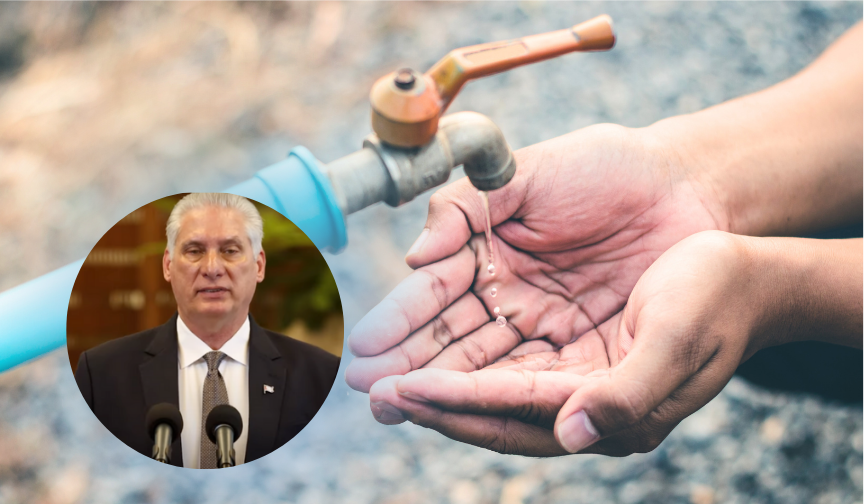
In an indication of the growing seriousness of Cuba’s worsening power and water supply situation, Cuba’s President has led a high-level meeting to discuss an action plan to address the country’s lengthening periods without power and related water shortages.

The meeting, which appeared similar in format to a Council of Ministers’ meeting, although not described as such, considered in part the need for an improved response to a growing number of fragmented local street protests in various parts of the island.

Noting euphemistically that recent days had been marked “by a context of contingencies,” President Díaz-Canel told the meeting that “despite the number and intensity of the successive ‘anti-Cuban’ protests, the enemy has failed to capitalise on the existing unrest and drive it into a social uprising.”

The official youth publication Juventud Rebelde quoted him as emphasising “the importance of increasing revolutionary vigilance in these times and of knowing how to adapt, to each circumstance, the methods of confronting criminal acts that damage the country’s vital resources.”

Díaz-Canel also stressed the importance of “cohesion between the Party, the Government, the Revolutionary Armed Forces, the Ministry of the Interior, the Young Communist League, mass organisations, and the population,” and the need for all such entities to be engaged in a constant discussion with the population, “explaining and listening” in spaces “designed and organised to encourage debate.”

Earlier, the meeting which involved the government’s leadership, and by video link the authorities in every province, heard from specialists that the daily power deficit is now having a serious national impact on Cubans access to water. Ministers and officials were told that the lack of electricity was causing 50% of the problems relating to its supply, drought 32%, and the breakdown of pumping equipment 10%.

Although no other figures were published relating to the overall scale of the crisis, the online and print publication quoted participating officials from the province of Santiago de Cuba as saying that the local situation was “tense,” and as telling the meeting that rapid actions are being designed to enable greater availability of the resource through the use of tanker trucks, the activation of wells, the provision of easy access points to water, and “even the possibility of transporting water by rail.”

On the subject of power outages (see also Cuba below), the Minister of Energy and Mines, Vicente de la O Levy, told the meeting that “the situation in the SEN (Cuba’s National Energy System) is complex and has worsened” following the disconnection of another of Cuba’s aging thermoelectric plants (CTE) from the grid. Although making clear that power would gradually be restored, the Minister said that “major impacts” would continue at the nighttime peak, but “with a considerable decrease (in the generation deficit) during the day, below 1,000MW.”

The report quoted the Prime Minister, Manuel Marrero, as telling the meeting that while the focus was on the SEN and the impact on water, other issues including the food supply, medicine, and transportation also required focus.

Juventud Rebelde indicated that the meeting additionally considered “the tensions our America is experiencing due to an empire that seeks to impose peace through force,” and what it described as “other sensitive issues such as the impact of an increasingly costly and harrowing blockade on Cubans.”

The former issue reflects Cuba’s growing concern about the heightened US military presence in the Gulf of Mexico, Puerto Rico, and Guyana, and recent actions by a naval task force close to Venezuela’s economic zone that has been sinking vessels alleged by Washington to be carrying narcotics destined for the US.

Juventud Rebelde’s report ended by noting President Díaz-Canel’s shared conviction that “we will move forward,” and that “one day, having overcome these moments, we will be able to recall these bitter days and the ways in which we overcame them.” “Here,” he was quoted as telling ministers, “No one will surrender.”

Highlights in this issue:

  • Growing concern about impact of worsening power and water supply 
  • Cuba to strengthen its defence and security cooperation with China 
  • Energy Minister confirms fully restoring a normal power supply will require millions of Dollars 
  • Joint pharma production with China to be expanded, transferred to Cuba
  • Ricardo Cabrisas passes 
  • US Court permits Administration to end humanitarian parole, deport Cubans

22 September 2025, Issue 1294

The Caribbean Council is able to provide further detail about all the stories in Cuba Briefing. If you would like a more detailed insight into any of the content of today’s issue, please get in touch
15 September 2025

Recently published official figures indicate that Cuba’s non-state MSMEs have begun to make a major economic contribution in consumer related sectors and services despite severe bureaucratic and regulatory impediments. However, according to a recent report by the US-based Cuban academic, Ricardo Torres, the sector continues to be seen by Cuba’s political leadership as “a necessary evil.”

Preliminary information published in late July by Cuba’s Office of National Statistics (ONEI) makes clear that, possibly for the first time since the Cuban revolution in 1959, Cuba’s private sector now accounts for more retail sales by value, meeting in 2024, according to ONEI, demand for some 55% of retail goods and services, a figure up from 44% in 2023.

The change is observable in the wide variety of products now on sale in informal markets – often at high US Dollar or Euro related prices – compared to state retail outlets that increasingly are only able to offer a limited variety of goods because of government’s lack of foreign exchange to import such products.

Provincial reporting and government statements additionally indicate that Cuba’s embryonic private sector is now playing an increasing role in turning around the fortunes of some productive and export-oriented state enterprises that have been able to identify and receive approval for entering into cooperative public-private ventures.

Emphasis now on localised state control

In a recent address to the Economic Affairs Commission of the National Assembly, Mercedes López, the President of the state-run National Institute of Non-State Economic Actors, made clear the growing fiscal importance of Cuba’s private sector.

Contributions from non-state management entities to the state budget, she was reported to have said, reached CUP6.8bn at the end of May, “confirming their growing fiscal impact and their importance as financial support for the country.” She also noted that non-state MSMEs “had a significant impact on the national economy, had created new jobs, promoted initiatives in the productive and service sectors, and increased revenue for the state budget.”

However, the official also laid emphasis on the need for control and for Municipal Administration Councils empowered to directly approve new MSMEs and non-agricultural cooperatives (CNA) to act to build on the territorial momentum and institutional strengthening they have been given responsibility for.

Stressing the importance of accelerating the decentralised power they now have to approve new state and non-state economic actors, she made clear that the objective now is for provincial and municipal authorities to foster “opportunities for identifying productive and commercial linkages,” and to allow non-state MSMEs “to more effectively integrate into the national economy” with a focus on potentially exportable products and territorial development.

No clarity on how far private sector will be allowed to grow

Despite this, it is far from certain how much further Cuba’s private sector will be allowed to grow. There are signs that the process of approval of new MSMEs’ slowed after central government handed responsibility for the approval of new non-state MSMEs to regional entities in September 2024, introducing a new layer of bureaucracy.

The news agency IPS reported in July that the approval of new MSMEs in Cuba is practically now at a standstill, and at mid-2025, growth in the non-state sector of the Cuban economy is showing signs of slowing due to the bureaucratic processes involved in their approval and ability to operate relatively freely.

It quoted Oniel Díaz, the General Manager of Auge, a private company providing corporate services, as saying: “The approval process for MSMEs is practically at a standstill, because in the first two or three years (since 2021), 100 MSMEs were approved weekly, and from May 2024 until today, only a handful have been approved.” According to Díaz, whose business has supported the growth of more than 400 private Cuban enterprises, this has resulted in “visible discontent” as applicants are having to wait for a response “for seven or eight months, or more than a year, and haven’t received one.”

The situation, he said, “does nothing to resolve any of the distortions in the economy, but rather, on the contrary, reinforces them.”

IPS noted that the 2024 decision to grant approval for MSMEs to municipal governing councils and remove it from the Ministry of Economy and Planning (MEP) should have been completed in March this year, but relatively few existing municipalities have been incorporated into the new system. It also observed that the older slow-moving process requiring lengthy inputs from local governments remains in place in most of Cuba.

For his part, President Diaz-Canel asserts that Cuba’s position on encouraging non-state MSMES and cooperatives must remain “strategic” and should be seen as an integral and complimentary part of the country’s socialist economy, while insisting state companies remain the dominant force in the economy but must become more efficient.

In July, Cuba’s pragmatic Minister of the Economy and Planning, Joaquin Alonso, told Cuba’s National Assembly that the development of Cuba’s private sector remains important to the economy. Although some ministers continue to stress the need for greater control, Alonso told delegates that the role of non-state economic actors is advancing, and that government’s intention is not to want to confront it “but rather to properly guide it.” Imports by private businesses, he said, had topped US$1bn, a 34% increase over the same period in 2024.

Cultural problems’ affecting state, non-state business relationships In recent months, government’s stress has increasingly been on creating approved cooperative arrangements between state and non-state entities where the latter are able to provide services or have the financing available to facilitate imports to enable the restoration of state production.

Despite this, recent exchanges on Cuban television’s flagship programme Mesa Redonda, make clear that achieving this requires overcoming what were euphemistically described as “cultural problems.”

Speaking on the programme on 19 June the Directors of state and non-state enterprises made clear they face similar problems in developing public-private collaboration in the “complex landscape of the Cuban economy” where “cultural and bureaucratic barriers converge.” Or as one participant succinctly put it: “Some directors still view the non-state sector as competition rather than an ally. It has been very difficult to establish that relationship simply because of the culture of Cuban business.”

In a report on the discussion, the official publication Cubadebate concluded: “The Cuban economy can no longer afford to maintain silos. In a country with limited resources, cooperation among all economic actors is not an option, but the only way to build resilience. Practice demonstrates this. When applied pragmatically, productive linkages cease to be a theoretical bridge and become a tangible engine of development. It is urgent to institutionalise these good practices, transforming exceptions into the rule.”

Its commentary raises important and so far unanswered questions as to how internal political disagreements within the Communist Party between senior conservatives, reformers, and the military – which controls significant parts of the Cuban economy – about the eventual size of the island’s private sector will be resolved. The issue is of particular significance at a time when much of the economy is in free fall, and the Communist Party and government appears to prefer the more controllable route of offering new more liberal incentives to private and quasi-state investors from China and Russia interested in key sectors such as tourism, sugar, and agriculture.

Expert analysis explores uncertain future of Cuba’s private sector Ricardo Torres, a Cuban economist formerly at the University of Havana but now a Professor at the American University in Washington DC, answers this by saying that private enterprise has become a “necessary evil” for the Cuban government, despite it gaining ground on the state. In a recently published study, ‘Private Sector in Cuba: Escape Valve or Engine of Development?’ he observes that the island’s private sector remains limited because of the state’s lack of commitment to it.

The analysis, published by the Cuba Study Group, a US based entity which brings together Cuban-American business leaders and young professionals, makes clear how much the Cuban private sector’s influence has grown, with more than 10,000 MSMEs having been registered in two years and now accounting for approximately 30% of employment or about 0.6mn jobs.

Speaking recently to the news agency EFE, Torres said: “Right now, there’s a lot of uncertainty in the private sector because the economy is in a stranglehold. It depends on regulations from a government that isn’t committed to free enterprise.” “There is no commitment, because the ideology that still prevails in the government views the private sector as a threat.”

The study confirms that, although the private sector now plays an important economic role in retail, transportation, and household services, it is regarded as “a safety valve rather than an engine of development,” Torres notes.

Drawing on official data, the report seeks to answer complex questions but with unclear answers relating to the point at which the state might halt its advance, and the conditions that would be required to enable the private sector’s potential as a driver of sustainable growth.

It notes that although Cuba’s MSMEs and the self-employed contributed 23% of national tax revenues in 2024, persistent structural obstacles remain. Cuban entrepreneurs, it observes, face multiple challenges including legal uncertainty, limited access to credit, and a tax burden heavier than that applied to foreign investors. Private entities also suffer from state limits on their ability to compete in external markets as official restrictions require the use of state intermediaries to engage in foreign trade.

In the report, Torres points to the lack of uniformity in the interpretation of regulatory provisions and unpredictable actions by government in relation to raids, inspections, legal requirements, price caps, and tax adjustments and their use for control. He argues that US policies by restricting banking and financial arrangements additionally impact the private sector’s ability to grow.

The academic recommends that if Cuba’s private sector is to develop and play a greater role, it requires more than mere tolerance. Eliminating bureaucratic barriers, expanding authorised activities, allowing foreign investment in MSMEs, and reforming the tax code to grant domestic private firms at least the same treatment as foreign investors, should, he believes, be the way forward.

The full 27-page report can be found at https://cubastudygroup.org/white_papers/special-report-on-cubas-private-sector/

According to reports presented to the Economic Commission of Cuba’s National Assembly in July, Cuba has 11,369 private MSMEs, seventy-one non-agricultural cooperatives (CNA), and 305 state MSMEs. In total, Cuba has 19,428 economic entities: 2,843 are state-owned entities, 110 joint ventures and wholly foreign-owned companies, 5,106 are cooperatives, 11,369 are private MSMEs, 305 are state-owned MSMEs, and seventy-one are non-agricultural cooperatives.

The decentralisation process in relation to MSMES began in sixteen selected municipalities. They have so far authorised 231 new economic actors. In June, 28 municipalities were added to this number. ONEI’s figures suggest that over the last five years the state-economy contracted by 11%.

Highlights in this issue:

  • China and Cuba close to restructuring public and private debt and using Renminbi for trade
  • Complete loss of power again affects whole country for extended period
  • Regional and municipal governments told to plan to raise more revenue in 2026
  • Sheinbaum says Mexico will continue to receive Cuban doctorsUS Judge overturns jury’s Helms-Burton related decision

15 September 2025, Issue 1293

The Caribbean Council is able to provide further detail about all of the stories in Cuba Briefing. If you would like a more detailed insight into any of the content of today’s issue, please get in touch

08 September 2025

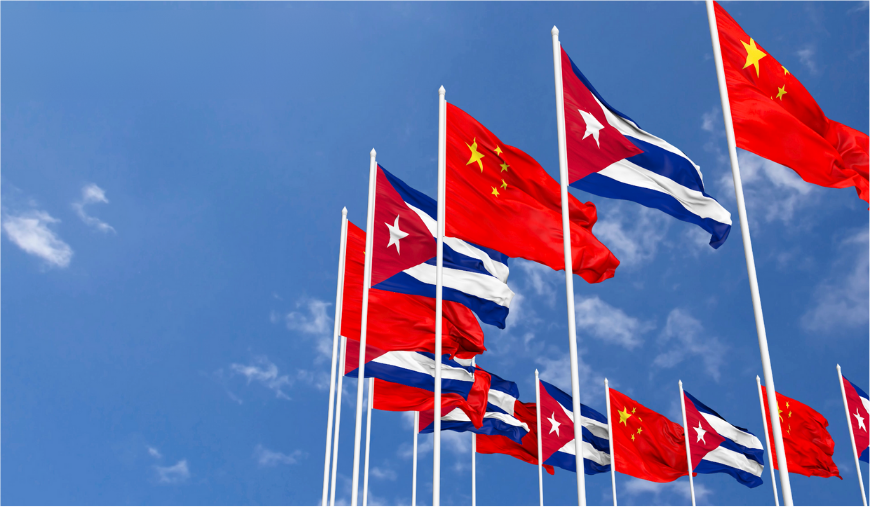
President Xi Jinping has told President Díaz-Canel that China “is willing to continue providing assistance and support to Cuba to the extent of its possibilities.”

His remarks follow from an important bilateral meeting that took place in Moscow in May when both leaders attended Russia’s celebration of its World War II victory over fascism. At the time, China’s President noted that relations with Cuba were at “a new stage featuring deeper political mutual trust, closer strategic coordination and more solid popular support.” (Cuba Briefing 12 May 2025).

Subsequently in late June, the Chinese government’s Special Representative for Latin American Affairs, Qiu Xiaoqi, paid an unusually long ten-day visit to Cuba involving high-level meetings, “in-depth” exchanges, and a country-wide tour focussed on practical cooperation.

Following the visit, China’s Ministry of Foreign Affairs (MFA) said in a statement that “China is willing to follow through on the important common understandings reached between the two heads of state, enhance bilateral exchanges, deepen practical cooperation, and continuously build a China-Cuba community with a shared future.”

China’s MFA also recognised “Cuba’s willingness to develop business cooperation projects that will bring mutual benefits,” before describing relations as strategic and special, and as serving as an example among socialist countries. It also noted that relations between the two Communist parties and countries had “shown fresh vibrancy” (Cuba Briefing 30 June 2025).

At the time the Cuban Presidency website quoted President Díaz-Canel as saying ties between the two countries were entering a new, “more solid,” phase, confirming “the political will to advance relations and find joint solutions at the highest level.” It had been agreed in Moscow, Cuban reporting noted, that “bi-national cooperation” would be expanded and strengthened in areas including biotechnology, tourism, and infrastructure development.

Xi’s confirmation of renewed Chinese support came on the same day that Cuba’s President participated with other world leaders – including Russia’s President Putin and North Korea’s supreme leader Kim Jong-un – in events to mark the 80th anniversary of China’s victory over Japan and the end of the second world war.

Díaz-Canel promises a more favourable business environment

Xinhua, China’s official news agency, quoted China’s President as telling Díaz-Canel in Beijing that the two sides should now seize the opportunity and mark the 65th anniversary of the establishment of diplomatic relations “to elevate bilateral ties to a higher level.” Xi also said that both Cuba and China should continue to mutually assist one another “and systematically promote development cooperation.” In doing so, he urged the implementation by both sides of China’s Global Security Initiative, Global Civilisation Initiative, and Global Governance Initiative. China will, he said, “continue to firmly support Cuba’s just struggle against interference and the blockade.”

According to Xinhua, in his response, Diaz-Canel emphasised that Cuba looks forward to “further strengthening all-round cooperation and high-quality Belt and Road co-operation and stands ready to provide a more favourable business environment for Chinese enterprises.” It also noted that a joint statement on accelerating the building of the China-Cuba community with a shared future was issued and multiple bilateral cooperation documents were signed.

Official Cuban reporting quoted President Díaz-Canel as thanking President Xi “for his deep personal involvement and sensitivity in issues related to Cuba and for leading the exceptional support that the Asian nation is providing to the island.”

He also told China’s President that relations are “indestructible,” and that Cuba was “honoured to be the first country in Latin America and the Caribbean to build a Community of Shared Future” with China.” Prior to departing from Havana Díaz-Canel had written on X that Cuba supports China’s Global Governance Initiative as it “will contribute to the reform of the global governance system and ensure the construction of a Community of a Shared Future.”

China’s concept of a ‘shared future’ envisions a world where countries with different systems, ideologies, and levels of development come together to pursue common interests, uphold shared rights, and fulfil common responsibilities.

Cuban reporting additionally quoted President Xi as having told Díaz-Canel, “you convened an event for this important anniversary in Havana, and you personally led it, which fully demonstrates the special friendship between China and Cuba, for which I express my high appreciation.” He also asked Díaz-Canel to convey his greetings to “comrade Raúl Castro.”

Later in a speech to mark the 65th anniversary of bilateral relations, the Chinese Vice President, Han Zheng, noted that the meeting between President Xi Jinping and his Cuban counterpart had allowed them “to reach a new consensus to continue consolidating the close relationship between the Chinese and Cuban parties, governments, and peoples.” Responding Díaz-Canel said that the meeting had enabled them “to renew concepts about what cooperation between China and Cuba should look like in the key areas that involve the economic and social development of our country.” “We have found,” he said, “cooperation models of common interest that guarantee mutual benefit and allow for integration among those participating in these projects.” See also China section below.

The Cuban Presidency website indicated that in Beijing eleven cooperation documents were signed. Among them were agreements related to the Belt and Road Initiative, political consultations, practical cooperation, cultural exchanges, and China’s Global Security Initiative. Commitments were also made on agricultural cooperation, territorial cooperation, artificial intelligence, traditional medicine, quality infrastructure, and on press, film, and television. No further details were provided.

In Beijing, Díaz-Canel met with Li Xi, the Secretary of the Central Commission for Discipline Inspection, who previously visited Cuba and recently discussed party organisation and discipline with Cuba’s Foreign Minister, and with Han Zheng, China’s Vice President, among others. The Cuban delegation in Beijing included the Ministers of Foreign Affairs, Foreign Trade and Investment, Energy and Mines, Communications, the President of the Central Bank, and the President of BioCubaFarma.

China is presently involved in the construction of seven solar parks in six Cuban provinces, has over ten joint projects with Cuba mainly in high-tech areas such as artificial intelligence, biotechnology, neuroscience, and nanotechnology, has several joint research institutes located in China in these and other areas, is donating transport equipment and rice, and is cooperating in higher education and on various joint research programmes. It also maintains a close working relationship with Cuba’s armed forces and Cuba’s interior ministry.

Cuba promises Vietnam to eliminate investment and trade bureaucracy

Cuba’s President travelled to Beijing from Vietnam. There he participated in events marking the 80th anniversary of the proclamation of Vietnamese independence on the first leg of a tour that also took in Laos.

In Hanoi at the end of meetings with senior figures from the Vietnamese Communist Party, government and business leaders, both sides signed a lengthy joint communique that included language relating to previously expressed Vietnamese concerns about Cuban bureaucracy and the slow pace at which projects the country is committed to in Cuba are moving forward (Cuba Briefing 28 July 2025).

In a section dealing with both nations desire “to promote and deepen bilateral economic, trade, and investment cooperation,” especially in strategic and potentially new areas, the communique notes that those involved in the high level meetings “called on the relevant authorities in both countries to increase exchanges and coordination to eliminate difficulties and obstacles, and to make full use of the Vietnam-Cuba Trade Agreement to increase and diversify trade volumes.” The document also noted that “the Cuban side reiterated its support and encouragement of the presence and participation of Vietnamese companies and projects in Cuba’s economic and social development process and assured that it will continue to create favourable conditions for this purpose.”

To accelerate cooperation both sides also agreed to a coordinated “review and evaluation of the effectiveness of cooperation mechanisms and agreements” and to assign to specific ministries the development of new methods and forms of cooperation …. appropriate to each country.” Details of some of the sectors the two nations have agreed to focus on will appear in the next issue.

Highlights in this issue:

  • US Justice Department backs Exxon in its Helms Burton lawsuit against CIMEX and CUPET
  • Private sector involvement in poultry and egg production spurring dollarisation
  • Hotel occupancy in Cuba falls to 21.5% in the first half of 2025
  • Possible Chinese investment in Cuban agro-industrial sugar sector discussed
  • Cuba’s official media laud relations with North Korea

08 September 2025, Issue 1292

The Caribbean Council is able to provide further detail about all of the stories in Cuba Briefing. If you would like a more detailed insight into any of the content of today’s issue, please get in touch
01 September 2025

The Canadian miner Sherritt International Corporation which mines nickel and cobalt in Cuba then refines it, has reported to investors that in the six months ended 30 June 2025, the operating environment in Cuba and hardening US policies have impacted negatively on its operations.

Leon Binedell, the Executive Chairman, President and CEO of Sherritt, said in a statement, “Extensive challenges within Cuba’s operating environment spurred by the escalating US policies against Cuba are continuing unabated.” These, he reported, had “directly impacted our Cuban operations and particularly at Moa, resulting in lower-than-expected production of mixed sulphides.”

He also noted in a second quarter report and guidance, that a shortage of skilled labour, and frequent blackouts contributed to a deterioration in results causing the company to revise its production forecasts for 2025 downward, from 33,000 to 27,000 tons of nickel, and from 3,600 to 3,000 tons of cobalt.

Looking ahead, Binedell was more optimistic. Observing that the company with its Cuban partners had previously been able to address setbacks, he said that Sherritt had implemented mitigation strategies to protect its interests and operations in Cuba. “We have confidence that we will overcome the current situation; however, it may take additional time to resolve these near-term challenges and to meet our full expansion potential at Moa,” he stated.

However, noting that in the short term the company’s ability to supplement the feed of mixed sulphides from its Moa joint venture to its refinery in Canada utilising inputs from China was very limited for reasons of cost, he told investors Sherritt’s metals production guidance for 2025 was being adjusted to reflect this reality.

Speaking about the company’s actions in Cuba to address the difficulties facing the 50/50 joint venture with its Cuban partnerCompania General de Niquel, he said that in addition to the recovery plan being implemented, Sherritt would now provide additional expatriate personnel at Moa, and a replacement gas well would be drilled by CUPET to maintain power production at its Energas SA joint venture. The company would also, he noted, implement significant cost reduction measures at Sherritt‘s operations in Canada, saving approximately C$20mn (US$14.5mn) annually in addition to the C$17mn (US$12.3mn) cost reduction measures introduced in 2024.

“While the nickel price remains under pressure, we expect our corrective actions and the completion of the Moa JV’s phase two expansion to translate into stronger performance ahead,” Sherritt’s CEO told investors. It “remains confident that the strategy adopted and long-term outlook will enable it to capitalise on a market recovery,” he said.

In a press release Binedell indicated that finished nickel and cobalt production at the Moa Joint Venture in the second quarter of 2025 was 3,431 tonnes and Sherritt’s share was 389 tonnes. Electricity production in the same period by Energas SA at its Varadero facility, he noted, was 176 GWh with the facility continuing to provide frequency control to help support the stability of the Cuban national power grid. Sherritt holds a 33.3% interest in Energas SA with Unión Eléctrica (UNE) and Cubapetróleo (CUPET).

In other updates on the company’s Cuba operations, Binedell noted:

  • Sherritt anticipates higher second half production on the back of the commissioning and ramp up of a sixth leach train at Moa, and the implementation of a recovery plan, with the agreement of its joint venture partners, see greater expatriate involvement in the recovery of production.
  • A new tailings facility is expected to be commissioned in the second half of 2026.
  • Phase two of the Moa JV expansion is in the final stage of commissioning. Ramp up is expected in the second part of 2025.
  • Energas’ service to support the stability of the Cuban electricity grid is expected to be fully paid for throughout 2025.
  • Cuba Petróleo (CUPET) is undertaking work to replace declining gas production from one of its legacy wells. Lower gas production from a compromised gas well is being partly offset by increased gas production from a new well that came online in the fourth quarter of 2024, with the replacement well expected to be in production in the third quarter of 2025.
  • The interruption of gas supply from a legacy CUPET well is now expected to see estimated electricity production for the year at the lower end of the 2025 guidance range of 800 GWh to 850 GWh.

Highlights in this issue:

  • Fall in Canadian visitor arrivals slowing but overall visitor numbers still 23% down at end of July
  • Analysis suggests worst ever Cuban sugar harvest in over a century
  • Unspent wages to be distributed to some state workers to retain their commitment
  • Russia considering creating a logistics hub at Mariel for LAC trade
  • Vietnam and Cuba agree to deepen security cooperation

01 September 2025, Issue 1291

The Caribbean Council is able to provide further detail about all of the stories in Cuba Briefing. If you would like a more detailed insight into any of the content of today’s issue, please get in touch

28 July 2025

Speeches and interventions made during the recently ended meeting of Cuba’s National Assembly and an earlier plenary session of the Central Committee of Cuba’s Communist Party suggest that the island may be entering a period of increased economic uncertainty, that government may struggle to deliver its economic objectives, and could find it hard to satisfy citizens’ concerns.

In particular, remarks made by the Minister of Economy and Planning (MEP), Joaquín Alonso, to National Assembly members made clear the enormity of the economic challenge government must overcome to recover past economic performance and restore growth.

In his detailed and often frank remarks, made during both full and working sessions, he set out the depth of the problems that must be addressed in the coming months and their interconnected nature.

During the four days of meetings the MEP Minister emphasised that now that the country’s fiscal deficit has been reduced, managing, controlling, and allocating foreign currency and earning more from exports will all be essential if the country’s deteriorating energy supply, insufficient food production, and its weak manufacturing output are to be addressed.

To this end, Alonso told delegates, the economy and its management “must now evolve and adapt,” against a background of the “persistence of a complex economic warfare scenario, in which risks are heightened, threats, and tensions are intensifying.”

Moving forward, Cuba’s Economy and Planning Minister said, now means doing everything possible to increase exports and foreign currency earnings and remittances, finding new sources of foreign direct investment, and identifying innovative sources of financing, “while containing current expenses and postponing non-essential investments.”

The goal now, he said, “is to boost the country’s foreign currency generation through all possible channels; continue to promote productive activities, with an emphasis on domestic food production and greater utilisation of all industrial capacities; and to strengthen the development, management, and monitoring of territorial food balances.”

All of which, Alonso stressed, must be delivered at the same time as other actions are being introduced “to extract excess national currency in circulation, and influence monetary, fiscal, and price control.”

Whether Cuba can achieve this and maintain the unity and commitment necessary to turn the economy around is less certain.

In his closing speech to the Communist Party’s Central Committee plenary held on 4-5 July, President Díaz-Canel made clear that under the leadership of the Communist Party, Cuba would continue to pursue its present economic and political path in a largely unrevised form as Cuba, he said, is now “a country at war.”

His promise, a twenty first century Cuban version of Winston Churchill’s 1940 message of an outlook that promises only ‘blood, toil, tears, and sweat,’ in the near term, sought to engage cadres – the politically committed – to work with the very many Cubans who are uncertain about the future to encourage hope.

His remarks suggested real concern exists at the level of the Central Committee of the Communist Party about losing the support of the young, and the need to do more politically to retain and increase their support. Other lines in his closing remarks indicated fear of an externally engineered social break down this summer, and the need to constantly rethink in practical terms the Party and government’s response to complex interrelated economic problems at a time of significantly diminished resources.

There was also an implied concern that the accelerating breakdown of international norms could mean that almost any action may now be possible against Cuba by the US and the Cuban leadership’s much-hated opposition in exile; unease that the Cuban people will blame the Communist Party rather than Washington for the present economic crisis; anxiety about the Communist Party’s ability to communicate hope in a much changed country, especially to the younger generation; and apprehension that it will lose its moral authority unless its cadres are successfully revitalised.

A hot summer of energy outages, shortages of water, transport, food, and other necessities now threaten. In recent months, street protests have been sporadic, small, and localised. However, government is clearly concerned that if Cubans’ legitimate concerns are not addressed and are fanned by external actors, a much wider breakdown of social cohesion and national unity is possible.

In the past, Cuban’s deep-rooted sense of nationalism has overcome such doubts. However, the more recent pivot to repression has created disenchantment about the future especially among those born long after Cuba’s conservative historic generation.

When Díaz-Canel addressed the Central Committee plenary he recognised that almost all the solutions now lie in achieving self-sufficiency. Cuba’s Communist Party and government must do much more to deliver “what the people are expecting from us” through “concrete and immediate actions that will help overcome the profound economic crisis” the island is facing, he stated.

The inference is that if Government and Cuba’s political leadership fail to rapidly create opportunity and a modern vibrant economy that encourages hope, the nature of future change could become unpredictable.

This issue provides more detail of the breadth of the economic challenge facing the island.

Detailed coverage of the recently held ninth Cuban Communist Party Plenary providing the political context to the National Assembly meetings can be found in Cuba Briefing 14 July 2025. Coverage of the principal speeches made during the 16-18 July plenary session of the National Assembly can be found in Cuba Briefing 21 July 2025.

Highlights in this issue:

  • Minister of the Economy sets out key economic challenges government must address
  • Visitor arrivals fall by 25% in first half of 2025
  • Power outages described as a sensitive political issue for the Communist Party
  • Legislators warn of need to speed up provincial approval of new non-state MSMEs
  • Vietnam expresses concern about Cuban business environment

28 July 2025, Issue 1290

 The Caribbean Council is able to provide further detail about all of the stories in Cuba Briefing. If you would like a more detailed insight into any of the content of today’s issue, please get in touch.

21 July 2025

Describing the present moment as being amongst the most difficult in recent Cuban history, President Díaz-Canel has called on all Cubans to commit their energy and effort to finding solutions to meet the challenges now facing the country.

“This is not the first time, nor will it be the last, that the Revolution faces its ‘most difficult moment,’ although it will always seem so to us,” he told the closing session of Cuba’s weeklong National Assembly.

His remarks came at the end of two days of meetings of its working commissions – sometimes held jointly in recognition of the urgent need for cross-cutting solutions – followed by a further two days in plenary sessions involving all delegates.

The presentations, including the doubts and concerns voiced by some elected members in their interventions, were reported at length in Cuba’s official broadcast, print, and online media.

The often-frank comments made by Ministers sought to explain to Cubans and their representatives the complex nature of finding and delivering solutions to the critical macro-economic problems the island faces if it is to restore growth. Ministers also emphasised the need to achieve greater understanding and popular support for the measures being introduced when nationwide energy outages, shortages of food and medicines, dollarisation, and increased US pressure are seeing localised protests threaten wider social instability.

This issue of Cuba Briefing is largely dedicated to coverage of the main economic announcements and general themes emerging from the National Assembly meeting. Next weeks’ issue, the last before the summer break, will provide a general analysis, additional detail, and as usual a wider range of news Cuba-related news.

Detailed coverage of the recently held ninth Cuban Communist Party Plenary providing thepolitical context to the National Assembly meetings can be found in Cuba Briefing 14 July 2025.

Highlights in this issue:

  • President says gravity of economic situation requires whole nation’s efforts to resolve
  • Economy Minister’s frank remarks indicate economic outlook will remain challenging
  • Marrero outlines partial progress with economic reforms, sets out plans for rest of 2025
  • Power generation ‘able to meet basic national demand by end of year’
  • Senior Minister resigns following extraordinary intervention

21 July 2025, Issue 1289

 The Caribbean Council is able to provide further detail about all of the stories in Cuba Briefing. If you would like a more detailed insight into any of the content of today’s issue, please get in touch.

14 July 2025

Cuba’s President has said that Cuba is now “a country at war.”

It is, he told a Central Committee plenary of Cuba’s Communist Party held on 4-5 July, at risk from a “Machiavellian combination” of actions by the US Administration. Washington “not only aims to destroy the scarce resources” that Cuba has, he said, but is also trying to create “a political and social crisis that will explode during the summer.”

To respond, he stated, Cuba’s Communist Party (PCC) and government must do much more to deliver “what the people are expecting from us” through “concrete and immediate actions that will help overcome the profound economic crisis” the island is facing.

Referring to the new US Presidential National Security Memorandum on Cuba (See Cuba Briefing 7 July 2025), President Díaz-Canel said that the US Administration intends intensifying its economic war with the aim of “fracturing” the nation through actions “damaging to the spiritual fabric” of the country.

“The United States government, he told the closing session, has “thus decided to maintain and strengthen the pressure, cutting off almost all bilateral diplomatic contact with Cuba and intensifying its campaign to discredit the country and intimidate third parties, primarily Latin Americans and Europeans, as well as Caribbean countries.”

Main themes indicate no change of direction

Speaking as the First Secretary of the country’s Communist Party and at the end of two days of what he described as “tough debates,” he made clear that Cuba’s Communist Party has decided that in the face of a situation “fraught with threats and difficulties” it would continue to pursue its present economic and political path in a largely unrevised form.

In doing so, he said, the PCC would work to strengthen unity, ensuring the delivery of government’s programme to reinvigorate the economy, perfect its ideological work, and emphasise the political training of new generations, while confronting “negative trends present in society.”

His remarks, which offered little that was new or any sense of a change of direction, had several main themes.

Of these the most prominent was real concern about losing the support of the young and the need to do more politically to retain and increase their support. Other lines in his closing remarks suggested fear of an externally engineered social break down, and the need to constantly rethink in practical terms the Party and government’s response to complex interrelated economic problems at a time of significantly diminished resources. His address also implied concern that the breakdown of international norms, might mean that almost any action might now be possible against Cuba by the US and the Cuban leadership’s much-hated exile opposition in the US. Other themes indicated a fear that the Cuban people will blame the Communist Party rather than Washington for the present crisis; anxiety about communicating hope in a changed country, especially to young people; and concern that the PCC will lose its moral authority unless its cadres are successfully revitalised.

Solutions said to depend “entirely” on leadership of Communist Party

During his address, Díaz-Canel indicated that the Central Committee’s two days of discussion had reaffirmed that “solutions depend entirely on us.” In a “highly challenging and threatening context” involving economic warfare, “disinformation, distortion, and hatred,” he stressed, public opinion had “forced us to continually rethink our scenarios of action and resistance tactics without compromising our strategy.”

This meant, he said, “defending unity” had to be the priority for the PCC, because “the very existence of the Revolution depends on it.” He warned however that it cannot be a slogan. Rather, he said, it required action that fosters the participation of the people, and young people especially in relation to ideology and the economy. In doing so, he placed emphasis on the importance of “revolutionary analysis and debate that provides ideas, solutions, and measures to enrich the difficult decision-making process.” He also underlined the need to monitor “the functioning and internal life” of grassroots organisations to ensure that all cadres in leadership positions are implementing all that was agreed at the Communist Party’s last Congress held in 2021.

Addressing international events, Díaz-Canel noted how Cuba had watched “the alarming impunity with which the US and Israeli governments had attacked Iran, without “the slightest vigorous political response from the international community and its institutions”, and what he described as the “premeditated” way in which “genocide against the Palestinian people” is being undertaken. In doing so, he observed the impotence of [the UN’s] anti-democratic structure and what he described as “the complicit role of the large transnational media which, he said, was “generating the narrative and ignoring worldwide condemnation.”

Placing this in a Cuban context, he said that this required the PCC and Government to better inform the Cuban people in defence of national sovereignty and socialism. In this, he observed, social communication will play a decisive role, requiring greater timeliness, quality and articulation, especially through debate and dialogue with young people.

Priorities for the Communist Party in relation to economy outlined

During his lengthy address Díaz-Canel stressed the role of the PCC in relation to the delivery of the programme of economic reform first announced in December 2023. In particular, he noted that:

  • The most important task the Party must undertake is to ensure that Government’s macro-economic reform programme is implemented and is better understood nationally.
  • The proposals and ideas that emerged from the debate held at the recent Congress of the National Association of Cuban Economists should be incorporated into the programme (See Cuba Briefing 23 June 2025 for details).
  • State-owned and non-state-owned enterprises must be freed from the bureaucratic obstacles that still exist and are preventing them from fully utilising their potential in developing the country’s production.
  • It is now essential to increase potential foreign currency earnings in every way possible and, more importantly, efficiently utilise the limited available income.
  • Agriculture and the food industry must be given the highest priority as food sovereignty is essential.
  • Credit programmes for local producers, access to inputs, and fair prices for essential crops can stimulate production, reduce dependence on imports, and reduce foreign currency expenditure.
  • It is imperative to stabilise the national electricity system.
  • Cuba’s economic and social development model maintains the appropriate balance and relationship between centralisation and decentralisation, balancing macroeconomic stability with innovation, integrating economic actors “in an appropriate relationship”, attracting foreign direct investment, and by prioritising domestic production.

Communist Party told it must consolidate its authority

Speaking specifically about Cuba’s Communist Party, he stressed that “The defence of unity must prevail as task number one.” The Party, he said, “must be the force that revolutionises the Revolution.” This requires, he told meeting participants, it to “consolidate the authority earned by the merits of the historical generation and preserve the leadership and moral authority of the organisation.”

In practical terms, he said, this will require the strengthening of the Party’s “operating dynamics and the proactivity of its members in addressing society’s most pressing problems.” It must show, he stressed, a “genuine concern for the functioning of society …. with the power to convene and mobilise to defeat any plan by the enemies of the Cuban nation.” To this end, growth in Party membership, he said , must be a process that generates genuine interest and has a social impact. “Let’s enlist young people to participate with their natural enthusiasm in all the country’s crucial tasks. This way, we will revive the essence of the Revolution and the Party,” he told the PCC’s Central Committee.

He also sought to have its members reflect on the mechanics of periodic evaluations of cadres and members as to whether they are effectively influencing the methods used in local political work. “We owe it to ourselves to reflect deeply every day on how we carry out our functions as a partisan organisation.” Oversight, he said, must be complemented by involving the population in decision-making combined with ideological training.

Need for greater control over social behaviour stressed

Addressing Cuba’s deteriorating social environment, Cuba’s President indicated that greater control will be required by the authorities. Observing that “problems and behaviours that threaten socialist construction are dangerously accumulating”, he said that “some are reaching magnitudes and levels that are already unacceptable.” This he blamed on a lack of “oversight of approved documents” resulting in a failure to implement policies, laws, decrees, and other legal norms.

Cuba’s President went on to say that it will now be necessary for the Communist Party and Government to “maintain the intensity of integrated actions, prioritising preventive action with the urgent implementation of popular and institutional control.” He also stressed the need to wage a permanent and intense fight against crimes associated with drug trafficking and consumption.

Importance of positive international relations emphasised

In his remarks, Díaz-Canel stressed the importance Cuba places on retaining what he described as “a significant share of political influence in the region and globally.” This authority, he said, “well earned by our historical leaders and respected worldwide, is an authority that gives us a heard and influential voice in important international events.” Speaking about specific relationships he noted that in the case of the BRICS, Cuba is committed to expanding relations and harnessing their potential. “This is undoubtedly a novel alternative that we should support,” he told the PCC plenary.

In Latin America and the Caribbean, and given the electoral calendar in various countries, he observed, the political balance is expected to become more adverse than the scenario experienced in recent years.

In this context, the fraternal ties with Venezuela, the important and close relationship that has strengthened with Mexico in recent years, the ties with Nicaragua and Honduras, and the common position of CARICOM are pillars that we must protect, he said.

Díaz-Canel also noted that political and economic ties with China and Vietnam have continued to strengthen, and that both countries now play a growing and important role in the major economic challenges Cuba faces. By contrast he noted only that the political relationship with Russia is “consolidating,” and that Cuba will continue to promote its participation as an observer country in the Eurasian Economic Union.

Party Congress in 2026 and plans to commemorate Fidel Castro’s birth

During his address, Díaz-Canel described as “crucial” the Central Committee’s approval of a call for a ninth Communist Party Congress to be held in 2026. The Congress is Cuba’s highest decision-making body, setting the country’s political and economic direction for the ensuing multi-year period. The ninth, he said, will be “responsible for presenting a strategy for improving the Party’s work, both ideologically and socioeconomically …. and addressing the problems.” As such, he stated, “it must be a critical Congress, but one that also proposes and approves ways to overcome the current situation under conditions of even more severe gridlock.”

To achieve this, he told the plenary, the intention is that the broadest possible consultation on the congress documents will take place beforehand “with non-members, in sector-specific meetings, with experts on specific topics, in the governing boards and key structures of the Central State Administration agencies, the business system, the budget system, and with young people.” The ninth Congress of Cuba’s Communist Party is to take place on 16-19 April 2026.

Speaking about plans to commemorate the Centennial of the birth of Fidel Castro next year, Cuba’s President said it would “facilitate and ensure encounters between young people and history. Planned events, he stressed, must “transcend the logical nostalgia for the historical leader ….connecting it with current and future struggles.” The intention is, he said, to “reinforce socialist values, connect with new generations, and project his thinking in the face of current challenges.”

Highlights in this issue:

  • More visitors sought from China, Turkey, Russia, and Latin America
  • Marrero admits government is dissatisfied with its failure to deliver
  • State Department sanctions Cuba’s President, extends US restricted hotels list
  • Positive Cuba-China biotech experience to be outlined during belt and road events
  • Mexico becoming a major supplier of gasoline and other fuels

14 July 2025, Issue 1288

 The Caribbean Council is able to provide further detail about all of the stories in Cuba Briefing. If you would like a more detailed insight into any of the content of today’s issue, please get in touch.

07 July 2025

President Trump has signed a National Security Memorandum, tightening and extending significantly US sanctions on Cuba.

The order is expected to expose non-US companies to greater secondary US sanctions risk if they transact or do business with any of the many Cuban enterprises and their subsidiaries that are linked to Cuban military and certain other state enterprises. The related regulations are expected to be published in early August.

The 30 June security memorandum instructs Cabinet members and federal agencies to seek to end “economic practices that disproportionately benefit the Cuban government or its military, intelligence, or security agencies or personnel at the expense of the Cuban people.”

Approach intended to widen extraterritorial nature of sanctions

The 30 June memorandum, in part, is intended to extend secondary sanctions in such a way as to prevent or deter businesses and entities in third countries from trading with and investing in Cuba. The approach was trailed earlier this year by the outgoing US Special Envoy for Latin America, Mauricio Claver-Carone. (See Cuba Briefing 10 March 2025).

A day after the document was signed by President Trump, the Miami Herald, citing ‘a source with knowledge of the new regulations’ reported that “the Trump administration will punish foreign companies that do business with military companies in Cuba.” According to the publication’s unnamed source, “sanctions will target any company providing direct or indirect support to companies directly or indirectly owned by the Cuban military,” thereby effectively expanding the US embargo to affect companies from third countries.

If this proves to be correct, among the international companies and smaller US businesses that may now be affected are those providing services, investing in, or trading with sectors including tourism, energy, fuel supply, telecoms, mineral extraction, financial services, port operations, the Mariel Economic Development Zone, and a wide range of other economic activities including those involving the supply of food, spares and equipment all of which Cuban military enterprises are closely involved in.

In this context the new security memorandum specifically mentions the military linked Cuban conglomerate GAESA which has many subsidiaries that overseas companies commonly transact their Cuba related business through. As such the yet to be published regulations could affect, for example, overseas business relationships with Gaviota that owns the hotels leased to or run by foreign hotel chains from Canada, Spain, Indonesia, India, Portugal and elsewhere. GAESA subsidiaries also operate many grocery stores, logistics operations, service stations, and other businesses in Cuba in convertible currency, sometimes undertaking such arrangements through subsidiaries based in third countries.

Number of sanctioned Cuban officials to increase significantly

Also affecting overseas engagement with Cuba, the memorandum instructs the US Treasury to significantly expand the number of sanctioned ministers, vice ministers, officials above a certain rank, senior trades unionists, senior media professionals, and members and employees of the Supreme Court.

The extended US sanctions list is also expected to include members and employees of the National Assembly; members of any provincial assembly; higher level officials of all Cuban ministries and state agencies; employees of the Ministry of the Interior and the Ministry of the Armed Forces; and sector heads of the Committees for the Defence of the Revolution.

New regulations expected in 30 days

The Presidential directive, which is now with leading US Cabinet members and the heads of multiple US government agencies, requires them to review US policy toward Cuba, examine current sanctions, respond to the new objectives set, and enforce or make stronger within 30 days the proposed actions.

To achieve this, the document mandates that “within 30 days of the date of this memorandum, the Secretary of the Treasury and the Secretary of Commerce, as appropriate, and in coordination with the Secretary of State and the Secretary of Transportation, will initiate a process to adjust current regulations relating to transactions with Cuba.”

This will require the State Department identifying Cuban entities or sub-entities such as GAESA, “under the control of, or act for or on behalf of, or for the benefit of, the Cuban military, intelligence, or security services or personnel,” where their direct or indirect financial transactions disproportionately “benefit such services or personnel at the expense of the Cuban people or private enterprise.” In such cases “direct or indirect” financial transactions will be prohibited.

The executive order further includes measures that seek to :

  • Prioritise, making more effective “adherence to the statutory ban on US tourism to Cuba” by extending related measures introduced during the President’s first term.
  • Require mandatory record-keeping of all US Cuba travel-related transactions for at least five years.
  • Restrict US educational tours to groups by requiring that educational travel is for legitimate educational purposes and organised and run only by US citizensunder the auspices of an organisation subject to the jurisdiction of the US with a representative of the sponsoring body accompanying such travellers.
  • Require the US Treasury to conduct regular audits of travel to Cuba.
  • Seek to expand internet access and the unimpeded flow of information to Cubans.
  • Oppose calls “in the United Nations and other international forums” to lift the US embargo “until a transitional government is established in Cuba,” and to submit “periodic reports on whether the conditions for a transitional government exist in Cuba.”
  • End the “wet foot, dry foot” policy which the White House says “encouraged thousands of Cuban citizens to risk their lives to travel illegally to the United States,” by not reinstating the Cuban Adjustment Act.
  • Increase efforts to support the Cuban people through the expansion of internet services, press freedom, free enterprise, free association, and legal travel.
  • Require the US Attorney General to submit a report to the president within 90 days “on matters related to fugitives from US justice living in Cuba or being harboured by the Cuban government.”
  • Convene a working group, comprised of relevant agencies, including the Cuban Broadcasting Office, and appropriate non-governmental organisations and private sector entities, to examine technological challenges and opportunities for expanding Internet access in Cuba.
  • Develop programmes and activities through the Federal Government that “foster freedom of expression through independent media and Internet freedom so that the Cuban people may enjoy the free and unregulated flow of information.”

The document also includes a series of catch-all objectives indicating that US interests in Cuba include: advancing human rights; encouraging the growth of a Cuban private sector independent of government control; enforcing final orders of removal against Cuban nationals in the United States; protecting the national security and public health and safety of the US, including through “proper engagement on criminal cases;” working to ensure the return of fugitives from American justice living in Cuba; supporting US agriculture and protecting plant and animal health; advancing the understanding of the US regarding scientific and environmental challenges; and facilitating safe civil aviation.

The Security Memorandum makes clear that the new measures should not eliminate US actions that in Washington’s eyes provide tools to engineer change in Cuba. These include “supporting programmes to build democracy in Cuba; air and sea operations that support permitted travel, cargo, or commerce; the acquisition of visas for permitted travel; the expansion of direct telecommunications and internet access; and the sale of agricultural products, medicines, and medical devices sold to Cuba as allowed for under US legislation.

The text also indicates that the updated policy should not affect “the sending, processing, or receiving of authorised remittances” or seek to “otherwise promote the national security or foreign policy interests of the United States.”

According to preamble to the body of the text, White House Cuba policy in future “will be guided by the national security and foreign policy interests of the United States, as well as by solidarity with the Cuban people.” Its text however makes clear that the Trump Administration “will continue to evaluate its policies.”

The full text of the memorandum can be found at: https://www.whitehouse.gov/presidential-actions/2025/06/national-security-presidential-memorandum-nspm-5/

An accompanying White House fact sheet on the order can be read at: https://www.whitehouse.gov/fact-sheets/2025/06/fact-sheet-president-donald-j-trump-strengthens-the-policy-of-the-united-states-toward-cuba/

Cuba says new US policy aggressive and hegemonic

In an initial response, President Díaz-Canel condemned the measures announced by the White House as a continuation of a “merciless economic war” that severely limits the possibilities for the country’s commercial and financial development. Writing on X, he observed that the US Administration’s new aggressive plan against Cuba, responds to narrow US interests. The goal, he said is “to cause as much damage and suffering as possible to the people. The impact will be felt, but we will not be defeated.”

Speaking live on the television programme Mesa Redonda on 2 July, Cuba’s Deputy Foreign Affairs Minister, Carlos Fernández de Cossío, said that the Memorandum serves to justify the actions the White House is already implementing or will adopt in the future. The measures will, he said “cause suffering to the people, affecting the economy and the country’s development in sensitive areas such as tourism, fuel supply, electricity generation , food production, and many other areas.” The memorandum, he said threatens individuals and companies that legally export to the Caribbean country from the United States to Cuba’s private sector. He stressed, however, that Cuba has overcome moments of greater complexity. Today “we have the capacity, organisation, wisdom, and experience to overcome this new aggression from the imperialist power,” he told viewers.

In a formal statement Cuba’s Ministry of Foreign Affairs (MINREX) categorically “denounced and rejected” the latest “infamous document” and an earlier version produced by the first Trump Administration in June 2017. It described the new US Security Memorandum as a clear expression “of that country’s aggressive behaviour,” observing that its objective, is “economic coercion as a weapon of aggression against a sovereign country, with the aim of breaking the political will of the entire nation and subjecting it to the hegemonic dictatorship of the US.”

“The rulers and politicians of the United States have the audacity to declare that they act in this way for the good of the Cuban people,” MIREX wrote. Indicating that “the challenges Cuba faces are significant and daunting,” MINREX noted, “The US government doesn’t care that Cuba is a peaceful, stable, supportive country with friendly relations with virtually the entire world. Its policy serves the narrow interests of a corrupt, anti-Cuban clique that has made aggression against its neighbours a way of life and a very lucrative business.”

Security memorandum creates new uncertainties

The US National Security Memorandum was signed just days before Cuba’s Communist Party and its National Assembly were due to meet, in part to review the delivery of its slow-moving macroeconomic reform process, first announced in December 2023. It comes as the Cuban government and Communist Party continue to call for unity in the face of economic and social uncertainty as they try to address administrative failures, continuing shortages of food and essential supplies, power outages, a lack of fuel, and inadequate foreign exchange.

Although the Trump administration claims that its objective is change led by the Cuban people, the new policy if strictly enforced by Washington appears likely to create new hardships, increasing the possibility of illegal migration and social instability. Paradoxically, It comes at a time when the US is also seeking to remove to Cuba or elsewhere, the tens of thousands of Cubans who migrated legally to the US under the Biden era humanitarian parole programme; a measure that offered a pathway to eventual US citizenship.

How the Cuban government responds beyond rhetoric to the tightening of sanctions remains to be seen. If the new sanctions significantly further restrict the country’s ability to earn foreign currency and trade with existing international partners and the daily experience of many Cubans worsens, despite the strength of Cuban nationalism, it appears likely that the Communist Party and government, may find themselves subject to new domestically led social and political pressure.

Equally uncertain is the reaction of Cuba’s increasingly close allies, China and Russia, and its other hemispheric and western trade and investment partners. China, which rapidly condemned the new US measures (see China section in the full issue) and Russia, in different ways, have been seeking new economic and strategic opportunity in Cuba.

While the Trump Administration’s actions may strengthen their hand, less certain is how the island’s trading partners in Europe, Canada, Mexico, Brazil and elsewhere will react. They oppose US extraterritoriality and sanctions in relation to Cuba. Instead, they largely want to see gradual economic and political reform enabling the emergence of stable more liberal market-oriented Cuban political system. However, in the face of their overriding desire to retain a positive relationship with Washington, their reaction when the new regulations are published, will be telling.

Highlights in this issue:

  • Cuban companies and individuals exempted from duties on renewable energy related imports
  • Russian Transport Ministry seeking alternative funding for Cuban railways upgrade
  • Air China inaugurates direct air cargo service to and from Havana
  • Spain activates US$442mn Cuba debt conversion programme
  • Cuba tells Eurasian Bloc leaders island can become their logistics bridge to Latin America

07 July 2025, Issue 1287

 The Caribbean Council is able to provide further detail about all of the stories in Cuba Briefing. If you would like a more detailed insight into any of the content of today’s issue, please get in touch.

23 June 2025

In a new response to citizen and student concern about recent increases in the cost of mobile internet access, the state telecoms company ETECSA has announced limited modifications to its plans.

A previous announcement led to student unrest and more generally, widespread national criticism on social media. The issue remains politically and socially sensitive.

So sensitive was the subsequent student reaction that Cuba’s leadership fearing wider student unrest, a broadening of issues of concern, and the possibility of external exploitation, that Cuba’s President  immediately acknowledged that the students were “using their constitutional right” …. “within the framework of institutionality.” They had  demanded solutions, he said, that would be resolved through dialogue and flexibility. (Full background Cuba Briefing 9 and 16 June 2025)

ETECSA announce limited modifications

Announcing on 19 June an intermediate plan that will make available an additional 2 gigabytes (gb) for CUP1,200 for 35 days, ETECSA said that this will allow “for a greater number of mobile phone users to have greater access to the Internet.” Company executives said that the new intermediate plan, offers a lower and more affordable price than the previously announced add-on 3gb for CUP3,360, first announced on 30 May. In doing so,  they recognised that the new plan still does not meet the needs of many customers.

Although the company’s rationale is that the price increases will enable ETECSA to improve its infrastructure and services, most subsequent online reaction published in Cuba’s official media and on social media platforms remains critical. Many posts make the point that all additional pricing above the maximum initial purchase is beyond the means of many Cubans and effectively dollarises add-ons and limits access to the internet.

ETECSA’s executives told the media that it continues  working with a group of organisations and institutions to find solutions that will allow both students and other sectors to have greater access to the internet, whether through institutions or by some other means. It also confirmed that a specific plan for university students is being implemented.

For university students, the company will allow the purchase of a 6gb plan for CUP360 as a one-time monthly purchase and in addition a single CUP360 balance top-up. For students to access this sector-based plan they must be registered in the company’s dedicated database.

Yusmany Rojas, Deputy Director of the company’s commercial vice presidency, told Cuban journalists that she recognised that the new offering still does not meet the needs of a portion of the population that consumes more than the current availability. However, it is all the company can provide, she said, given the current situation and the impact on ETECSA’s economic recovery. According to Cubadebate, a recent study by the telecoms company, indicates that 38% of users in Cuba consume more than 8gb a month.

Highlights in this issue: 

  • Economists’ proposals only a ‘working guide’ for Cuban ministries
  • Tabacuba says production is expected to recover this year
  • Fernández de Cossío says Cuba has no dialogue with Trump Administration
  • Vietnamese military instructed to deepen cooperation, heighten profile in Cuba
  • Catholic Bishops issue unusually direct message about the crisis facing many Cubans

Student group submits forty recommendations

The announcement follows Cuban media reports that the multidisciplinary group of university students formed by the Communist Party-linked Federation of University Students (FEU) developed more than 40 proposals suggesting ways in which ETECSA might address student concerns about the pricing of mobile data in relation to their needs.

According to Litza González, the National Vice President of the FEU, these will now be presented and discussed in the University Councils of each academic institution, while the FEU-convened group “will support the company (ETECSA) in implementing the projects based on their feasibility.”

The reported recommendations relate to improving ETECSA’s communications strategy, the development by the company of a crisis manual, and the creation of mechanisms to increase public feedback. Cubadebate quoted González as saying that the student group also undertook a detailed analysis of the concerns raised by the universities and considered pricing policies, data packages, and sectorisation, as well as the creation of a work system to evaluate the progress of the initiatives presented.

The online platform quoted  Tania Velázquez, the President of ETECSA, as saying that the dialogue had been “enriching” and had been “one of frankness, openness, and exchange.” Some 40 ETECSA specialists participated in the meetings. “Our interest is to make people aware of the reality of our company and to seek joint solutions,” she observed. Quoting several students,  Cubadebate  reported that while the creation of the group by the FEU had enabled “young university students to make medium- and long-term proposals,” “disagreement and dissatisfaction” had been present.

Government praises students

In other reported comments, government sought to commend students while suggesting in their case that future improvements might be possible

Deputy Prime Minister, Eduardo Martínez, highlighted  the “talent and collective intelligence of the students.” “We must take advantage of this,” he said, adding that both President Díaz-Canel and the Prime Minister were aware of the meetings. “There are things that may not be possible in the short term, but they can be structured through projects,” he said, while reiterating the need to implement measures that allow for the sustainability and improvement of ETECSA’s services. The student group will meet again in September.

Separately, the official publication Juventud Rebelde emphasised the FEU’s assurances of the legitimacy of the process it was overseeing, noting the students’ “frank and robust debate,” and their questions and proposals. It quoted several as putting forward ideas relating to marketing, pricing, the company’s technology, expanding bandwidth at higher education centres, and installing Wi-Fi hotspots.

The multidisciplinary group’s proposals followed days of meetings with representatives of ETECSA in response to the peaceful student protests in multiple university faculties after the company’s badly misjudged late May announcement.

23 June 2025, Issue 1285

 The Caribbean Council is able to provide further detail about all of the stories in Cuba Briefing. If you would like a more detailed insight into any of the content of today’s issue, please get in touch.