

Cuba Briefing
The Caribbean Council's Exclusive Publication on Cuba

The Cuba Briefing is your news and insight resource for the latest developments in Cuba.

Published since the mid-1990s, Cuba Briefing is an unparalleled resource of detailed analysis on economic, social and political developments going on inside Cuba including analysis on the Cuban government’s priorities and policy developments towards foreign investors, economic reform, and the growth of the private sector.

Cuba Briefing is produced on a weekly basis by David Jessop, the director and founder of the Cuba Initiative and Non-Executive Director of the Caribbean Council, providing expert insight and a longer term lens on week-to-week developments in the country.

Don’t miss out on the latest news business and opportunities from the region. Subscribe to receive the Cuba Briefing Publication directly to your inbox. Subscribers receive 23 editions over 12 months. Click to Subscribe.

Leading Articles Featured in Cuba Briefing

13th February 2023

President Díaz-Canel has been quoted in Granma as saying  that Cuba has the will to advance relations with the Vatican and continue building “with mutual benefit”, roads for “the solution of the expectations of both parties.”

The report which followed a meeting between Cuba’s President and  Cardinal Beniamino Stella, who was visiting Cuba as a Papal envoy,  did not however directly mention the Vatican’s hope that Cuba will offer an amnesty to many of those held after the widespread street protests that took place across Cuba in July 2021 (Cuba Briefing 19 July 2021).

Despite this, the President’s words were widely taken to be a reference to its ongoing dialogue with the Catholic Church about the impact of the arrests, prosecution, and jailing of Cubans since the protests. Earlier the Cardinal had told journalists that “the Pope greatly desires there to be a positive response” from the Cuban government to the requests of the Catholic Church.

During his 23 January to 10 February visit to Cuba which marked the 25th anniversary of Pope John Paul II’s visit to the island, Stella met with the Church’s leadership and congregation in Cuba, senior government and Communist Party officials, and spoke to the media.

A lengthy report of the conversation between the Cardinal and Cuba’s President published in Granma’s print edition on 9 February also referred obliquely to the Vatican’s  present efforts to encourage a dialogue with the US to resolve the two nations differences.

The official publication reported that during the meeting between the two men, Díaz-Canel emphasised the closeness between Cuba, Pope Francis, and the Holy See, noting that Cuba agreed with many of Pope Francis’ ideas; “on how to eliminate inequalities, on how to enhance social justice; (his ideas) against war, for peace, for concern for the environment.”

Thanking Pope Francis for his “criticism of the blockade”, Díaz-Canel was quoted by Granma as expressing gratitude “In the same line of reasoning [for] the efforts deployed by the current Supreme Pontiff” so that “there is a dialogue between the Government of the United States and Cuba, and that we can resolve in a civilised manner the differences we have.” Cuba’s President also recognised the closeness between Pope Francis and former President Raúl Castro.

In an address to the University of Havana attended by Cuba’s President, the Foreign Minister, Bruno Rodriguez, and other senior figures, Cardinal Stella stressed that “freedom cannot be subordinated to any calculation of interests, circumstances, waiting for better times.”

Cuba he said, “must be free of all interference,” while encouraging “its children to be free men and women,” to allow material and spiritual growth. Stella said that Cuba should “promote reconciliation and fraternity” from “diversity” and not “by similarity of ideas.” What was required, he said, was a “culture of encounter” that encourages the creation of bridges.

Speaking to the media after his address, Cardinal Stella, indicated that the Vatican wanted to see Cuba release those held following the street protests that took place on 11/12 July 2021. Pope Francis “very much wants there to be a positive response” from the Cuban government to the Church’s requests”, he told journalists.

The Catholic Church, he said, had sought in discussion with the Cuban Government an amnesty so that  “young people who at one time have expressed their thoughts … can go home.”

Stella who said that he had spoken to the Pontiff before traveling to  Cuba, was quoted as saying:  “I think the issue is there on the table … The Pope very much wants there to be a positive response, whatever it is called, amnesty, clemency.”

Stella says new dialogue with US must come soon

Asked about a possibility that the Pope might facilitate a new dialogue between the US and Cuba, Cardinal Stella said “”Not only is it possible, it must come. By speaking, solutions can be found, so the Church…lives with great inner longing, that those who have power can talk to each other, they can listen to each other.” “Hopefully it will happen soon and constitute an important step for the many advances that the Cuban people greatly need very much. There are things that must be done and done soon,” he told the media.

Cardinal Stella’s comments came a week after the US Chargé d’Affaires in Havana, Benjamin Ziff, told journalists that any return to the détente that existed  between Cuba and the US under the Obama Administration would be “difficult”  and that “the most serious obstacle to any improvement in the bilateral relationship” continues to be the Cuban government’s imprisonment of protesters and dissidents .

Speaking in Miami on 31 January, he told AP and the Miami Herald that although some measures had recently been put in place to bring families separated by the Florida Straits closer together, Washington did not see any easy return. “It’s hard to go back,” Ziff told AP. “The world has changed from the Obama era and now we have to deal with the world today.”

In his remarks Ziff suggested that the US found it difficult to deal with the island’s authorities, defining “US relations with Cuba as correct and pragmatic.”

Acknowledging that the dialogue  between the two governments had resumed on some issues, he stressed that the most important matter on Washington’s agenda was human rights. “That is our number one priority, to ensure that the Cuban population can have a future without repression and with economic hope,” he told AP.

The  US Chargé  however stressed that “the change in Cuba comes from Cuba, from the Cubans…the United States can support, can help, encourage, advocate, pressure, everything, but basically the future of Cuba depends on the Cubans.”

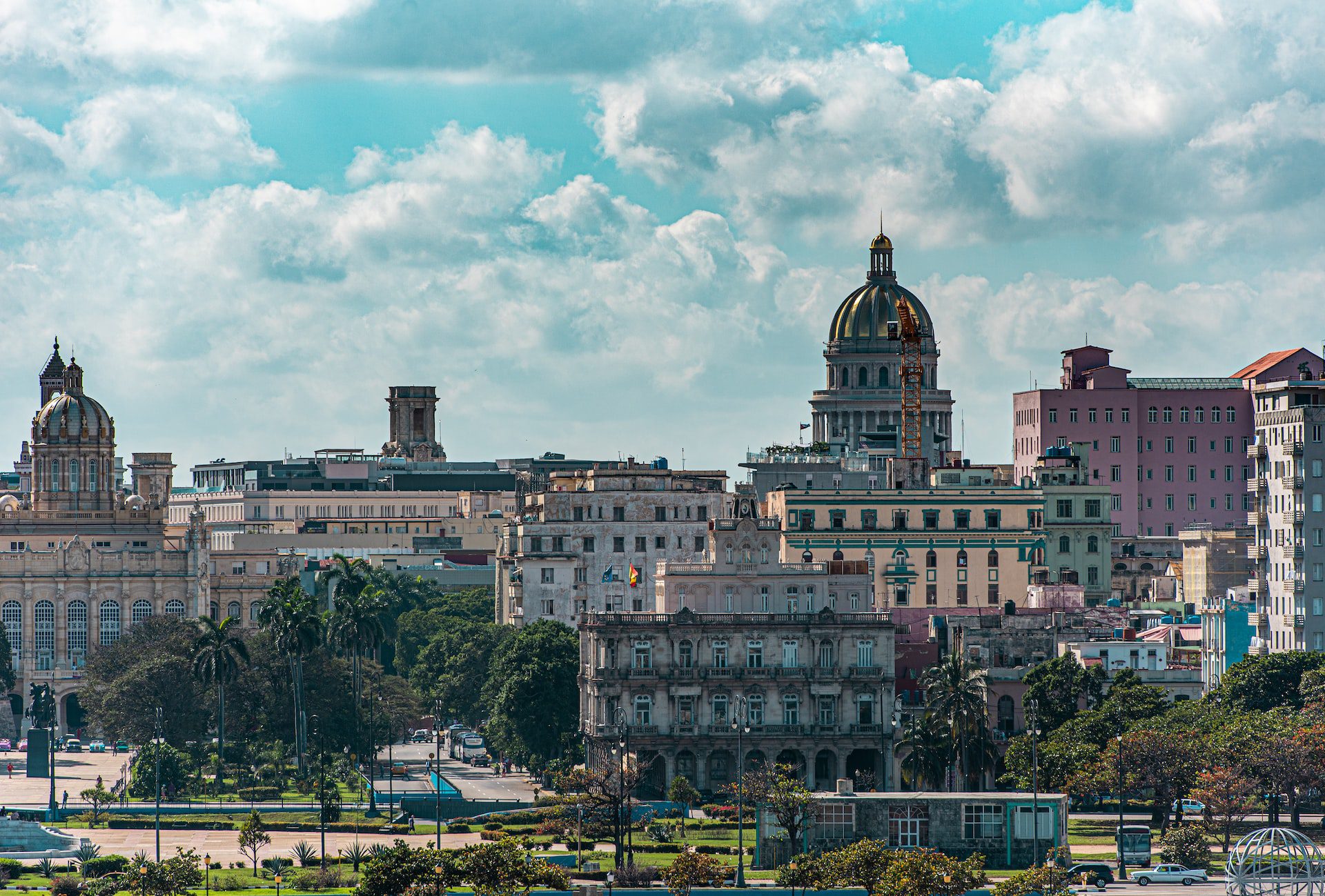
Photo by Simone Savoldi

The Caribbean Council is able to provide further detail about all of the stories in Cuba Briefing. If you would like a more detailed insight into any of the content of today’s issue, please get in touch.

6th February 2023

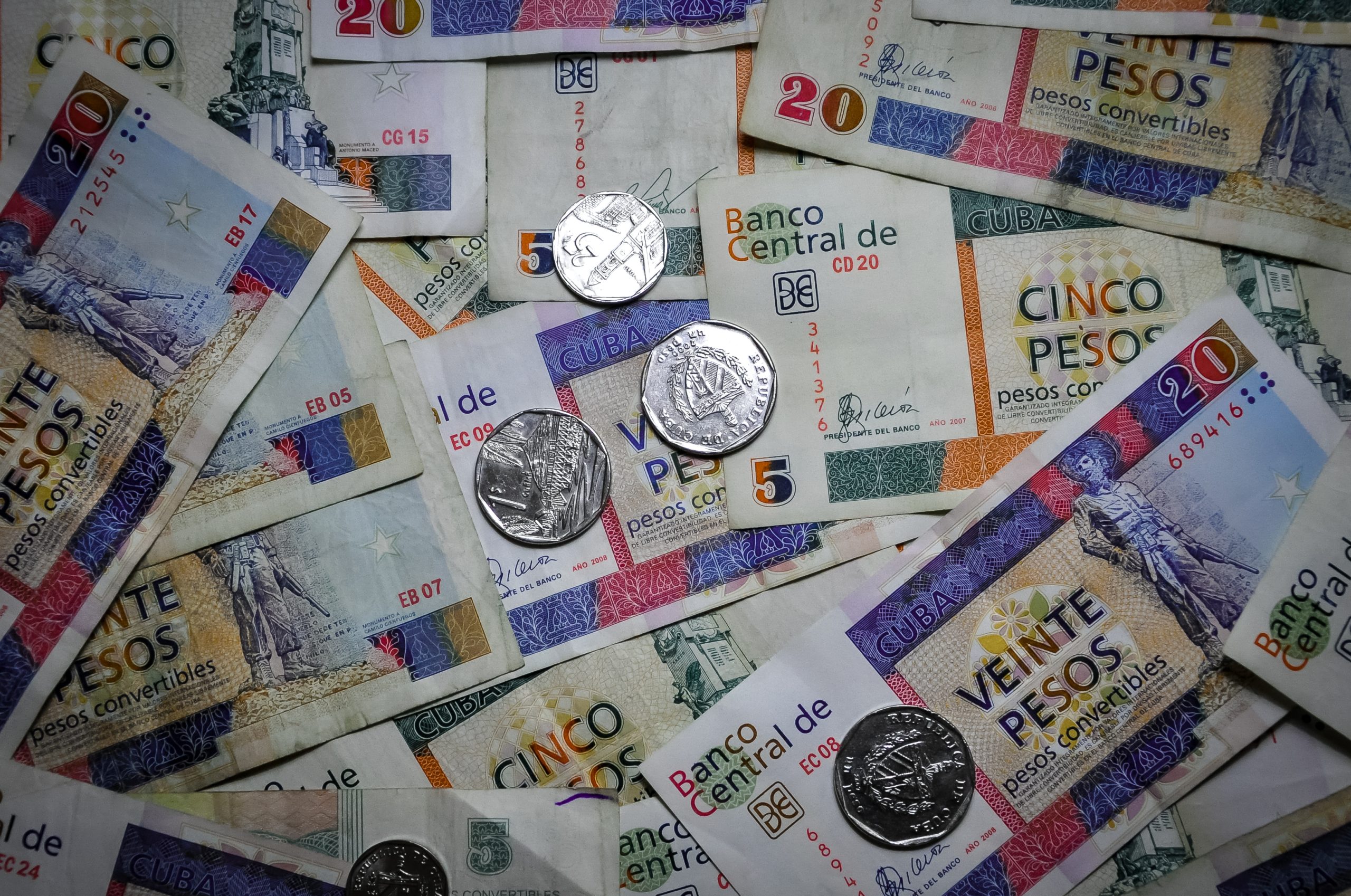
The case before the High Court in London to determine whether an offshore Cayman company, CFR I is a legitimate creditor of the Cuban Government and the Banco Nacional de Cuba (BNC), has now ended. It is unclear when any ruling in the high-profile trial may be made public.

The case revolves around €72mn (US$78mn) in commercial debt which CRF I accumulated; whether CRF I is as such a legitimate creditor of the BNC and Cuba, or as Cuba argues, the “CRF is not a creditor of the BNC or of Cuba and has never been”; and whether the UK commercial court has jurisdiction in the matter. (Background Cuba Briefing 16 January 2023).

During the trial Cuba argued that CFR I is not a legitimate creditor on the basis that the fund obtained the debt illegally, and that the debt “was contracted by the BNC before 1997 when it had functions as the Central Bank.” Since then, the Banco Central de Cuba (BCC) says “the BNC has had no authority to act on behalf of the Cuban government.”

Cuba’s legal counsel and Cuban officials and ministers, in some cases giving evidence in person, argued that correct procedures were not followed in relation to the acquisition of the debt, and that CRF I was not a “responsible” creditor but rather a “vulture fund” seeking redress through litigation. During the proceedings a former worker at the BNC convicted of bribery testified electronically from a Cuban prison.

In response CFR I, argued that it acquired the debt correctly, it was a legitimate creditor, that some of the evidence given lacked veracity, and that it was not as alleged a “vulture fund”.

Following the end of the trial on 2 February, the Cuban Justice Minister, Oscar Manuel Silvera, who attended the court’s closing days, praised “the seriousness and strict adherence to the rules by the English court and its authorities.” In an interview with Cubadebate he also expressed gratitude to the judicial authorities for their willingness to enable witnesses to testify from Havana in real time. Asked about when the outcome of the proceedings will be known, Silvera said that the finding of the court and its judgment would not be immediate.

The formal court finding on whether CRF I is a legitimate creditor of Cuba in respect of its claim is expected to take many weeks, may not necessarily be made public, and may well be appealed.

Any judgment favouring the plaintiff could have complex longer terms implications for the Cuban government and Cuban economy as with such an outcome further court cases could follow relating to recompense being sought against Cuban state assets held overseas.

The Spanish news agency EFE reported that CRF I “is the largest holder of Cuba’s sovereign debt and has accumulated bonds of €1.2bn” (US$1.3bn). The details of the case and the evidence given has had wide if partisan coverage in Cuba’s state media and the exile press.

The Caribbean Council is able to provide further detail about all of the stories in Cuba Briefing. If you would like a more detailed insight into any of the content of today’s issue, please get in touch.

30th January 2023

Cuba’s Minister of Finance and Prices, Meisi Bolaños, has said that the most significant challenge facing Cuba this year will be delivering economic growth while continuing to deliver the country’s social provision and system of subsidies.

Speaking with other ministers about the 2023 budget on the flagship television and radio programme, Mesa Redonda, she emphasised that the planned deficit of CUP68.1bn (US$2.84bn) will require “proper management” if a  gradual reduction in the country’s fiscal deficit and the maintenance of Cuba’s principles of equity and social justice are to be achieved.

Bolaños made clear that achieving further reductions in the fiscal deficit will depend on “the future capacity of the nation to amortise the debt, based on income and the demand for financing”.

Speaking about  the fiscal deficit proposed for 2023 she said that what had been agreed “is not optimal.”

Bolaños told viewers that the proposed budget involves “a decrease of just over CUP7bn” from 2022 spending, with tax revenue this year being CUP150bn (US$6.25bn), a 31.7% growth, and non-tax revenue CUP134bn (US$5.58bn) a 17% increase over 2022, which together will finance 80% of total government expenditure.

In her remarks she noted that among the main challenges will be the capture of more income for the budget based on diversifying and increasing sources of income, boosting more efficient production, and the better control of budgetary spending.

Bolaños sought to assure Cubans that “ basic social services”  and attention to the vulnerable will remain financing priorities, and that the principle of equity and social justice will be maintained  “without applying shock therapy, without resorting to layoffs” in the state sector.

Tax rates and sources to be reviewed

Speaking later in the same broadcast, Vladimir Regueiro, the First Deputy Minister of the MFP, explained  that 53% of income will be derived from taxes, “once again recovering this space as a fundamental source of budgetary income.”

In his remarks he made clear, however, that capturing  more revenue was the key to the state budget and that there will be a review of tax bases and tax rates, “in accordance with adjustments established in the country’s existing Tax Law.”

“If income does not grow”, Regueiro said, it would not be possible to deliver the country’s  macroeconomic stabilisation programme and meet the costs of planned socioeconomic development.

He reiterated that there will be “more systematicity and rigor” in the collection of taxes in 2023  as a consequence of there being more efficient mechanisms to control of payment of the taxes  and greater awareness among economic actors.

Regueiro stressed that in introducing new taxes the objective was “not about collecting more at all costs.” Despite the income  being so necessary, it cannot, he noted have a confiscation effect on the wealth that is generated. Rather, he said, the intention is  that  “all economic actors to grow and interact.”

Other new measures and incentives

Other points that emerged during the round table  were:

  • Cuba will spend 72% of its budget or CUP251bn (US$10.5bn) on social security payments, on increases in the cost of raw materials to produce medicines and food,  and on social assistance to the most vulnerable. 
  • Subsidies to the business sector will be made to maintain the pricing of electricity, liquefied gas, and  water provided for household use.
  • Budgetary support will be used to encourage agricultural production in sectors including coffee and sugarcane, as well as for investment in the construction of new state housing, and improvements to the water supply.
  • There will be a group of temporary fiscal incentives for all actors, state and non-state, who are involved in strategic sectors of the economy including agriculture,  and in relation to the profits of high-tech companies and those involved in developing computer apps and IT services.
  • Technology Parks will be exempt from a tax on their profits for a period of five years and from import tariffs.
  • Changes will be made to the tax on profits on projects related to renewable energy sources.
  • New tax measures will see “those who have more income contribute more”.
  • A  general tax regime will be created for all self-employed workers “with a progressive scale” of taxation.
  • There will be a new requirement that entities in the state sector make an additional 10% contribution to the budget, excepting those that are price controlled

Other measures announced included changes to the rates of taxation on bonuses for those working in foreign entities; recognition of costs of acquiring freely convertible currency to finance the purchase of inputs, products, and raw materials by recognising different exchange rates; and the application of the sales and services tax to all MSMEs on the basis that “the objective of promoting the growth, transformation and recognition of these economic actors has been achieved.”

The Caribbean Council is able to provide further detail about all of the stories in Cuba Briefing. If you would like a more detailed insight into any of the content of today’s issue, please get in touch.
23rd January 2023

Granma has published an interview that suggests that Cuba will be hard pressed in the coming years to achieve its objective of  producing domestically over 0.6mn tons of rice. This is the volume it requires if it is to deliver from domestic production alone enough rice to cover the regulated family food basket and for social consumption.

The official communist party publication quoted Oslando Linares, the Director of the Rice Technology Division of the state-owned Grupo Empresarial Agrícola attached to the Ministry of Agriculture, as saying that the country’s Comprehensive Rice Development Programme intended to achieve self-sufficiency by 2030 was now unlikely to meet its objective.

Linares told Granma that until 2018, the programme had been satisfactory with records being broken for rice production, reaching the historic high that year of 304,000 tons. However, since then, production has declined falling to 246,700 tons in 2019, he said, because of a “general lack of inputs, as well as spare parts for rice combines.”

The report quoted him as saying without indicating the actual production figure for 2022 that last year volumes decreased significantly, driven in part by “the loss of the supply chain.” Linares attributed this to the pandemic, the tightening US embargo,  and the war in Ukraine. These, he said, variously impacted on the cost of herbicides, pesticides, energy and fuel, and agricultural aviation.

Granma quoted Linares as saying the plan for 2023 has been set at around 40% of what was originally intended under the sector’s original development programme resulting in just 68,000 hectares planned this year, “a really poor figure.”

Asked by the publication about how and when the current situation could be reversed, Linares affirmed that recovery might begin in 2023 but would require three years for production to be consolidated, Better use would be made, he noted, of “the nation’s scientific and creative thought to support the nearly 25,000 cereal producers on the island.”

Linares told the publication that to try to achieve this, plenary sessions were being held to identify best and worst practice, and to promote “a group of endogenous technologies that allow us to take off, without the extensive demand for resources that we do not have.”  This he said involved using the proven expertise of some producers and “should influence the rise in agricultural yields and the quality of the grain.”

Linares also emphasised the potential  of the sector’s seed development programme which is receiving support from Vietnam and Japan involving long, medium, and short cycle varieties, some of which have low input requirements

“We rice farmers have to get used to the new working conditions, to using fewer chemical products and using a considerably greater number of bioproducts,” he told Granma.

Cuba’s original objective in achieving  self-sufficiency was to plant 0.2mn hectares, obtaining a yield of six tons per hectare, and wet cereal production of 1.2mn tons to provide the 0.6mn tons planned.

Rice is a cultural and nutritional staple in the Cuban diet. The failure of the plan and the absence of any production figures for 2022 suggest that for the foreseeable future  the island will have to rely on imports from the US, Latin America, the Far East  and elsewhere, placing further strains on the country’s budget and the timely delivery of the basic food basket.

Photo by Sandy Ravaloniaina 

The Caribbean Council is able to provide further detail about all of the stories in Cuba Briefing. If you would like a more detailed insight into any of the content of today’s issue, please get in touch.
16th January 2023

Cuba’s Central Bank (BCC) has confirmed that legal proceedings will shortly begin in London before the commercial division of the High Court in a case relating to a debt recovery claim for €72mn (US$78mn) made against the Banco Nacional de Cuba (BNC) and the Republic of Cuba.

In a statement issued on 13 January, the BCC described the claimant, CRF I Limited, as a “vulture fund”  seeking to benefit from unpaid government debt that it had accumulated. CRF I Limited, the BCC said, is incorporated as a Cayman offshore company,

The BCC observed that typically “vulture funds” buy in the secondary market, at auction prices, “debts issued by countries, to demand immediate payment of 100% under threat of legal action.” It went on to note that the judicial procedure will determine  whether CRF I is a creditor of the BNC and Cuba, or as Cuba argues, the “CRF is not a creditor of the BNC or of Cuba and has never been.”

The BCC observed in its note that the object of the procedure relates to public debt because “it was contracted by the BNC before 1997 when it had functions as the Central Bank.” Since then, the BCC noted, “the BNC has had no authority to act on behalf of the Cuban government, neither to approve the assignment of public debt without the prior authorisation of the Ministry of Finance and Prices and the Council of Ministers, since the BNC cannot for any case authorise the assignment of guarantees granted by the State” in the form of sovereign guarantees.

The BCC further stated that “the BNC and Cuba have never ignored their debts, had always maintained their interest in negotiating with their legitimate creditors”, and “that both the BNC and Cuba are involved in the legal proceedings and will defend their rights.” It also indicated in its statement that the superintendence of the BCC “as a body of a technical nature, with autonomy for the exercise of its functions assigned by Law, related to the inspection, surveillance and control over the institutions that carry out financial and banking activities in the country” will provide more information in a timely manner as to the results of this process.

Reuters reported that CRF I Ltd, which it described as an investor in defaulted Cuban sovereign debt since 2009, filed the case in Britain’s High Court after Havana refused a debt relief offer made by CRF I and other bond holders in 2018.

The outcome of the case, which is being heard before Judge Justice Andrew Henshaw KC, has wider implications for both Cuba itself, CRF I and other similar funds that hold also large sums in Cuban debt. (Additional Background Cuba Briefing 12 September 2022).

In recent years Argentina and other Latin American nations have been engaged in similar lengthy legal battles with funds which have specialised in accumulating distressed securities.

Photo by JF Martin 

The Caribbean Council is able to provide further detail about all of the stories in Cuba Briefing. If you would like a more detailed insight into any of the content of today’s issue, please get in touch.

9th January 2023

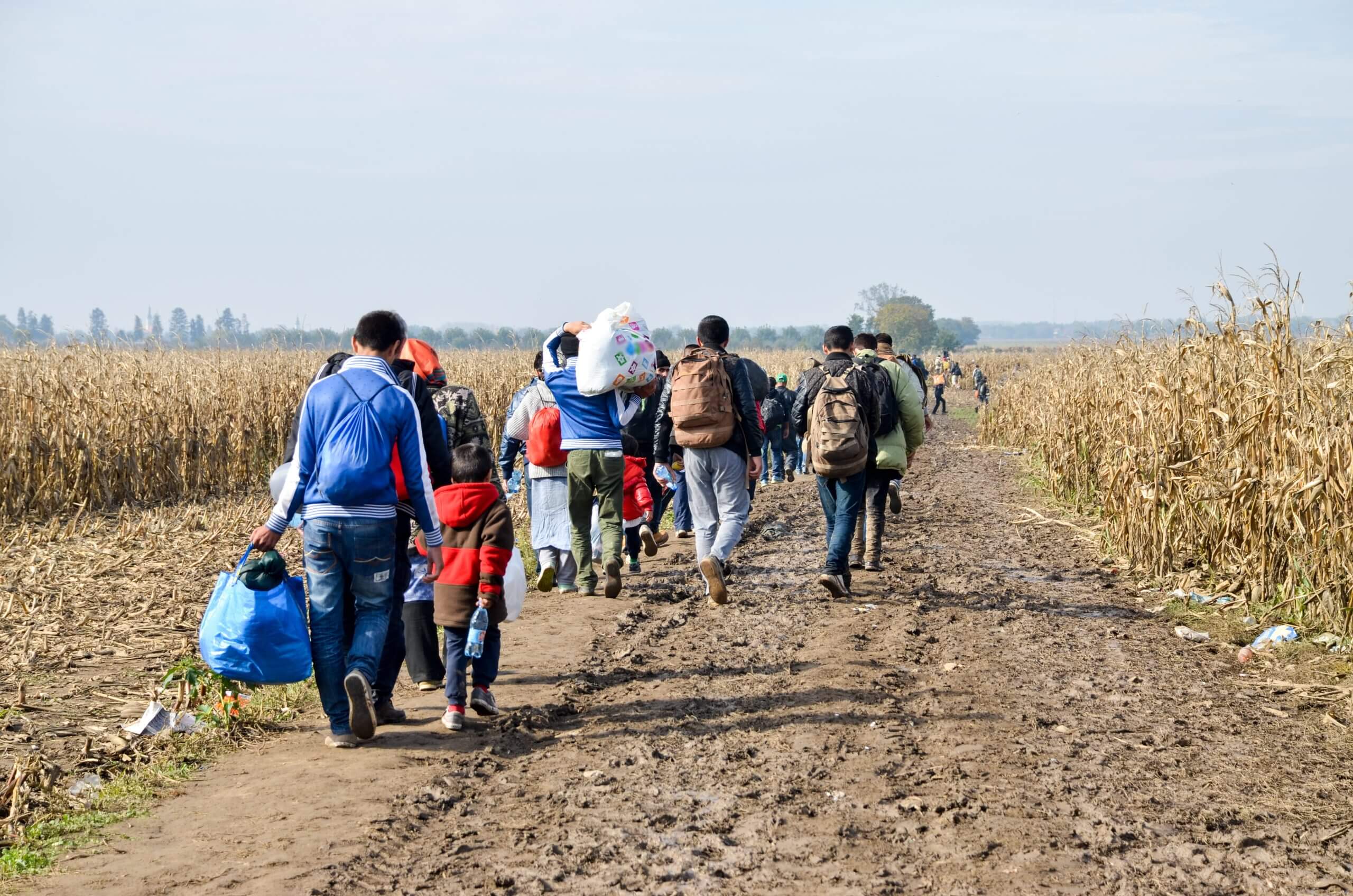
President Biden has announced that the US is to expand restrictions introduced during the COVID pandemic, to rapidly expel Cuban, Nicaraguan, and Haitian migrants caught illegally crossing the US-Mexico border. 

The decision extends what are known as ‘Title 42’ restrictions, the legality of which are eventually expected to be ruled on by the US Supreme Court. The two-track approach will additionally see up to 30,000 people per month from the three countries plus Venezuela able to legally enter the country by air.

Speaking about the decision, President Biden said, “If you’re trying to leave Cuba, Nicaragua, or Haiti, or have agreed to begin a journey …. do not just show up at the border. Stay where you are and apply legally from there”.

Biden said that anyone who did not apply, but sought to cross the border would not be eligible for the new programme. Anyone legally applying, he said, would require a lawful sponsor in the US and would need to undergo a rigorous background check.

The approach, which has been tried with some success with migrants coming from Venezuela, will according to the White House be expanded to nationals of Cuba, Nicaragua, and Haiti for a period of two years and will lead to work authorisation.

It will additionally mean that Cubans and citizens of the other three named nations who irregularly cross the Panama, Mexico, or US borders will now be ineligible for the US parole process and subject to expulsion to Mexico. In turn, Mexico has said that it will accept returns of 30,000 individuals per month from the four countries if they fail to use these new pathways. US officials describe the process as “expedited removal.”

The decision responds to US domestic political concern about surging illegal migration on the US’s southern border, and the inability of the US and state authorities and the judiciary to process claims for asylum.

In a statement, the Mexican government said that by capping the number of would-be migrants applying to enter the US at 30,000 a month, the new scheme would offer a “significant alternative to irregular migratory flows that can carry significant risks for the safety of migrants and refugees.”

Cuba’s state media reported the news factually. A commentary by the Director of Cubadebate quoted Ernesto Soberón, Director of Consular Affairs and Cuban Residents Abroad in the Ministry of Foreign Affairs, as saying that Cuba had “alerted the US government for years about the risks of stimulating irregular emigration through the Cuban Adjustment Act and the privileged and politically motivated treatment received by Cubans who arrive on US territory or its border.”

The commentary went on to observe the failure until recently of existing US  commitments to grant Cubans a minimum of 20,000 visas per year and the closure of visa processing at the US Embassy in Cuba. This it said had “caused an accumulation and significant growth” in migration, affecting not only Cuba and the US but transit countries as well.

US media reports indicate that many Cuban migrants who have left the island but hoped to, or who have recently crossed the US border are in despair to learn they may be sent back to Mexico and may not now automatically be processed for asylum under the US’s 1996 Cuban Adjustment Act.

According to the US Department of Customs and Border Protection, 224,607 Cubans sought to enter US territory in fiscal year 2022, usually transiting points in Central America and then seeking to cross the Mexico-US border to legally apply for migratory status. The US embassy in Havana resumed visa processing this month. Previously Cubans seeking to migrate to the US had to travel to Guyana for processing.

Some US analysts see addressing the irregular flow of migrants between Cuba and the US as a critical component in achieving the gradually negotiated normalisation of relations.

The Caribbean Council is able to provide further detail about all of the stories in Cuba Briefing. If you would like a more detailed insight into any of the content of today’s issue, please get in touch.

2nd January 2023

Four cruise lines that operate out of the US have been told that they must pay close to US$450mn in total to the heirs of the original owners of the Havana Cruise Terminal. The port was expropriated in the 1960s by the Cuban government.

The ruling in the Miami Southern District by US District Court Judge, Beth Bloom, follows from an earlier March 2022 ruling that the use of the Havana Cruise Port Terminal constituted trafficking under Title III of the US Helms Burton legislation.

The allegedly trafficked (utilised) property was once owned by the Delaware-registered Havana Docks Corp. The ruling in favour of relatives of its owners also requires the cruise lines to pay the legal fees and costs which are expected to amount to around US$3mn per company.

Although the cruise lines – Norwegian Cruise Holdings, Carnival Corp, Royal Caribbean Group, and MSC Cruises – may appeal, the landmark case is expected to set a precedent as it was the first to be allowed to proceed to trial under Title III of the Helms Burton legislation.

In 2019, the Trump administration allowed US citizens to sue third parties for ‘trafficking’ property in Cuba expropriated after the Cuban revolution. The provision had previously been waived by every US President.

In her March 2022 ruling, Judge Bloom said that the companies must pay the descendants of a US businessman for using the Havana cruise terminal. The case was brought by Havana Docks, whose President, Mickael Behn, is the grandson of a businessman, William Behn, who had three docks confiscated in 1960. The company holds a US-certified claim to the terminal and piers.

In their defence, the four cruise lines had said they had used the terminal for lawful travel, that there was no evidence they acted with intent of trafficking, that Havana Docks never owned the cruise terminal but held a concession to operate a cargo business, and the UK based principal of the plaintiff was not an eligible claimant.

However, Judge Bloom rejected the companies’ arguments in a 169-page ruling, noting that the defendants continued using the terminal after gaining actual knowledge of Havana Docks’ certified claim. This was, she said, “enough to establish liability under the Libertad Act.” She also found that Havana Docks, with its office and management in Kentucky, qualified under US law and had demonstrated it owns a claim to confiscated property.

Bloom noted also that because US officials including the then US President had suggested cruise lines encourage US citizens to visit Cuba, it did not automatically immunise them from liability if they engaged in statutorily prohibited tourism.

Earlier cases have been dismissed because the plaintiffs had inherited their claims after a cut-off date or because they were unable to establish jurisdiction. The US Justice Department’s Foreign Claims Settlement Commission has previously certified nearly 6,000 claims on property confiscated by Cuba with a principal value of US$1.9bn.

Photo by Peter Hansen

The Caribbean Council is able to provide further detail about all of the stories in Cuba Briefing. If you would like a more detailed insight into any of the content of today’s issue, please get in touch.
19th December 2022

Cuba’s Minister of Economy and Planning, Alejandro Gil, has said that he anticipates the country’s economy will grow by a minimum of 3% at constant prices in 2023. The figure compares with a lower than expected GDP growth outcome of 2% this year. This compares to an initial forecast of 4%  (1.3% in 2021). The 2023 growth projection was he said 8% less than GDP growth in 2019.

Speaking to members of Cuba’s National Assembly, Gil told delegates that in 2023 he expected GDP growth to be spurred by a greater capture of foreign exchange and the restoration of productive activities.

 He cited as positive contributory factors, the control of COVID-19; “the positive results of the recent international tours of the country’s leadership” (Cuba Briefing 29 November 2022); the growing interest of foreign business as evidenced by discussions at the recently held Havana International Fair; “a more dynamic recovery of tourism”; the assurance of fuel supplies; the generation of enough electricity to meet demand; and progress in the country’s planned macroeconomic stabilisation programme.

In remarks reported in Cuba’s state media, Gil stressed that while the conditions exist to achieve the proposed objectives and said that 2023 “will be a better year”, he stressed that an increase in exports would be essential. He noted that in drawing up next year’s state plan, account had been taken of the intensification of the US embargo, an increase in the cost of inputs, and a growth in income-generating activities.

The anticipated outcome, he said, required “ an ambitious goal” of US$9.6bn in sales of goods and services, over US$1.04bn more than in 2022 but about US$3bn less than in 2019. It would also he told legislators depend on receiving 3.5mn international visitors, a figure double that received this year.

As in the past, a significant part of government expenditure will go on the price-regulated family basket of food, but, Gil warned, “the complex reality in which imports are carried out” means that imported inflation will affect the price of products such as oil, rice, milk powder, wheat, and corn, making increased national production essential.

Addressing state investments, he said that important projects are planned which relate to building thousands of new homes, improving water storage and supply, delivering ongoing projects in tourism, and in relation to food production and renewable energy.

Planned fuel imports at 7.87bn tons, he said, have been costed at US$4.41bn, while overall power generation of 20,140 GWh is projected as in 2019 to cost about US$500mn, with 50% coming from thermal generation, 15% from floating power barges paid for in foreign currency, with just 2.8% coming from renewable energy sources .

Speaking about the domestic market, he said that this is expected to grow but acknowledged that supply levels that fully satisfy demand have yet to be achieved. Of these he said that 80% of sales will be in Cuban pesos (including services), and 20% in MLC. The objective, he indicated, is to increase retail merchandise circulation by 15%.

Noting that a shakeup of the state business sector” has yet to be achieved, Gil confirmed that significant “larger-scale transformations in socialist state companies are planned.”  While eighty-three state enterprises were planning losses in 2023 and 480 (about 25%) will end 2022 with losses, he said that this did not mean that all were inefficient as some were “subject to price caps so as not to affect the population” and had experienced a rise in import costs.

Addressing inflation, Gil noted that from October 2021 to October 2022, the official rate increased by almost 40%. He also noted that from January to October 2022 the average price of the basket of goods and services as calculated by ONEI, Cuba’s national statistical agency, grew by almost 29% affecting the purchasing power of wages. He appeared to suggest that a part of the solution may lie in a national process underway that will see the decentralisation of power to approve prices locally but stressed that there can be no new wage increases.

“This is not a market economy, although there are spaces where it works. This is an inclusive economy. Here you must have regulations on costs,” Gil told National Assembly members.

In other remarks Gil noted:

  • The high price of raw materials in international markets is resulting in the slow recovery of national production
  • Pre-pandemic levels of export activity have been restored in relation to nickel, tobacco, rum, honey, and seafood, offset by lower earnings from telecommunications and tourism.
  • Anticipated sugar production would be at a low of 455,200 tons with just 90,000 tons allocated for export.
  • National tourism is growing, achieving 115% compliance with the state plan in 2022.
  • With respect to the recently announced policy decision to encourage participation of foreign investment in Cuba’s retail and wholesale trade there have been more than sixty expressions of interest and some discussions were at an advanced phase .
  • That as an objective there was a need to move from welfare care to true social care, and “the proper functioning of a mechanism that guarantees subsidising people and not products.”
  • The non-state sector now delivers 12 to 14% of Cuban economic activity, 21 to 28% of passenger transportation and 1% of freight transportation. In 2022 the sector earned somewhere between US$14mn and US$15mn in exports. It had also contributed CUP58bn (US$2.4mn) to Cuba’s retail business.

Most analysts outside Cuba believe that the official rate of inflation is a significant underestimate as many Cubans have no option other than to buy in the informal market where the inflation rate is believed to be around 200% per annum.

Photo by Jason Leung 

The Caribbean Council is able to provide further detail about all of the stories in Cuba Briefing. If you would like a more detailed insight into any of the content of today’s issue, please get in touch.

13th December 2022

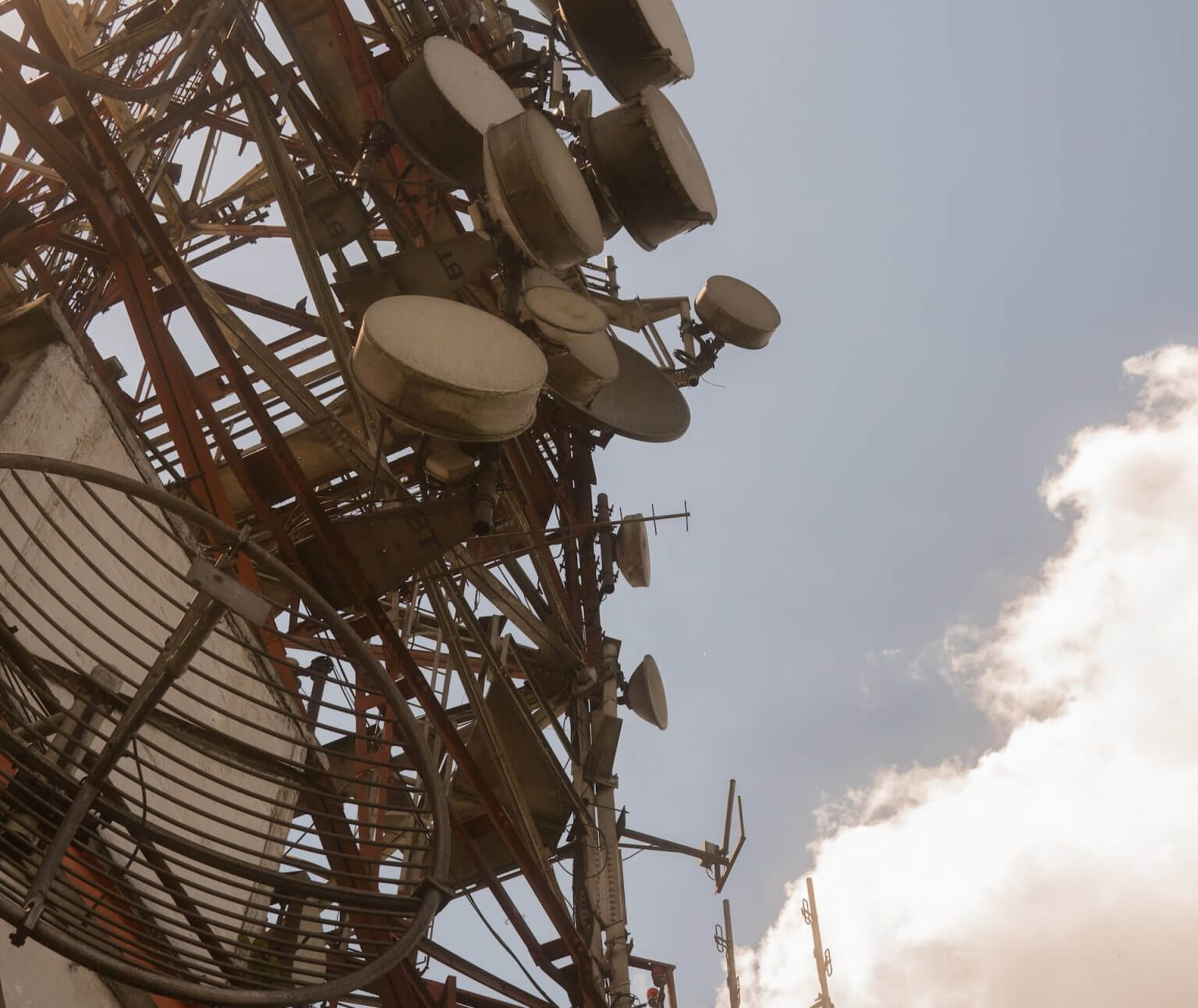
Just days after the US Justice Department recommended the US Federal Communications Commission deny an application seeking the installation of a direct submarine telecommunications cable connecting Cuba and the US, Cuba and France have announced that a French company is installing a subsea cable between Cuba and Martinique.

The agreement between the Cuban state telecommunications company ETECSA and the French multinational Orange SA will see the link become operational next year, providing onward international links to the multiple undersea cables that serve the French speaking island.

According to ETECSA, work is to begin shortly on the laying of a 2,500km ARIMAO cable able to carry internet, data, and voice communications between a location in Cienfuegos and the eastern Caribbean Island of Martinique, which as a French Département d’outre-mer, is a peripheral but integral part of the European Union.

Speaking to Juventud Rebelde about the new telecoms link, the President of ETECSA, Tania Velázquez, said that it will provide a “robust and effective solution to expand communication capacities enabling Cuba and Cubans to interact with the world.” It will, she said, allow ETECSA to expand and diversify its international capacities to meet the demand for Internet connection and broadband services” and more generally to support its international expansion.

In making the announcement ETECSA said that all necessary permits were in place and that “the physical structure” of the cable will be ready in 2023. This will allow, Velázquez told the state publication, the company to continue expand connectivity.  At present Cuba has only one international submarine internet cable, ALBA-1, which provides links to and through Venezuela. It has been operational since 2012 but has not the capacity to meet present demand.

The new cable will be laid by Orange Marine. The decision will geographically diversify current connectivity and improve indirectly Cuba’s telecoms links to the US.

As reported in Cuba Briefing 5 December 2022 the US Department of Justice expressly advised against the installation of the proposed ARCOS-1 USA cable planned by Verizon and multiple Latin telecoms providers on the basis that ETECSA would manage the cable landing, and this posed a security threat enabling “access to sensitive US data traveling through the new cable”.

Following the US decision, Cuban media outlets have republished a report appearing in the leading Mexican daily, La Jornada, noting that the US decision based on the alleged danger that other “foreign adversaries” would use Cuba as a gateway to access US networks, was “ridiculous.”. The publication noted that the long-standing existing ARCOS-1 network which Cuba had hoped to link to, connects 24 international internet anchor points from 15 countries accessible to “US adversaries including China and Russia”, most of which are anyway routed through the vast Network Access Point (NAP) of the Americas data centre and Internet exchange point which is located in Miami.

Photo by Jackson David 

The Caribbean Council is able to provide further detail about all of the stories in Cuba Briefing. If you would like a more detailed insight into any of the content of today’s issue, please get in touch.